


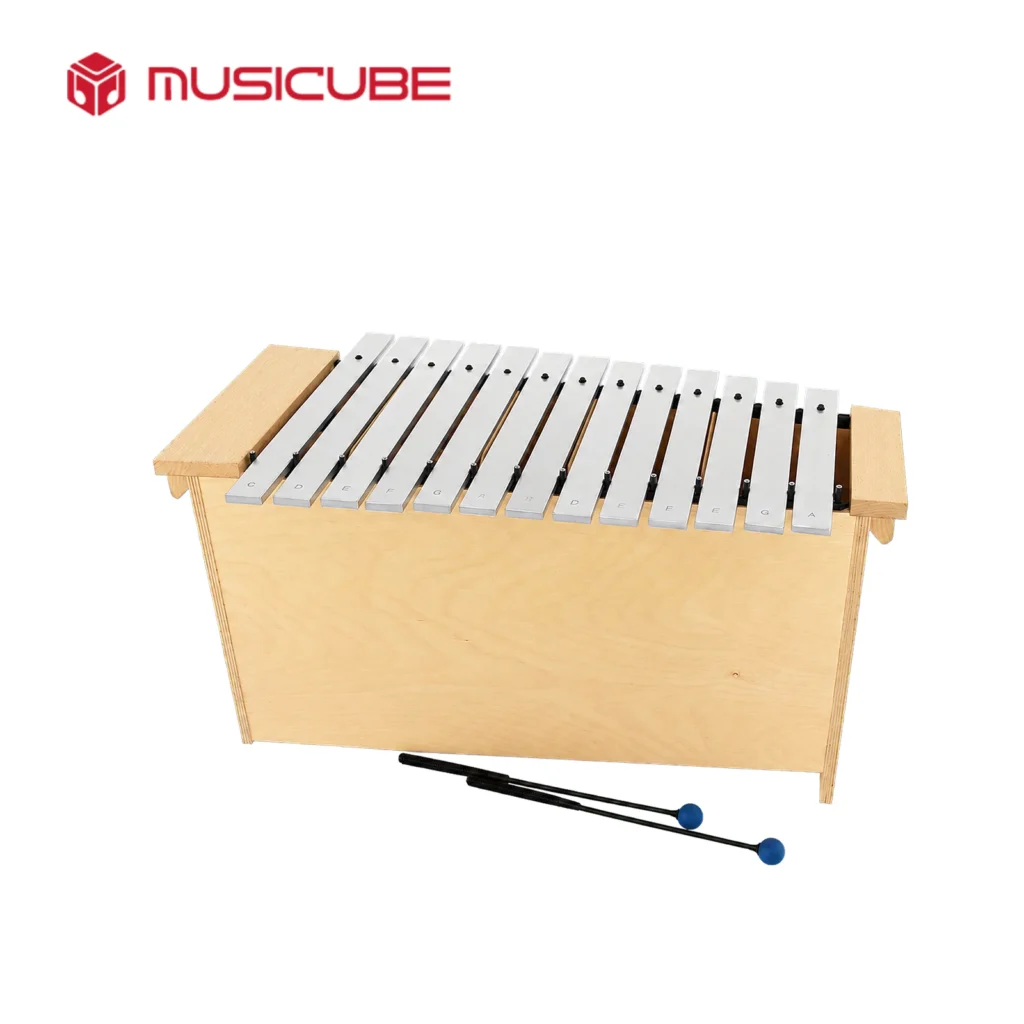
By the Royalsound factory team — kids musical instrument manufacturer since 2003 · Updated October 2026
A children’s xylophone is a specification, not a photograph. Bar material, bar profile, tuning method, resonator construction and target age vary between models that look identical on a shelf, and each variation changes who the instrument is for. Errors here rarely start with the unit price; they start when a buyer signs off a spec sheet without knowing which row commits them to what. This page works through the range, the hardwood / aluminum / steel choice, the three-key add-on system and the items to fix before a deposit. Royalsound has run an instrument works in Jiangsu since 2003, with 20,000 m² under roof. Musicube xylophones on US shelves come off that same plant, so the checks below describe how the line is actually run, not how a catalogue is assembled.
What a barred-instrument specification must state
A barred-instrument catalogue is simple to fake and difficult to deliver. A trading desk can buy wooden bodies from one workshop, metal bars from a second and printed boxes from a third, then photograph them as one range. Ask instead for evidence that only a plant with a tuning bench can supply: pitch records filed by batch, ownership of the bar-forming tooling, and a sample cut from the same stock as bulk. Those requests separate a factory from a page.
Put four questions to any would-be xylophone factory. Who tunes the bars, and on which bench? Is the reference sample cut from bulk stock or made separately? Are pitch records kept by batch so a later order can be matched? Does the plant deal with returns from its own branded instruments? The last question tells you more than a wall of certificates. Our documented QC process exists because we carry both roles, and the OEM/ODM programme defines the line between artwork changes and structural ones.
Soprano, alto and bass xylophones on one line
A usable range covers the registers a programme actually orders. The preschool 8-tone instrument, the soprano, the alto and the bass should share one tuning platform, one add-on key system and one box architecture, so a school can extend a set without re-learning it. Keeping those parts common is only feasible when a single line makes all of them.
| Segment | What it covers | SKUs on the line |
|---|---|---|
| Hardwood xylophones (Orff) | Soprano, alto and bass on one shared 16-bar, three-key platform | 051305, 051306, 051307 |
| Metallophones | Same 16-bar platform with aluminum bars for a brighter voice | 051301, 051302, 051303 |
| Glockenspiels | 8-tone preschool bodies through 13-bar alto and 27-bar chromatic models | 050811, 050805, 051102, 051304, 052302, 052701, 052501 |
| Hand chimes and resonator bars | 8-bell diatonic chimes and 8 anodized-aluminum resonator bars | 050840, 050812 |
| Preschool wood xylophones | 8-tone beechwood instruments, nature and colored, ages 3+ | 050821, 050825, 050820, 050802 |
Bar counts, dimensions and note ranges are listed on the xylophone range page. Barred instruments are usually bought as a voice mix rather than a single model, so they also determine how the rest of a container is planned; the wholesale programme guide and the multi-category supplier overview explain how that mix is built next to unpitched percussion, keyboards and strings.
Bar dimensions, material and note range
From a photograph, most barred instruments look interchangeable. In practice the bar material, the width profile, the tuning method and the resonator box differ, and the specification sheet is the only place those differences are stated. Learn what each row means before you set two quotations side by side.
Tuning and the three-key system
Every Orff model in this line carries 16 bars: 13 diatonic bars plus two F-sharp and one B-flat add-on bars that travel in a cloth bag. Add them and one instrument covers C major, G major and F major without a second purchase. Bars are printed with note names and staff positions, so a pupil reading sheet music plays the same symbol they see. Two tuning terms appear on spec sheets. Fundamental tuning tunes the bar so the fundamental is the dominant tone; overtone tuning tunes the sounding partial. Both are legitimate, they are not interchangeable, and the model you sampled must be the model you quoted: on this line, the tuning method is specified per model on the quotation.
Bar material and profile
Three bar materials run across the range, and the choice is a voice decision before it is a price decision.
| Hardwood bars | Aluminum bars | Special-steel bars | |
|---|---|---|---|
| Models | 051305, 051306, 051307 | 051301, 051302, 051303 | 050811, 050805, 051102, 051304, 052302, 052701, 052501, 050802 |
| Bar size | 32 × 8 mm (soprano, alto); 36 × 10 mm + 32 × 8 mm (bass) | 32 × 8 mm (soprano, alto); 36 × 10 mm + 32 × 8 mm (bass) | 20 × 2 mm or 22 × 2 mm |
| Voice | Woody attack, shorter decay, rosewood-tone finish | Longer ring, brighter sustain | Bright, compact, shorter sustain |
| Typical use | Orff and Schulwerk melodic work | Second melodic color beside the hardwood line | Preschool glockenspiels, chromatic models, toy xylophones |
The bass model is the clearest example of profile as engineering. The 051307 carries two bar widths on one instrument: the six deepest bars are 36 × 10 mm and the upper ten are 32 × 8 mm. The thicker profile puts mass where the low register needs it; the thinner profile keeps the upper register articulate. A quote that lists “16 bars” without the profile split is incomplete.
The resonator box
The box under the bars is half the instrument. Across the Orff line it is built from solid and 12 mm laminated birch with FSC® certified timber, finished in water-based paint, with flexible pins and multiple resonance chambers under each bar, plus side handles. Box depth follows range: the soprano box is 615 × 187 × 131 mm, the alto 645 × 226 × 221 mm, the bass 674 × 267 × 356 mm. A tender that asks for a fuller mid-register voice is asking for chamber volume, and the box dimensions are where the answer lives. For wood-bodied programmes the factory holds FSC® chain-of-custody certification (GFA-COC-006800); ask at quote stage and the documentation travels with the shipment paperwork.
Mallets and what ships in the box
Mallets are a spec line, not an accessory. The Orff models ship with two rubber-tipped plastic mallets from a three-level hardness system, colour-coded by voice (red for soprano, yellow for alto, baby blue for bass) so pupils sort them at a glance. Each unit also ships a Musicube songbook with colored keys, a song sheet with coloured notes, and the cloth bag for the add-on bars. On the preschool models the mallets are wood and the box is full-color. Brown box versus full-color box is a channel decision: classroom programmes take the brown box, gift shelves take the printed one.
Spec sheet: hardwood xylophone trio (051305, 051306, 051307)
| SKU / Model | 051305 (soprano) · 051306 (alto) · 051307 (bass) |
| Age range | 6+ years |
| Configuration | 16 bars with carving notes: 13 diatonic plus 2 × F-sharp and 1 × B-flat add-on bars in a cloth bag |
| Bars | Bright rosewood-tone hardwood; 32 × 8 mm (soprano, alto); bass mixes 6 × 36 × 10 mm and 10 × 32 × 8 mm |
| Scale | Fundamental tuning; tuneable to C major, G major or F major |
| Pitch range | C5–A6 (soprano) · C4–A5 (alto) · C3–A4 (bass) |
| Resonator box | Solid and 12 mm laminated birch, FSC® certified timber, water-based paint, flexible pins, multiple chambers, side handles |
| Box size | 615 × 187 × 131 mm · 645 × 226 × 221 mm · 674 × 267 × 356 mm (L × W × H) |
| Mallets | 2 rubber-tipped plastic mallets, three-level hardness; red (soprano), yellow (alto), baby blue (bass) |
| Extras | Musicube songbook with colored keys, song sheet with coloured notes, cloth bag for add-on bars |
| Packaging | Brown box; full-color sleeve or full-color box quoted from volume |
| Lead time | 25–45 days after deposit |
Wood bars or steel bars for a preschool shelf
The ages-3+ segment splits two ways, and the split follows the shelf. The 050825 runs eight beechwood bars at 25 × 10 mm over a beechwood resonator, fundamental tuning across C6–C7, coloured finish, two wood mallets, full-color box, at roughly 225 × 195 × 35 mm. The colour anchors each note to the song sheet, which is what turns note-matching into a game before a child reads notation. The 050821 is the same platform in natural finish for the all-natural shelf. The 050802 takes the other route: a solid-wood body with eight special-steel bars at 20 × 2 mm, carved notes, built-in mallet storage, and 24 pieces per master carton for gift-channel volume. Wood bars give the warmer voice and the colour-learning story; steel bars give the durability and the carton economics. Neither is the upgrade of the other, and a range that only offers one leaves half the shelf to a competitor.
Tuning systems and the commitment each one makes
The reference conditions below apply whether you order 200 units of one preschool model or a mixed soprano / alto / bass programme:
| MOQ | 200 pcs on standard models |
| Samples | 10–15 days, built off the production line; cost credited against the bulk order |
| Bulk production | 25–45 days after deposit receipt |
| Payment | T/T 30% deposit with 70% against B/L copy |
| Shipping | FOB Qingdao, Shanghai or Ningbo; DDP quoted for EU and US destinations |
| Capacity | 20,000 m² factory in Huai’an, Jiangsu — building children’s instruments since 2003 |
Declaration documents for a barred instrument follow the bars and the box. Wooden bars and birch resonator boxes fall under our FSC® chain-of-custody certificate (GFA-COC-006800) where the market asks for it; steel and aluminum bars are listed on that model’s toy-safety test report. Give us the destination before the boards are cut and we set out the applicable list in writing, each report with its number and issue date. A logo alone proves nothing without the report behind it.
Container arithmetic for a barred-instrument order
Volume, not unit price, is what a register mix changes first. A bass box is 674 × 267 × 356 mm (about 0.064 m³), a soprano roughly 0.015 m³, and an 8-tone preschool model about 0.0015 m³; the 050802 ships 24 to a master carton. A 40-foot high-cube takes around 67 m³, so the same space holds approximately a thousand bass boxes or several thousand soprano boxes, before the carton and pallet losses that the quotation spells out. Decide the voice mix while the order is still a quotation — after packing, it is a freight problem.
Classroom programmes are normally assembled from several voices, so agree the carton scheme before bulk starts: which models share a master carton, the label and barcode format on each retail box, and the loading order. A sealed container that must be opened and re-sorted at the warehouse is the costliest avoidable error on a first order, and it is settled entirely at approval stage.
Pitch checks across a barred-instrument batch
A bar that is out of tune is obvious to a teacher, which is why a barred-instrument run is verified instrument by instrument, not released on a single batch sample. The bench checks pitch against the approved reference; assembly checks pin height, the presence of the add-on bars and cloth bag, resonator finish and edges, and mallet hardness against the voice. Set contents are reconciled to the packing list, an AQL inspection covers finished goods, and batch logs let a later reorder be rebuilt to the same reference. Drifting bars are corrected on the bench, never shipped as a discount line.
Where barred-instrument orders stall
- Comparing ranges by bar count instead of bar profile. “16 bars” hides the 36 × 10 versus 32 × 8 split that makes the bass a bass.
- Assuming fundamental and overtone tuning are the same product. They are different instruments at different prices; the quotation must name the one you sampled.
- Requesting hardwood bars for a preschool gift shelf, or steel bars for an Orff programme. Choose the bar material for the shelf it will sit on; a price comparison is not a specification.
- Ignoring the add-on bars. The three-key system is part of the instrument; a quote without the F-sharp and B-flat bars and the cloth bag is not the whole offer.
- Treating the resonator box as packaging. It is the acoustic half of the instrument, and the box dimensions belong in the tender response.
- Paying the deposit ahead of sample approval. No other checkpoint in a barred-instrument order costs so little and prevents so much.
Opening a barred-instrument programme
- Provide the voice split, quantities and target country; a first barred-instrument quotation can be prepared from that alone.
- Approve a pre-production unit against the written specification: check bar profiles, play the add-on keys, and reconcile every item in the box.
- Settle the carton scheme, packaging and artwork in advance, including Pantone references and any FSC® documentation the programme requires.
- Once the deposit lands, the run takes 25–45 days on the same tuning bench used for your reference sample.
Send the voice mix and quantities for tiered pricing, MOQ and the tuning-sample schedule, back within 24 hours. Own-brand work is scoped in the private label guide; for a single-model specification review on the keyboard side, see the keyboard manufacturing overview.
Questions barred-instrument buyers ask
How do you verify a children’s xylophone manufacturer is a real factory?
What is the MOQ for children’s xylophones?
How long does a xylophone order take?
What is the difference between a xylophone and a metallophone?
What does “16 bars” mean on the spec sheet?
Can the soprano, alto and bass ship as one classroom set?
What is the difference between fundamental and overtone tuning?
What documentation applies to a xylophone order?
What are the payment and shipping terms?
Explore Our Instruments
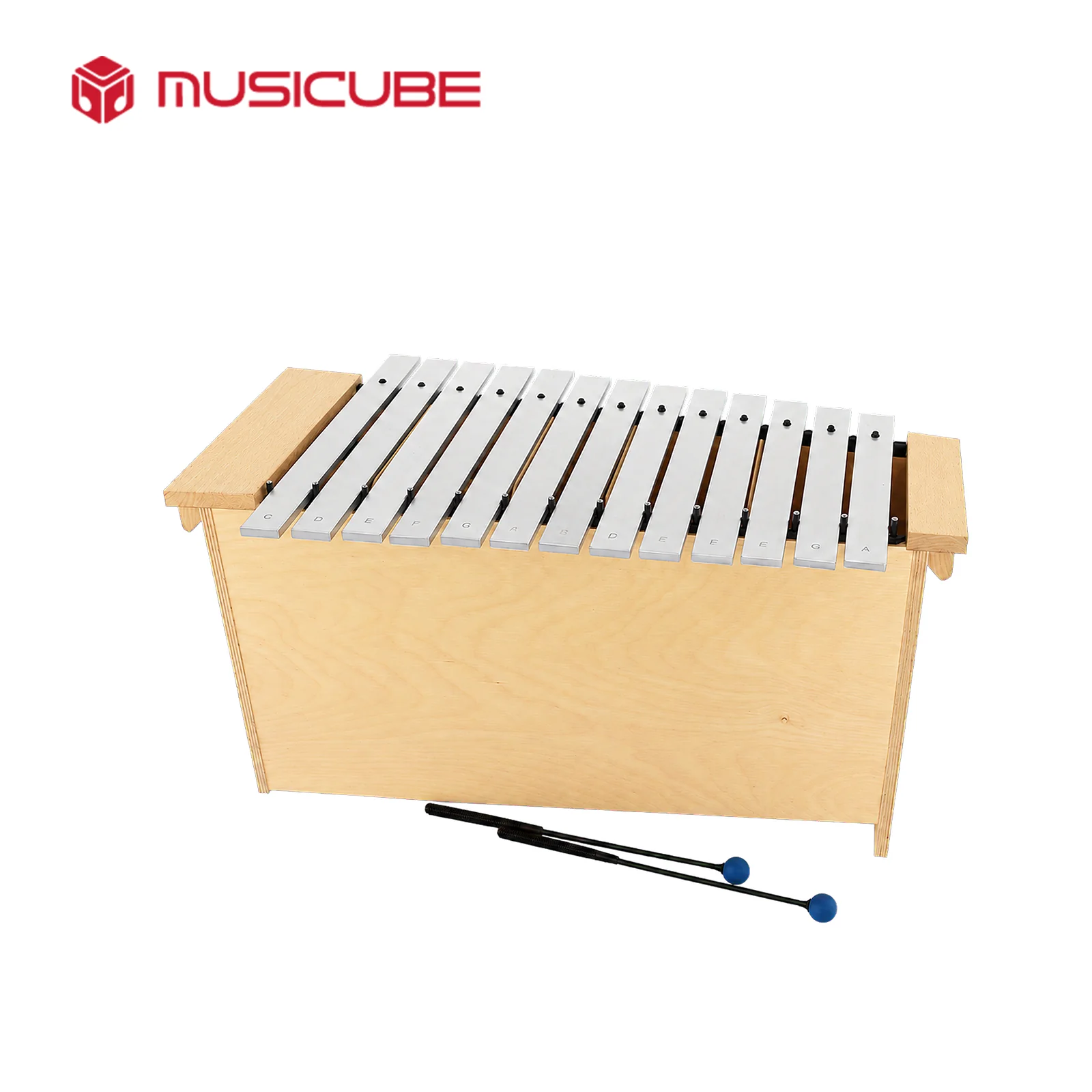 Bass Xylophone – 13 Diatonic BarsC3–A4 · mixed bar profiles · 051307
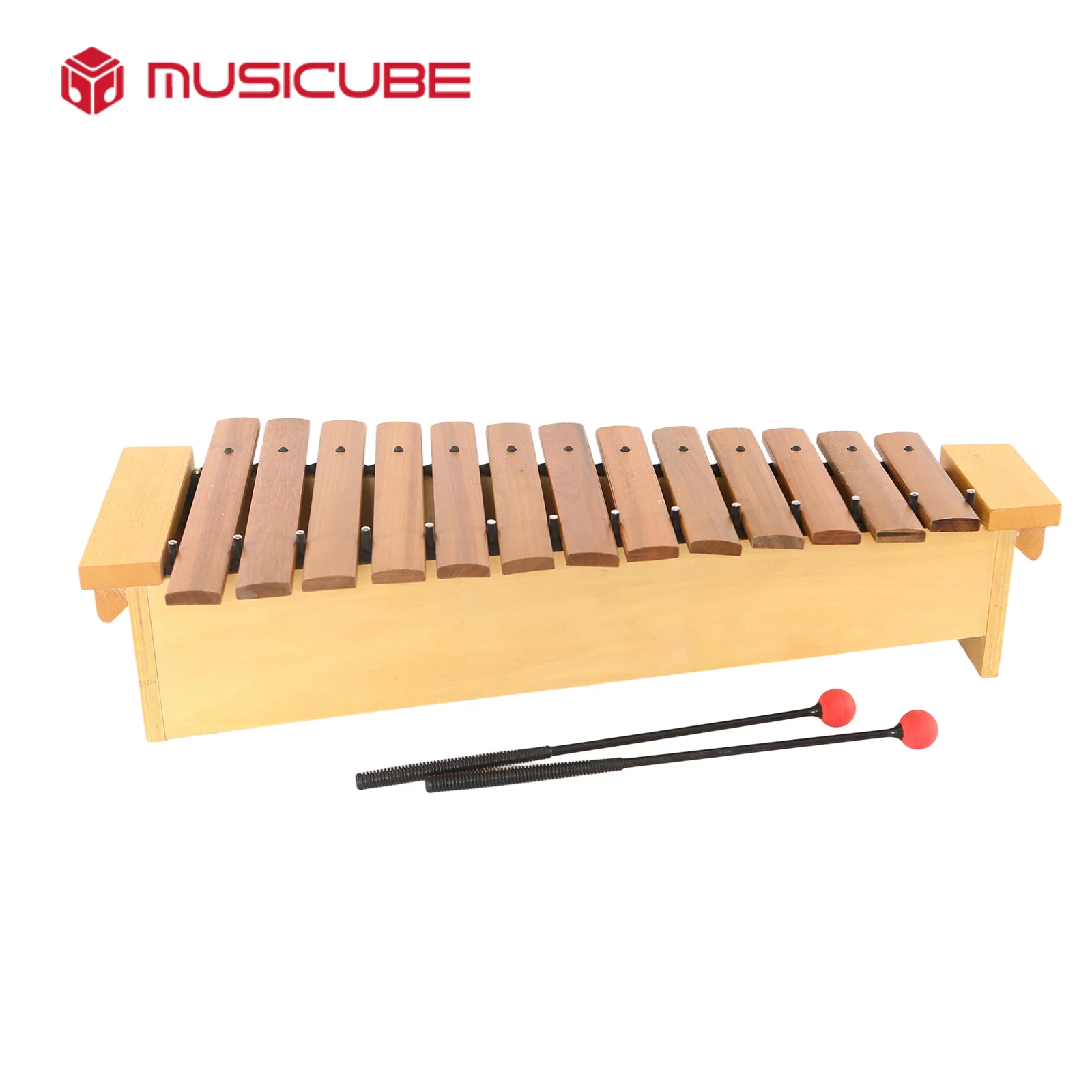 Soprano Xylophone – 13 Diatonic BarsC5–A6 · rosewood-tone bars · 051305
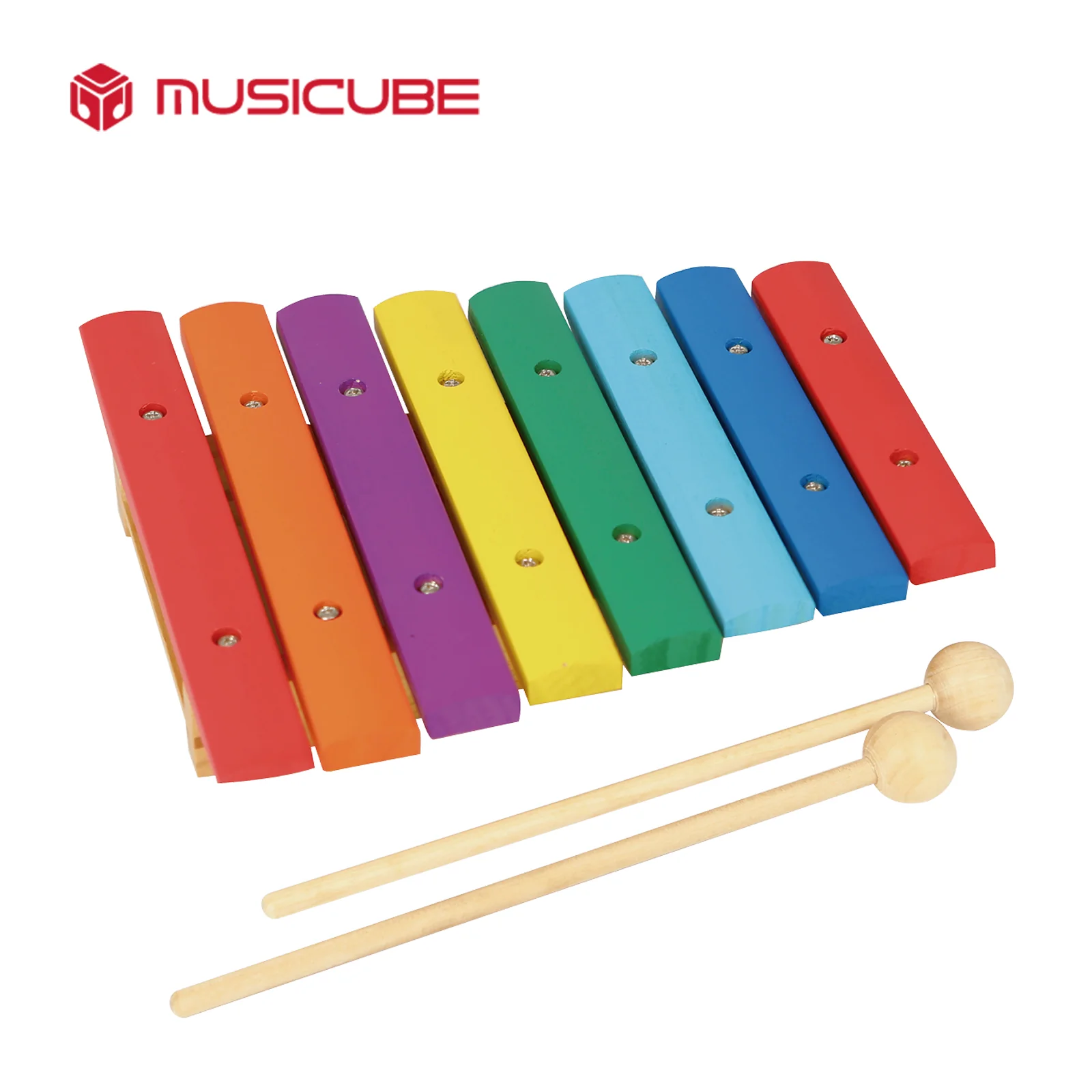 8 Tones Xylophone – Colored Wood BarsC6–C7 · beechwood · 050825
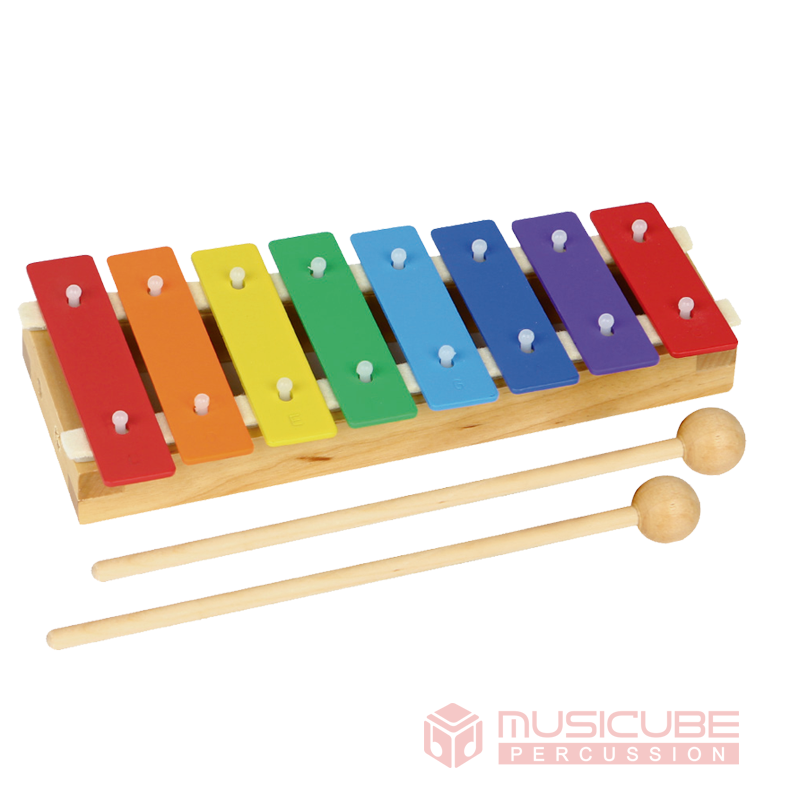 8-Note Wooden Xylophone for KidsAges 3+ · steel bars · 050802
Ready to Build Your Xylophone Programme?
Tell us the soprano / alto / bass split, the quantities and the destination; that is all a first barred-instrument quotation needs.
For checks that sit outside the instrument specification, the 7-point factory audit checklist covers the reports, inspection gates and contract terms to request from any supplier.
The age-3+ end of the catalogue moves as new bodies are added to the line; our note on the expanded wooden xylophone range records which models joined it and what changed in the finish and packaging.