


By the Royalsound factory team — kids musical instrument manufacturer since 2003 · Updated October 2026
A kids musical instruments wholesale supplier is easy to find and hard to audit. Every catalogue looks the same; what differs is who owns the line that builds your order, who signs the sample, and what happens when the third container arrives with a finish drift. This guide is written for the buyer running that audit across ten instrument categories from one factory — percussion, Orff instruments, recorders, steel tongue drums, ukuleles, guitars, pianos, accordions, harmonicas and melodicas — with the terms, gates and price levers that decide whether the program holds past the first order.
What the ten-category range covers
A kids musical instruments wholesale program is really ten small businesses sharing one factory, each with its own tooling, tuning standard and packaging logic. Treat the catalogue as one undifferentiated list and your sample approvals stall. Here is the range as it currently ships:
| Category | What ships | Representative SKUs | Typical buyer |
|---|---|---|---|
| Percussion | Tambourines 6–10″ (poplar and beech plywood), hand drums 6–12″, egg shakers, maracas, rhythm sets 4–39 pieces with storage | 010601/010801/011001; 030602–031002; 200214; 204067 | Preschools, classroom programs, gift retail |
| Xylophones (Orff) | 8-tone glockenspiels (basswood, pinewood, beechwood); 13-bar soprano/alto/bass xylophones and metallophones; chromatic glockenspiels 25/27 bars in cases; resonator bars; hand chimes | 050802/050803; 765/768/772; 745/750; 731; 740 | Music schools, Orff programs, specialist retail |
| Recorder | Pearwood school recorders, ABS-head beginner recorders, all-plastic sopranos, slide flutes, whistles | 150113/150114; 150126/150127; 150202/150203 | School tenders, lesson programs |
| Steel tongue drum | 6″ 11-tone, 8″ 11-tone, 12″ 13-tone and 14″ 15-tone hand-tuned drums, 4–5 colourways | 210602–210605; 210801–210804; 211210–211213; 211401–211405 | Music shops, wellness and gift channels |
| Ukulele | 21″ sopranos in basswood, mahogany neck and water-transfer patterns, with or without cloth bags | 182108/182109/182114/182102; 182112; 182126/182127 | Gift retail, school starter programs |
| Guitar | Beginner 21″–40″, 36″ travel and classical, folk acoustics with gig bags, electric starter pack with 10W amp | 182120; 183001–183005; 183601; 183921 | Music schools, retail guitar programs |
| Kids piano | Mechanical 18/25/30-key uprights and grands with stools; 25-key digital; 88-key hammer-action | 091807–093741; 092525–092530; 098801 | Gift programs, lesson channels, premium retail |
| Kids accordion | 10-button first accordion (14 tones, 2 basses); 17-key junior (8 bass) | 160101–160104; 160201–160205 | Toy retail, music shops |
| Harmonica | 10-hole 20-tone kids models in plastic or stainless casings; diatonic blues; titanium professional | 151001–151006; 151010; 151014/151015 | Gift retail, music shops |
| Melodica | 32-key and 37-key ABS melodicas, soft bag or hard case | 153201–153204; 153701–153704 | Lesson programs, school bands |
Each category keeps its own page with the full model list: the percussion, xylophone, recorder, steel tongue drum, ukulele, guitar, kids piano, kids accordion, harmonica and melodica ranges. The rest of this guide covers what catalogue pages cannot: how to audit the supplier behind them.
How to audit a kids musical instruments wholesale supplier
Every supplier claims factory-direct pricing. The difference between a manufacturer and a reseller shows up in five places, and all five fit in one email:
- The licence. Ask for the business licence showing manufacturing scope. A factory sends it; a trader sends a price list.
- The line. Ask which production line runs your model, who performs the final tuning check, and who signs the sample against the bulk run. A factory answers with a line and a name; a reseller changes the subject.
- The price ladder. A factory quotes unit price by quantity tier — trial quantity and year-one quantity side by side. A trader quotes one number and hopes you do not ask for 500.
- The sample source. Samples should come off the production line, not a showroom hand-build. Ask where your sample will be built, and whether its cost is credited against the bulk order. Get the answer in writing.
- The current run. Ask which colourways actually ship this quarter. A factory knows its run; a reseller forwards a catalogue from two seasons ago.
We are the manufacturer. The 20,000 m² factory in Huai’an, Jiangsu has built children’s instruments since 2003 and runs the full chain from material intake to export cartons, across all ten categories above. The documented QC process on our quality page is the same one we run for Musicube, our own retail brand selling in the US market, so retail feedback goes straight back into production.
The sample gate: what the 10–15 days actually cover
The sample window is not a black box, and it is the gate that protects the bulk run. Here is what runs inside it:
- Finish run. Your colour is mixed and applied to a body from the same line that will run your bulk order.
- Branding and accessories. The logo goes on by the agreed method, and the accessories — keyboard stickers, song sheets, cleaning kits — are proofed for sign-off before any print run starts.
- Sample QC. The sample is tone-checked and key-checked against the written spec before it is packed for you. Tuned instruments do not ship on a promise.
You approve one physical sample, and that sample becomes the reference for the bulk run. This is why the sample matters more than the quotation. Keep the approved sample on your side — it is what your quality team checks future batches against, and it is what makes a reorder faster than the first order. A failed sample costs days; a failed container costs a season.
What moves your unit price
Four levers move the unit price on any program in this catalogue. None of them are secrets, but all of them belong in the quote:
- Quantity tier. Unit price steps down as the order grows. Ask for your trial quantity and your year-one quantity priced side by side; the gap tells you how the factory prices growth, and it is the number a trader cannot show you.
- Colour count. Each Pantone match is a separate finish run; standard finishes avoid it. Put the colour count in the quote conversation, not the sample conversation.
- Packaging. Brown export carton is the base. Full-colour retail boxes and gift boxes are quoted from volume, and your retail customer sees the box before the instrument.
- Print runs. Every language version of a songbook or manual is its own print run. Lock the song list before bulk starts, not during.
One format-specific exception: the smallest packed items — 8-tone glockenspiels and xylophones, 36 pieces to a carton — carry a 500-pc MOQ rather than 200, because the packing line runs full cartons. Ask what the unit price includes line by line: mallets and song sheets ship in the box on the melodic ranges, cleaning kit and bag on the recorder range. Freight, duties and market documentation sit outside the unit price.
The timeline, from enquiry to container
| Day 0 | Brief: category and model, quantity, target market, packaging preference, brand status |
| Days 1–15 | Pre-production sample off the production line, against the written spec |
| Approval | You test the sample against the spec. This is the gate; once bulk starts, changes cost a new sample and a new timeline |
| Bulk | 25–45 days after deposit receipt, on the same line that built your sample |
| Shipping | FOB Qingdao / Shanghai / Ningbo; DDP quoted for EU and US destinations |
| Payment | T/T 30% deposit, 70% against B/L copy |
Two things stay off the first quote on purpose: carton quantity and container loading, which depend on your model mix, and market-specific paperwork, which depends on your destination. Both get confirmed in writing before production starts.
Category notes: what to verify per range
Buying across ten categories means ten different verification questions. These are the ones that decide whether an order lands clean:
Orff and melodic instruments
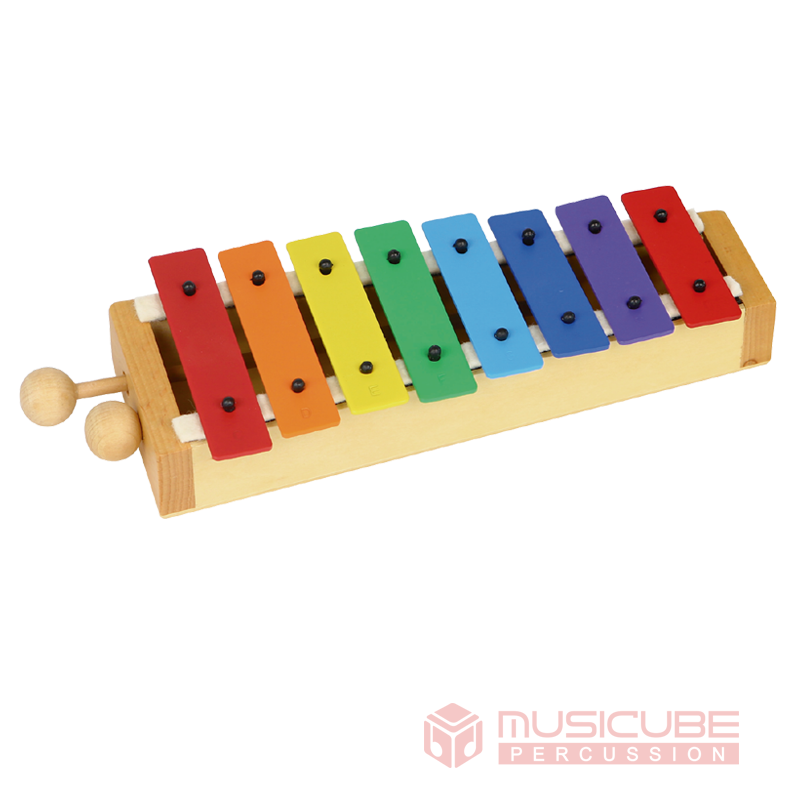
The 8-tone glockenspiels are the volume entry: special steel bars, 20 × 2 mm, tuned to C-major from C6 to C7, note letters carved into the keys, two mallets and a colour-coded song sheet in the box. Ask how the pitch check runs before packing, and whether the 13-bar soprano, alto and bass bodies share one tuning standard across the set — a classroom order fails if the family does not match.
Percussion and sets
Verify the shell grade (poplar plywood on the kids line, beech on the high-grade line), the jingle count per tambourine size (four on the 6-inch, six on the 8-inch, eight on the 10-inch), and the exact piece count on sets — 9-piece rhythm sets through 16, 17, 31 and 39-piece classroom sets with totes, wall bags or a cart. A set that arrives one piece short is a classroom that cannot run its lesson.
Strings
The 21″ ukulele and the beginner guitar range share a 345 mm scale, so a child moves from four strings to six without relearning the instrument — useful if your program sells both. Verify fret count (12 on the ukulele, 15 on the 21″ guitar, 19 on the larger bodies) and what ships in the box: picks, cables, padded bags and gig bags differ by model and belong in the quote.
Winds and keyboards
On recorders, confirm the fingering system — German with single holes or Baroque with double holes — because schools mix both in one classroom order and the body, range and accessories are otherwise identical. On the digital piano range, the spec points are key width (22 mm pro keys on the 25-key models), polyphony (128 notes on the 88-key hammer-action) and body finish. Documentation for every category follows the rule below, not a certificate list.
Documentation: state your market first
Where applicable, product testing and compliance documentation are reviewed according to the target market and agreed product requirements. Tell us where the instruments are going and we confirm in writing what applies to your order before production starts. On the piano line the FSC® chain-of-custody certificate for the MDF travels with the shipment paperwork. If your retail customer will ask for reports matched to the model, raise it before you sign the purchase order, not after the container sails.
One warning about how this category is marketed: certification claims travel between supplier websites without paperwork behind them. Ask for the certificate or the test report, with a number and a date. If it cannot be produced, treat the claim as marketing copy.
Private label and ODM across the range
OEM and ODM here is not a sticker exercise. What can carry your brand: the instrument itself through imprint, laser engraving or in-mold branding; the accessories (mallets, song sheets, cleaning kits, picks, bags); the packaging (brown export carton, full-colour retail box or gift box with your barcode and warning panels); Pantone-matched finishes; and the paperwork — manuals and songbooks in the languages your market requires.
ODM projects start from a market gap, not a spec sheet: bring a price point, an age group or a hole in your range, and our design office engineers the product, tunes it and hands you exclusivity through contract. Sample cost is credited against the bulk order. The full OEM/ODM service page covers what each track includes.
Mistakes that cost wholesale buyers time
These are the mistakes we see most often from buyers running their first multi-category order. None of them are about the instrument:
- Approving a sample without testing it. Play every key, check the tuning, compare the finish against the Pantone reference before you sign.
- Leaving the target market until the end. It determines what documentation applies, and paperwork cannot be retrofitted onto a sailing container.
- Mixing categories without a carton plan. Mixed containers need a packing scheme agreed before bulk starts: which items share a carton, how retail boxes are labelled, how the loading is arranged. Repacking a sealed container is the expensive kind of mistake.
- Ordering print before the content is final. Song lists, manuals and sticker colour maps go to print inside the 25–45 day window, and print is the long pole.
- Sending raster artwork for the lid. Vector files, fonts outlined, Pantone numbers — every time.
How to start an order
Put five things in your first email and you will get a usable quote back the same day: category and model, quantity, target market, packaging preference, and whether you need your own brand. Anything less and the quote is a guess.
- Send the model mix, quantities and target market. That is enough for a first quote.
- Approve a pre-production sample against the written spec.
- Confirm packaging and artwork if you are going private label.
- Bulk production starts at deposit and runs 25–45 days.
Request a quote with your quantities and we reply with pricing, MOQ and lead time within 24 hours.
First-order assortment and what a comparable quote must state
Most first-order delays are not production delays. They begin with an enquiry that names a category but no model mix, no target market and no packing assumption, and with a quotation that cannot be placed beside another supplier’s without guessing what is included. These are the minimum fields to send on the first email, and the lines a usable quotation has to put in writing.
Fields to send in a request for quotation
- Model mix and quantity per SKU. This drives MOQ, carton data and whether tooling is needed at all. “A container of kids instruments” is not yet an assortment.
- Target market and age grade. EN 71, ASTM F963 and CE reports, and the 3+, 4+ and 6+ marks, are issued per model rather than per catalogue, so the market decides which documents belong in the file.
- Packaging and private label scope. Retail-ready carton, custom print, logo, songbook or stickers each carry their own minimum and their own artwork deadline.
- Incoterm and destination port. FOB, CIF and DDP do not describe the same unit price, and a comparison between them is not a comparison.
- Target price per unit and expected annual volume. With those two numbers we can propose an alternative model, finish or carton instead of simply declining the target.
- Sample route and approval date. The approval date, not the enquiry date, is the real starting point for the production lead time.
- Delivery schedule. One shipment or split lots, and any deadline tied to a retail or school calendar.
Lines every quote should itemise
| Line | Why it belongs in writing |
|---|---|
| Unit price basis: currency, per SKU, Incoterm and validity period | Without a validity date and a stated term, a number is an indication rather than a quote. |
| MOQ per SKU, and separately for custom packaging and private label | Mixed first orders are usually constrained by the printed carton, not by the instrument. |
| Tooling, artwork plates and sample charges | State whether each is a one-off cost or amortised into the unit cost. |
| Carton quantity, dimensions, gross weight and container loading | Landed cost per unit cannot be calculated until these are known. |
| Certification and test report per model | Ask for the report tied to the exact SKU and its age grade, not a logo on a company profile. |
| Lead time stated from deposit and from sample approval | These are two different start points and a frequent source of a missed season. |
| Payment terms and the trigger that releases production | Defines what has to happen before a line is booked. |
To compare supplier quotes, normalise them first: the same Incoterm, the same packaging scope, the same test-report scope and the same sample stage. A unit price that omits carton data or per-model reports is not cheaper; it is an incomplete quote whose missing costs arrive later as a revised proforma invoice. Asking for these seven lines takes one email and removes most of the conversations about why the price changed.
Assortment by sales channel
- Online retail and Amazon FBA. Fewer SKUs, retail-ready cartons, barcode and drop-test data, and a compact footprint that keeps the dimensional weight sensible. The best-selling models in a first order are usually the ones that ship and store most easily, not the widest range.
- Promotional and gift channel. One hero model, custom packaging MOQ settled early, and a fixed artwork date tied to the campaign rather than to production.
- School and class sets. One specification across the whole cohort, spares, hygiene packing, and the compliance grade stated per SKU. Our school recorder guide shows how a class-set assortment is specified.
The same fields apply whether the first order is a mixed ten-category container or a single private label line. Use the 7-point factory checklist while you are still shortlisting, the OEM and ODM program guide for the private label scope itself, and the OEM vs ODM decision guide to settle the boundary before artwork is commissioned. Once the mix is fixed, send it through our quote form with the fields above; a complete RFQ is the fastest route to a price that holds.
Quick Answers
Are you a kids musical instruments wholesale manufacturer or a trading company?
How do I verify you own the production line?
What MOQ applies to kids musical instruments wholesale orders?
How long do samples and bulk production take?
Is the sample cost credited against the bulk order?
What moves the unit price on a wholesale order?
Can I mix categories in one container?
What documentation ships with the order?
Explore Our Instruments
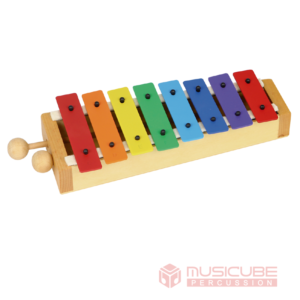 8 Tones Colored Glockenspiel – Basswood Body8 steel bars · C6–C7 · 050803
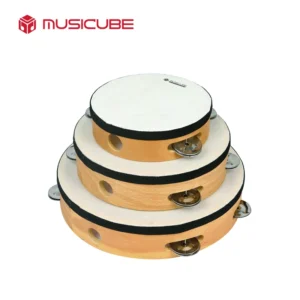 High-Grade Tambourine – 6″ Beech Plywood6/8/10″ sizes · 55 mm frame · 010601
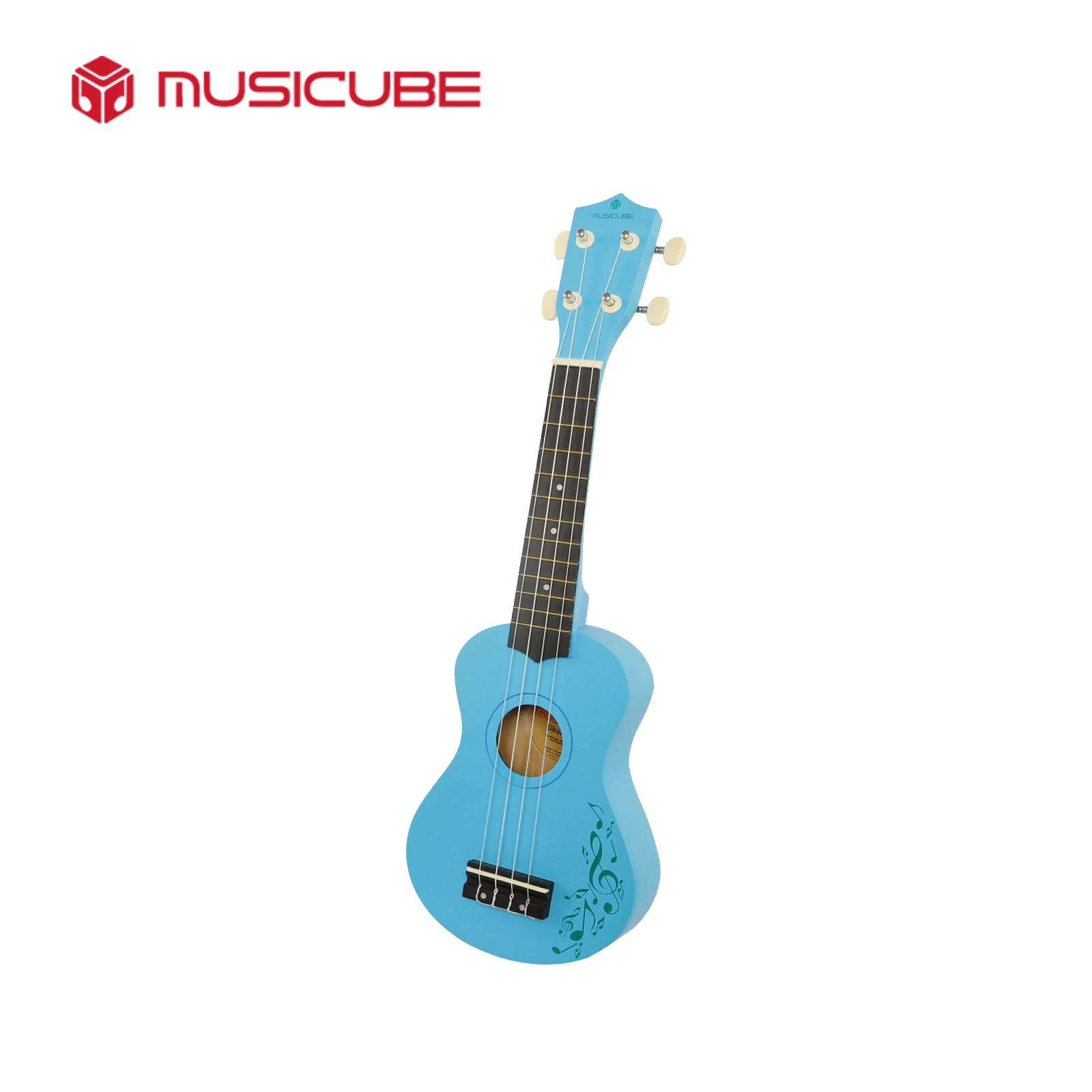 21″ Ukulele – Basswood, 4 Colors12 frets · 345 mm scale · 182109
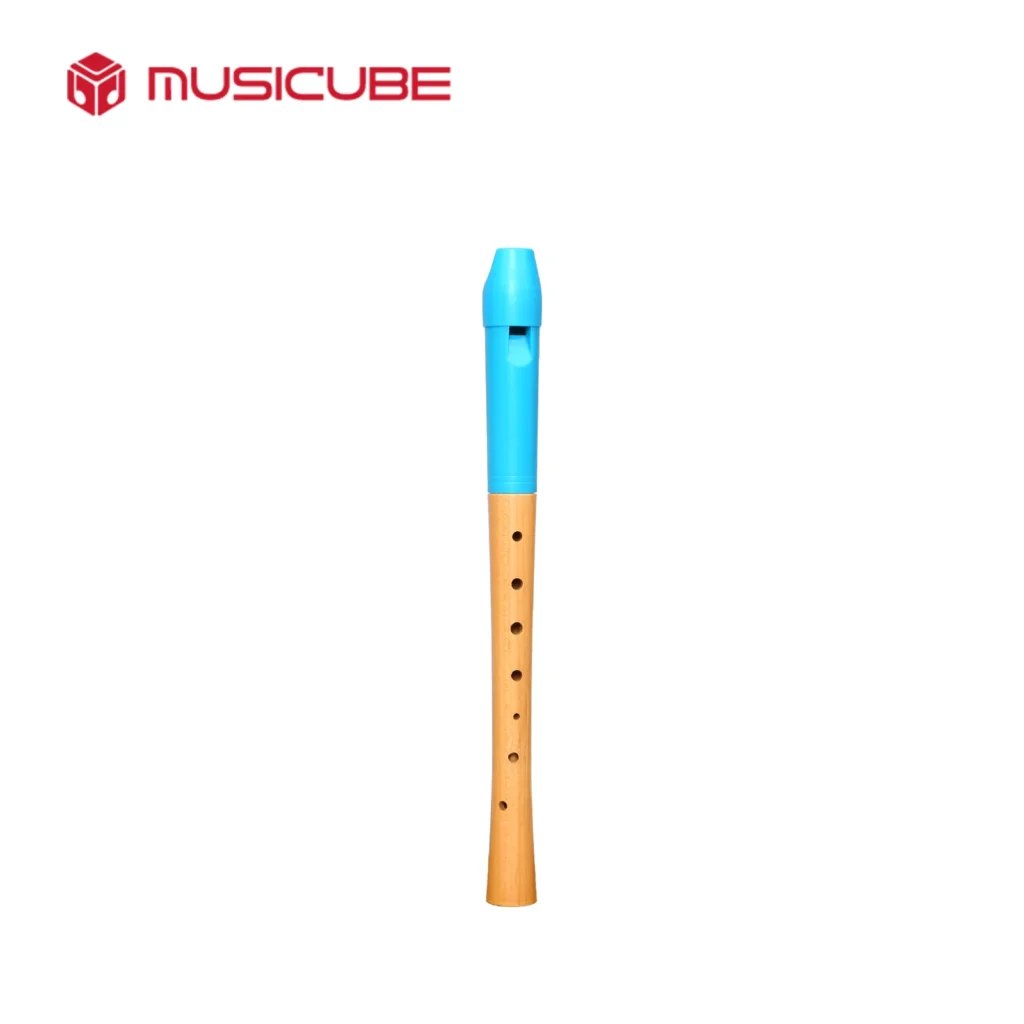 Recorder for Beginners – Pearwood & ABS HeadC5–C6 · German fingering · 150126
Ready to Price Your Kids Instruments Order?
Send your model mix, quantities and target market — we reply with pricing, MOQ and lead time within 24 hours.