

By the Royalsound factory team — kids musical instrument manufacturer since 2003 · Updated October 2026
Searching for a kids digital piano manufacturer usually means three questions at once: who actually builds the instrument, who can supply it at wholesale prices, and who will put your brand on it. This guide answers all three from the factory side, with the product data, terms and timelines a serious buyer should ask for before placing an order.
What counts as a kids digital piano
“Digital” in this category means an electronic tone engine with built-in speakers. No strings, no tuning maintenance, nothing to adjust when the humidity changes. What separates a real kids digital piano from a toy is the keyboard: professional-width 22 mm keys that match a child’s finger spacing, versus the narrow, clacky keys on gift-shop toys. Everything else follows from that choice.
Key counts map to sales channels, and buying the wrong one is the most common sourcing mistake we see:
| Keys | Typical buyer | Notes from the production floor |
|---|---|---|
| 18 keys | Entry price points, nursery retail | Compact upright bodies; a first instrument, not a learning tool |
| 25 keys | Nursery retail volume, gift programs | Two full octaves (C4–C6) — real songs, not beeps; the category’s workhorse |
| 30 keys | Step-up and grand-body buyers | Usually sold with a stool; grand shapes photograph better on shelf |
| 88 keys | Advancing players, lesson programs | Hammer action, pedal unit and bench — a different line and price band |
Age grading matters for your listing copy. The 18- and 25-key bodies are built and labelled for age 3+, which covers nursery retail and classroom programs. The 88-key hammer-action model is a 6+ instrument for advancing players, and that is where the ticket size lives. If your channel sells to schools, the 3+ range is your volume; if it sells to music teachers and parents of older children, the 88-key line carries the margin. Teachers buying for shared classroom use ask for the 3+ range because it survives shared use; gift programs ask for the grand body because it photographs.
The 25 key kids digital piano is where the volume is
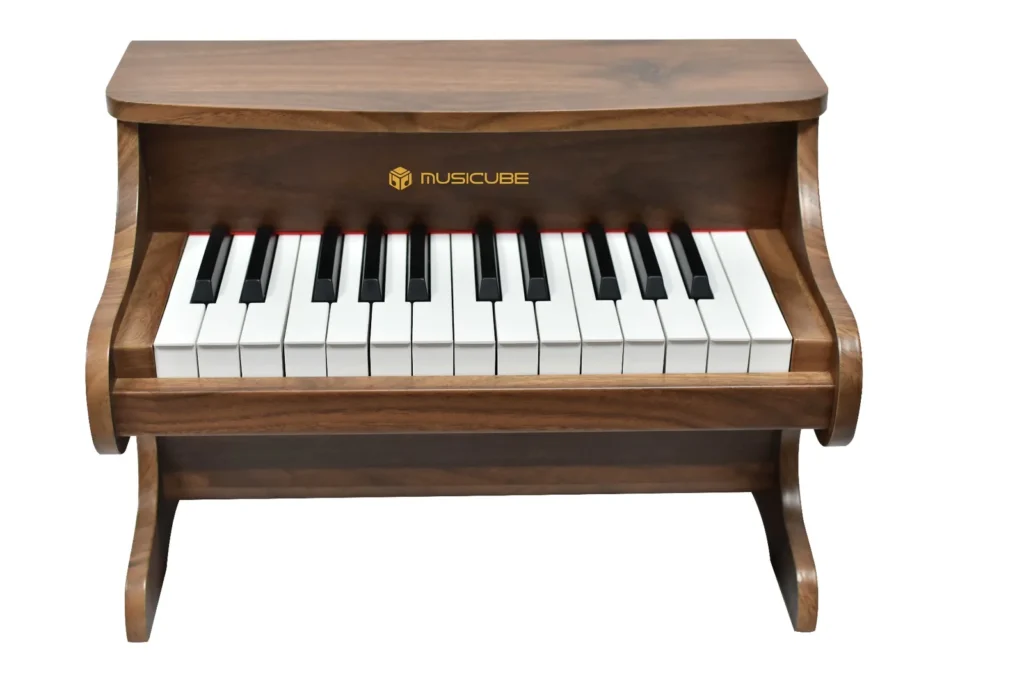
If you are stocking one kids digital piano, stock the 25-key. Two full chromatic octaves (C4 to C6) mean a child can play actual songs from day one, the 425 mm body fits nursery shelves and gift cartons, and the 22 mm key width builds correct finger spacing instead of fighting it.
The spec sheet our wholesale buyers work from:
| Keys | 25 chromatic keys, C4 to C6 (two full octaves), 22 mm professional width |
| Material | FSC® certified MDF wood construction |
| Finish | Melamine film wood surfaces — walnut, red oak and solid colour options |
| Size | Approx. 425 × 240 × 295 mm (L × W × H) |
| Included | Keyboard stickers and an illustrated songbook (English lyrics) |
| Packaging | Brown box for the upright; gift colour box for the grand body with hinged lid |
| Age range | 3+ years |
| Lead time | 25–45 days after deposit |
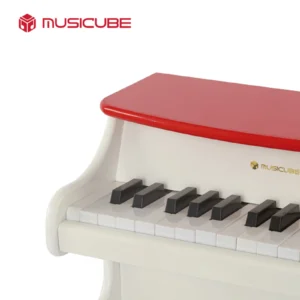
The line runs six finishes across two bodies: the compact upright in walnut (092525), black (092526), red (092512) and red oak (092529), plus the grand body with hinged lid in red oak (092530). Same keys, same tone platform, same songbook. The colour is the only thing your customer chooses.
Upright or grand? The upright wins on shelf density and carton cost. The grand wins on presence — it photographs like a real instrument and anchors a gift display. Most programs start with the upright and add the grand for the premium end of the range.
How to tell a real kids digital piano manufacturer from a reseller
Every kids digital piano supplier claims factory-direct pricing. The difference between a kids digital piano manufacturer and a reseller shows up in four places, and you can test all of them on the first email:
- Price ladder. A factory quotes unit price by quantity tier. A trader quotes one number and hopes you don’t ask for 500.
- Line access. Ask which production line runs your model and who performs the final tone check. The factory answers with a line and a name; a reseller changes the subject.
- Sample control. Samples should come off the same line as bulk production, not from a showroom hand-build. Ask where your sample will be built.
- Catalogue freshness. Ask which colourways actually ship this quarter. A factory knows its current finish schedule; a reseller forwards a catalogue from two seasons ago.
- Paperwork. Ask for the business licence showing manufacturing scope and a video walkthrough of the line that will run your order. A factory sends both; a reseller sends a price list.
We are the manufacturer. The 20,000 m² factory in Huai’an, Jiangsu runs the line, tunes the units and packs the cartons. We also build our own consumer brand, Musicube, which sells on the US retail market, so retail feedback — the colour that sells, the songbook that gets used, the key action that survives a classroom — goes straight back into production. The full kids piano range runs from 18 keys to 88-key hammer action. None of the four tests above costs you anything to run, and all of them fit in one email.
Kids piano wholesale terms that belong on your quote
These are the terms we publish, and they are the terms you should demand from any supplier:
| MOQ | 200 pcs on standard models |
| Samples | 7-15 days for a pre-production sample |
| Bulk lead time | 25–45 days after deposit receipt |
| Shipping | FOB Qingdao / Shanghai / Ningbo; DDP quoted for EU and US destinations |
| Payment | T/T 30% deposit, 70% against B/L copy |
A unit price means nothing without the tier next to it. Ask for the price at your trial quantity and at the quantity you actually expect to reach in year one — the gap between the two tells you how the factory prices growth. Also confirm what the unit price includes: on this line the keyboard stickers and the illustrated songbook ship in the box, and packaging is the brown box unless you specify otherwise. Freight, duties and any documentation work sit outside the unit price.
Two things deliberately do not appear on a first quote: carton quantity and container loading, which depend on your final mix of models, and market-specific documentation, which depends on your destination. Both get confirmed in writing before production starts. If a supplier hands you a fixed container loading before knowing your order, they are guessing.
Every quote we send states five things: MOQ, unit price by quantity tier, lead time and its starting point, Incoterms and port, and payment terms. If any of the five is missing, what you received is not a quote.
Quality gates for electronic kids pianos
Electronics fail differently than wood. The gates that matter: incoming inspection on MDF stock and electronic components, in-line checks during assembly, and a pre-shipment inspection against your approved sample with photo and video reports before packing. Every unit gets a tone and key check — a dead key or a buzzing speaker is a return, not a discount.
Ask which AQL the factory inspects to, and whether you receive the inspection report before the cartons are sealed rather than after the container sails. A factory that inspects to a stated AQL and shares the report is a factory that expects the reorder. The documented QC process is the same one we run for our own retail brand. If a batch fails the gate, it does not ship — the deposit timeline has room to rebuild, and the standard does not move.
Cartons, containers and what lands at your warehouse
Packaging is a commercial decision, not an afterthought. It shows up in your landed cost, your shelf presentation and your return rate:
- The upright ships in a brown box; the grand body ships in the gift colour box with the hinged lid protected.
- Carton quantity depends on your final mix. A container of 25-key uprights and a mixed container of 18/25/30-key models load differently, and the loading plan is confirmed on your quotation.
- Export cartons are drop-tested as part of packing. A piano that arrives with a cracked lid is a piano you will replace.
- Each model’s retail box carries its own model label and barcode, so mixed shipments can be received at your warehouse without unpacking everything.
- Shipping terms: FOB Qingdao / Shanghai / Ningbo as standard, with DDP quoted for EU and US destinations.
Documentation: state your market first
Where applicable, product testing and compliance documentation are reviewed according to the target market and agreed product requirements. Tell us where the pianos are going and we will confirm in writing what applies to your order before it ships. The MDF on this line is FSC® certified, and the certificate travels with the shipment paperwork. Get that confirmation in writing before production starts — a verbal assurance does not survive a customs delay. For a deeper factory-audit checklist, read our 7-point guide to choosing a kids piano manufacturer.
How to start an order
Put five things in your first email and you will get a usable quote back the same day: key count, quantity, target market, packaging preference, and whether you need your own brand. Anything less and the quote is a guess.
- Tell us the key count, finish and target market. That is enough for a first quote.
- Approve a pre-production sample against the written spec.
- Confirm packaging and artwork if you are going private label — see our OEM/ODM service page.
- Bulk production starts at deposit and runs 25–45 days.
Request a quote with your quantities and we reply with pricing, MOQ and lead time within 24 hours.
Quick Answers
What MOQ should I expect on kids piano wholesale orders?
How long does sampling and bulk production take?
Can I sell the 25-key model under my own brand?
Which key count should I stock first?
Can I mix key counts in one order?
Is the 25-key model a digital piano or a toy keyboard?
What documentation ships with the order?
Explore Our Instruments
 25 Keys Kids Digital Piano – Walnut22 mm pro keys · C4–C6 · 092525
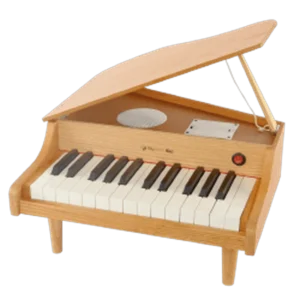 25 Keys Kids Grand Digital Piano – Red OakGrand body · hinged lid · 092530
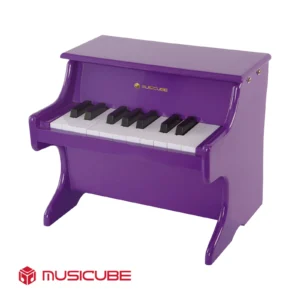 18 Keys Kids Piano – Purple18 keys · C4–F5 · 091807
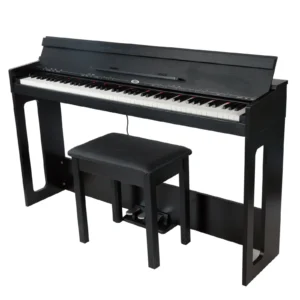 88 Keys Digital Piano – Hammer Action88 keys · 128 polyphony · 098801
Ready to Price Your First Order?
Send your key count, quantities and target market — we reply with pricing, MOQ and lead time within 24 hours.