


By the Royalsound factory team — kids musical instrument manufacturer since 2003 · Updated October 2026
Most piano factories will print your logo and call it OEM. A real kids piano OEM program covers more than the logo — the colour, the box, the songbook, the stickers — and this is what each of those choices does to your timeline and your price.
Kids piano OEM or ODM: pick the right lane
The two words get used interchangeably. They shouldn’t be:
| OEM | ODM | |
|---|---|---|
| What you bring | Your brand and artwork | Your specification — key count, body, functions |
| What we build | Our proven platform models in your dress | A model developed to your spec |
| Sample timeline | 10–15 days | Scoped per project — longer, and it shows |
| Best for | First private label order, retail programs | Established brands with a defined product gap |
Start with OEM unless you already hold a specification. Most buyers searching for a kids piano OEM partner are really choosing between these two lanes, and the choice sets everything that follows: timeline, price structure, and how much of the development risk sits with you. A kids piano ODM project pays off when you know exactly what you want and why the market needs it. Otherwise you are paying to learn on our production line. Our OEM/ODM page lists what each track includes, and the difference in risk is bigger than the difference in price. If you are not sure which lane you are in, send the specification and we will tell you.
What a private label program actually covers
- Logo. Silkscreen on the lid, a metal badge, or laser marking, applied at the factory, not stickered in a warehouse. Placement matters as much as the mark: lid centre panel and fallboard are the positions customers photograph.
- Colours. Standard finishes ship as they are; volume orders can match your Pantone on the same body. Each custom colour is a separate finish run, so the colour count belongs in the quote conversation, not the sample conversation.
- Packaging. The brown box takes a full-colour sleeve, and the grand body ships in a gift colour box; full-colour gift boxes are quoted from volume. Your retail customer sees the box before the instrument — budget for it accordingly.
- Songbook. Your brand on the cover and your song selection inside, including non-English lyric versions. Each language is its own print run.
- Stickers and labels. Keyboard stickers in your key-colour system, plus manual, barcode and age-grading label under your brand.
Everything on that list happens in our factory, which is the point. A program assembled by three subcontractors fails in three places at once. It also means one point of contact: the engineer who signs off your sample is the engineer who signs off your bulk run.
What happens during the sample window
The 10–15 day sample window is not a black box. Here is what runs inside it:
- Finish run. Your colour is mixed and applied to a body from the same line that will run your bulk order.
- Branding. The logo is applied by the agreed method (silkscreen, badge or laser), and you receive photos of the placement before approval.
- Songbook proof. A proof of your cover and first pages goes out for sign-off; the print run only starts after you approve it.
- Sample QC. The sample is tone-checked and key-checked against the written spec before it is packed for you.
You approve one physical sample, and that sample becomes the reference for the bulk run. This is why the sample matters more than the quotation. Ask any supplier whether the sample cost is credited against the bulk order, and get the answer in writing.
Why the 25-key is the private label entry model
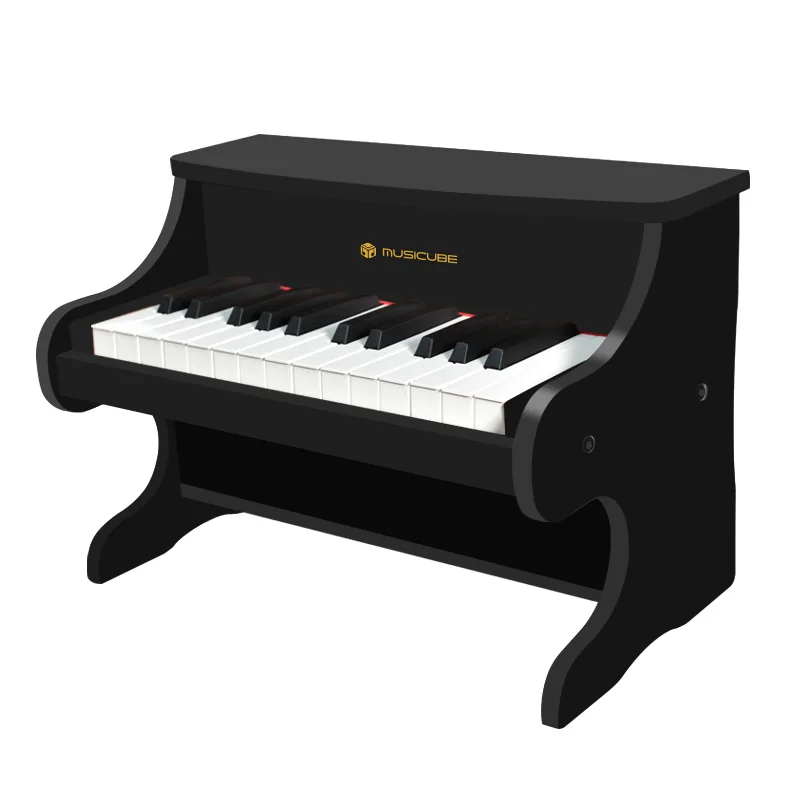
Two full octaves (C4 to C6) on 22 mm professional-width keys, in a 425 mm body that fits a gift carton. It is complete enough to teach real songs and priced to move in nursery retail. Six finishes across two bodies, the compact upright and the grand with hinged lid, give your program a range on one platform, so your first private label order does not need a new development cycle. Full specs are on the 25-key product page.
The same program scales up the ladder: 18-key uprights for entry price points, 30-key grand bodies for shelf presence, and the 88-key hammer-action model for advancing players. Ordering a wholesale kids digital piano under your own brand starts with the sample, not the artwork. Validate the instrument first, then dress it. One supplier, one QC system, one set of paperwork for the whole range.
Private label buyers also pick the 25-key because the accessory set is stable: keyboard stickers and an illustrated songbook ship in the box, so your branded version replaces two printed items rather than redesigning the kit. Fewer moving parts, fewer approvals, fewer ways for a first order to slip. It is also the size most private label buyers photograph first. The walnut and red oak finishes read premium on a shelf, while black and red cover the classic toy-aisle palettes.
The timeline, start to finish
| Day 0 | Brief: quantity, target market, key count, artwork status |
| Days 1–15 | Pre-production sample carrying your logo, packaging and songbook |
| Approval | You test the sample against the written spec. This is the gate that protects the bulk run |
| Bulk | 25–45 days after deposit, on the same line as your sample |
| Shipping | FOB Qingdao / Shanghai / Ningbo; DDP quoted for EU and US destinations |
What we need from you, and when: target market at quote stage, logo artwork and Pantone references before sampling, final song list before the songbook goes to print. Late artwork is the number one reason private label orders slip. Everything upstream of printing can wait, and printing cannot.
Approval is a gate, not a formality. Play every key, check both speakers, and compare the finish against your Pantone reference before you sign. Once bulk production starts, changes cost a new sample and a new timeline. Keep the approved sample on your side too. It is the reference your quality team will check future batches against.
Packing a mixed program
Retail programs rarely order one key count. A mixed container (18-key uprights for the entry shelf, 25-key for the volume, a grand body for the display) loads differently than a single-model container, and it needs a plan before bulk starts:
- Which models share a carton, and how many units per carton.
- How each retail box is labelled and barcoded, so your warehouse can receive without opening every carton.
- How the container loading is arranged, confirmed in writing on your quotation.
Agree the scheme at approval stage. Repacking a sealed container is the expensive kind of mistake, and it is entirely avoidable.
Artwork specs that avoid reprints
Print is where private label programs bleed money. Not because printing is expensive, but because reprints are. Most reprint costs come from four fixable mistakes:
- Logo files. Send vector artwork (AI, EPS or SVG) with fonts outlined. A JPEG pulled off a website is the most common cause of a blurry lid.
- Colour references. Pantone numbers, not “the red from our website”. Screens lie; Pantone prints.
- Placement. Confirm where the logo goes (lid centre panel, fallboard, back panel, packaging) before the sample is built. Moving it afterwards means a new sample.
- Song list. The songbook goes to print inside the 25–45 day window, and the song list is the long pole. Lock it before bulk starts, not during.
Keyboard stickers follow the same rule: they only work as a pair with the songbook, so the sticker colour map and the song selection should arrive together and go to print together.
What moves the price
Four levers move the unit price on a private label program. None of them are secrets, but all of them belong in the quote:
- Quantity tier: unit price steps down as the order grows.
- Colour count: each Pantone match is a separate finish run; standard finishes avoid it.
- Packaging: brown box plus sleeve is the base; gift boxes cost more.
- Songbook languages: every language version is its own print run.
Ask for the price at your trial quantity and at your year-one quantity side by side. The gap between them tells you how the factory prices growth, and it is the number a trader cannot show you. For the product data and wholesale terms behind every program on this page, see our kids digital piano manufacturer guide.
Documentation under your brand
Where applicable, product testing and compliance documentation are reviewed according to the target market and agreed product requirements. State your destination market and we confirm in writing what applies to your order. The MDF on this line is FSC® certified. If your retail customer will ask for reports matched to the model, raise it before you sign the purchase order, not after the container sails. The same applies in reverse: if your market carries no requirement we have not already seen, we will say so rather than sell you paperwork you do not need.
Mistakes that cost private label buyers time
These are the mistakes we see most often from buyers running their first private label program. None of them are about the instrument:
- Approving a sample without playing it. Test every key and both speakers first.
- Leaving the target market until the end. It determines what documentation applies.
- Mixing key counts without a carton plan. Mixed models need a packing scheme agreed in advance: which models share a carton, how the retail boxes are labelled, how many units per carton. Repacking a sealed container is the expensive kind of mistake.
- Ordering the songbook before the song list is final.
- Sending raster artwork for the lid. Vector, outlined, Pantone-referenced — every time.
Quick Answers
What is the minimum order for private label kids pianos?
How long does a private label order take?
Can you develop a piano to our own specification?
Can the songbook and stickers carry our brand and language?
What documentation ships under our brand?
How do reorders work after the first order?
Can I mix key counts in one order?
What happens if the sample fails inspection?
Explore Our Instruments
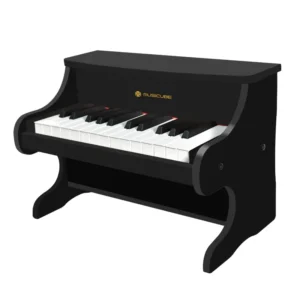 25 Keys Kids Digital Piano – Black22 mm pro keys · C4–C6 · 092526
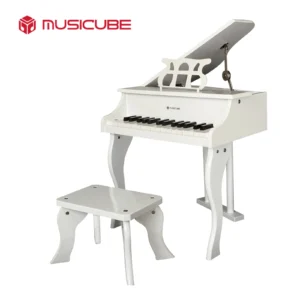 30 Keys Kids Grand Piano – WhiteGrand body · stool incl. · 093003
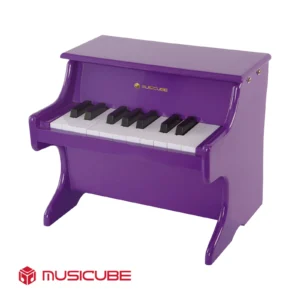 18 Keys Kids Piano – Purple18 keys · C4–F5 · 091807
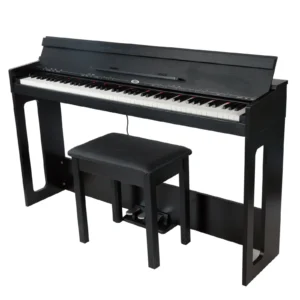 88 Keys Digital Piano – Hammer Action88 keys · 128 polyphony · 098801
Ready to Build Your Piano Line?
Send your quantities, target market and customization needs — quotation within 24 hours.