


By the Royalsound factory team — an Orff instrument manufacturer in Huai’an, Jiangsu since 2003 · Updated October 2026
We are an Orff instrument manufacturer, and this page is the short version of what that means commercially: four families — xylophones, metallophones, glockenspiels and classroom percussion — built on one shared barred platform at our plant in Huai’an, Jiangsu. Standard models start at 200 pcs per model, pre-production samples take 10–15 days on the line that will run your order, and bulk production runs 25–45 days after deposit. Sets are configured to your school list or catalogue spec rather than picked from a fixed assortment, and the OEM programme covers logo, colour, packaging and mixed-set combinations. Below is what the line covers, how we put a set together, what the OEM terms include, and what we need from you to come back with a costed quotation in 24 hours.
What our Orff instrument line covers
Buyers come to an Orff instrument manufacturer for one of three things: a complete classroom set, a single barred voice to fill a gap in an existing range, or a private-label programme built around their own catalogue. We quote all three from the same production line, and the reason we can is that the barred instruments share one platform.
The plant has run since 2003 and covers 20,000 m² in Huai’an. We supply importers, wholesalers, school-supply distributors and music brands, and we run our own Musicube brand into US retail — so the same line has to satisfy both a wholesale margin and a consumer return rate.
What we do not do is buy finished instruments and relabel them. Bar drying, bar cutting, tuning, resonator box assembly, metal-bar work, finishing and packing all happen on site, which is what lets us hold a colour match or a tuning standard across a repeat order two years later.
Four families, one barred platform
Xylophones — hardwood bars
Soprano (051305), alto (051306) and bass (051307) run one 13-bar diatonic layout, C5–A6 on the soprano, with chromatic add-ons reaching a 16-bar arrangement. Short dry attack, so thirty children playing at once still hear separate notes. Same bar spacing and the same replacement parts across the three sizes, which is the point: a school that buys a soprano this year and a bass next year is still running one instrument system.
Metallophones — aluminium bars
Soprano (051301), alto (051302) and bass (051303) sit on the same box system with a longer ring and a brighter tone. This is the voice that makes a chord sound like a chord rather than three separate notes. Metal is cut and tuned on separate equipment from wood, in the same building.
Glockenspiels — steel bars
From 8-tone preschool bodies (050811, 3+) through 11-tone kinder models (051102) and the 13-bar alto (051304, C5–A6, 4+), up to chromatic instruments: 23 red bars (052302), 25 coloured bars in a carry case (052501) and 27 black-and-white bars (052701). An 8-tone glockenspiel and a 27-bar chromatic glockenspiel are different products at very different price points, and both get called “a glockenspiel” in a catalogue.
Classroom percussion — the unpitched half
Hand drums, tambourines, triangles, guiros, castanets, jingle sticks, maracas. In a class of thirty, roughly ten children are on barred instruments; the other twenty need something that holds a beat without needing pitch. We build these as kits rather than loose items, because the storage problem differs in every room: 200401 with a storage box, 200402 combining drums and xylophone, 200403 on a wall-hanging canvas organiser, 200407 as a drum-led rhythm set.
The two barred voices follow the same platform and differ only in bar material and box depth. If you are weighing one against the other, the hardwood xylophone page covers grain, tuning and cartridge loading, and the aluminium metallophone page covers alloy, anodizing and the three-voice split.
What we make in our own plant
An Orff instrument manufacturer is only as good as the operations it keeps in-house, so here is the list without adjectives.
Bar stock and drying. Hardwood is graded and dried before cutting; the grading decides whether a bar stays in tune after a term of use. We buy the stock, not the finished bar.
Cutting and tuning. Every bar is checked against a reference before packing, and we keep the tuning record for the batch. Ask for it on a repeat order and you can compare two years apart.
Resonator boxes. Made on site, matched to bar length. This is the operation most trading offices outsource entirely, and it is the one that decides whether the instrument carries a room.
Metal bars. Cut and tuned here rather than bought in finished, which matters when a school asks for a spare alto bar in a finish from three seasons ago.
Finishing and printing. Note names and staff positions are printed in-house, so it is a production step rather than a special order.
Assembly, packing and spares. Instruments, beaters, stands and storage ship as one consignment where the destination allows it, and single spare bars can be finished in the current colour without waiting for a container.
How we configure a set for your market
An Orff set is a bundle, not a catalogue product, so we build it to your list: which voices, how many of each, which percussion kit, whether stands and storage travel with the instruments. Two schools in the same city routinely get different configurations because their rooms and class sizes differ.
The table below is what we include by default, and what gets dropped when a set is priced down to hit a number. If you are comparing our quotation against another, this is the list to compare line by line.
| Component | Our default set | What a stripped set drops | What it costs the school later |
|---|---|---|---|
| Pitched instruments | Soprano, alto and bass across at least two families | One size, one family | No bass line, no contrast between wooden and metal voices |
| Chromatic add-on bars | Fitted or boxed with the set | “Available on request” | Nothing outside C, G or F major can be played |
| Beaters | Two per instrument, head matched to bar material | One generic beater each | Hard heads dent aluminium bars; soft heads give no attack on hardwood |
| Note names and staff printing | Printed on the bars | Blank bars | The teacher names every note for every child |
| Resonator boxes | Included, matched to bar length | Bars on a flat frame | Volume and sustain collapse |
| Stands | Included, or a separate line with a part number | Mentioned in prose, absent from the quote | Instruments get played on desks at the wrong height |
| Storage | Box, rack or wall organiser in the same shipment | None | Bars stack, frames chip, replacement orders start in year two |
| Spare bars | Two or three common sizes per set | None | One cracked bar takes a whole instrument out of service |
If you would rather size the set from a classroom count than from a catalogue list, the arithmetic is in our guide to sizing Orff instruments for schools room by room; we will run the same calculation with you on a call.
The 16-bar platform and chromatic add-ons
A diatonic instrument has the white notes only, deliberately: a child can play in C, G or F major without a wrong note. The limitation arrives the first time a class needs F# or Bb. Our 13-bar instruments take three add-on bars to reach the full 16-bar layout.
Two details are worth agreeing before the order: whether the add-ons ship fitted or boxed separately, and whether they sit in the set price or on a separate line. Both are normal here; only one is what you budgeted for.
Add-on bars have to fit the existing bar bed and match the existing finish, which means they come off the same jig that cut the original bars. On a repeat order for a set bought two seasons ago we still hold the tooling, so the fourth bar matches the first three.
OEM, ODM and private label
Most of our volume is not our brand. The programme runs in four steps, and most buyers take them in order: your logo on the instrument, the box and the manual, from the same 200 pcs per model; custom bar and frame colours, matched on a physical sample rather than a screen; a set combination that is yours alone, packed as one SKU with one barcode; and structural change — new bar counts, frames or kit layouts — scoped per project with tooling and sampling quoted separately.
What each step does to the tuning, the tooling, the carton and the compliance file is set out in what each Orff instrument OEM and ODM change costs you, which is also where the artwork package a project needs is listed.
Samples for any of the four are built on the line that will run the bulk order, and the sample cost is credited against it. That is deliberate: a sample built in a separate sample room tells you what the sample room can do.
MOQ, samples, lead time and container loading
Standard models start at 200 pcs, counted per model rather than per set. Custom colours or packaging generally hold that MOQ; structural changes are quoted per project. A mixed set does not raise the MOQ — it splits the 200 across the models you choose, and the arithmetic of that split is in how a wholesale Orff order is built.
Pre-production samples take 10–15 days. Bulk production runs 25–45 days after deposit, depending on the mix and the finishing work. Add transit and clearance for your destination; sets with stands and storage ship in more cartons and clear a little slower than instruments alone.
Freight is where a good quotation turns into a bad landed cost, so we quote it properly. Volume is not proportional to unit count: a bass xylophone and a soprano glockenspiel are similar in price and far apart in cubic metres, so a bass-weighted set can fill two-thirds of a container on under half the units. We supply cubic metres per model and nested carton dimensions rather than an average, and we say so when a mix is loading badly.
Inspection and certification
Three checks decide whether a set survives its second school year, and all three happen before packing.
Bar tuning. Checked against a reference per batch, with the record kept. Ask how many bars are sampled and we will tell you the number.
Box joints and finish. Resonator boxes take the most abuse in transit and in storage, so the corner joints are inspected on the finished unit, not the face.
Beater matching. The beaters packed with each instrument are checked against the bar material specified for that model, because mixed-up beaters are the most common cause of dented metallophone bars and they are packed by hand.
On documentation: EN71 for the EU, CPSIA and ASTM F963 for the US, GB 6675 for China, and ISO 9001 for the plant. Reports are issued per model, because a set spans four families and one report cannot cover them all. We send the list by model number with the quotation so your compliance file closes before the tender does.
What we need from you to quote
Five things, and we can usually turn a quotation around inside 24 hours.
The configuration. Voices and quantities, or the classroom count and class size if you would rather we propose the mix.
The destination market. It decides the certification set, the language on the packaging and often the carton marking. It is the single most common reason a first quotation has to be redone.
Whether it is your brand or ours. Private label changes the artwork timeline and the MOQ conversation.
The quantity and the delivery window. If the window is tight, say so at the start — a 25–45 day run plus transit does not fit every season, and we would rather say that in the first email than the fourth.
Any spec you already have. If you are holding a quotation from another supplier, send it. We will price against the same list and mark the lines where we differ, which is faster than starting from a blank page.
How to start
Send the five items above through the quote form and you will get a costed quotation with carton volumes, MOQ position and lead time. If you are at an earlier stage and want to see the instruments first, ask for the catalogue and a sample plan — samples are built on the production line, so the timing you see is the timing you get.
The full range sits in our Orff instrument sets section, including the combination and private-label options. For voice range, bar material and tuning, the xylophone buyer’s guide goes deeper; if the unpitched half of the room is your open question, the classroom percussion set guide covers kit composition.
Quick Answers
What does an Orff instrument manufacturer actually make?
What is the MOQ for an Orff instrument set?
How long does a sample and a bulk order take?
Can you produce a set under our own brand?
Which certifications come with the instruments?
Explore Our Instruments
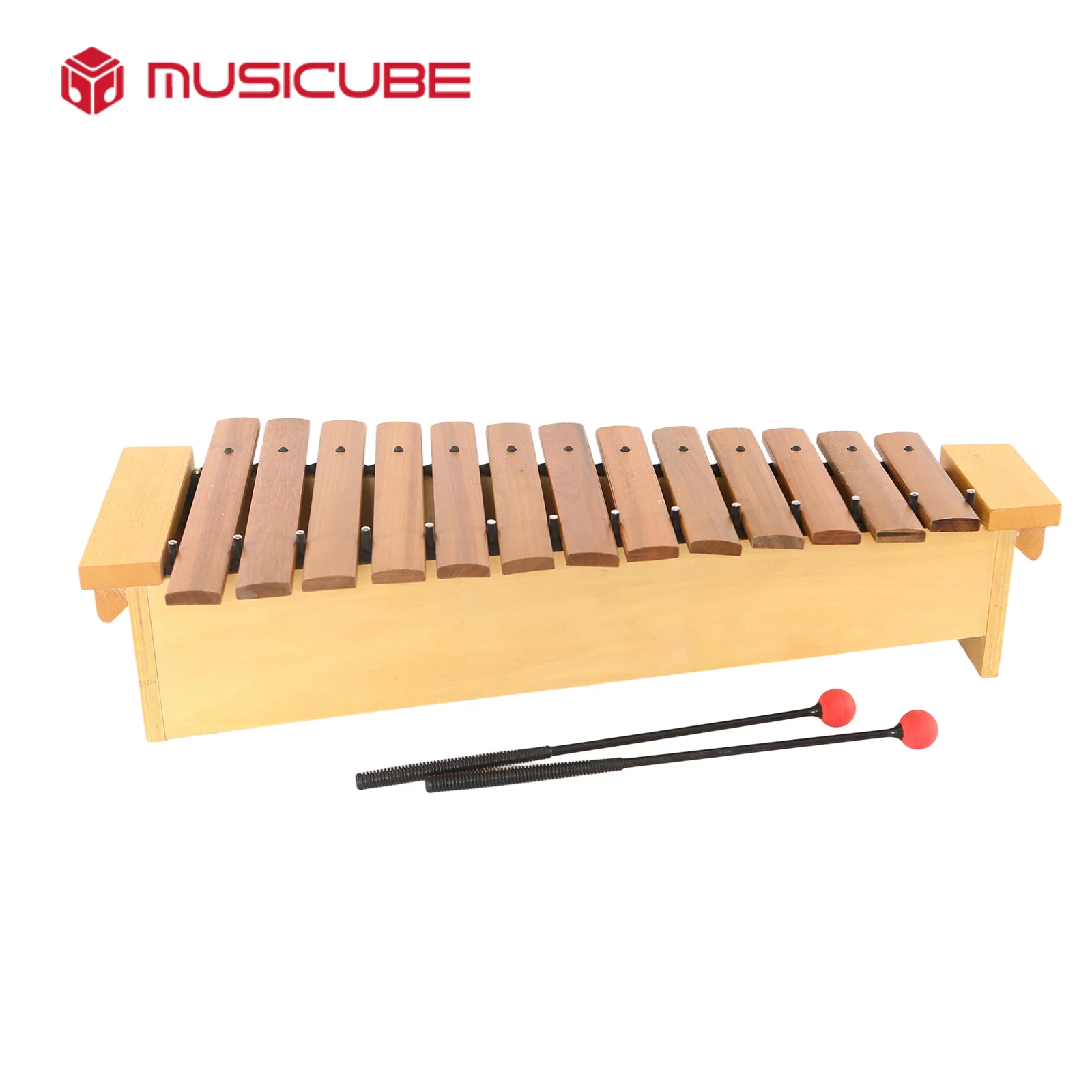 Soprano Xylophone – 13 Diatonic BarsC5–A6 · hardwood · 051305
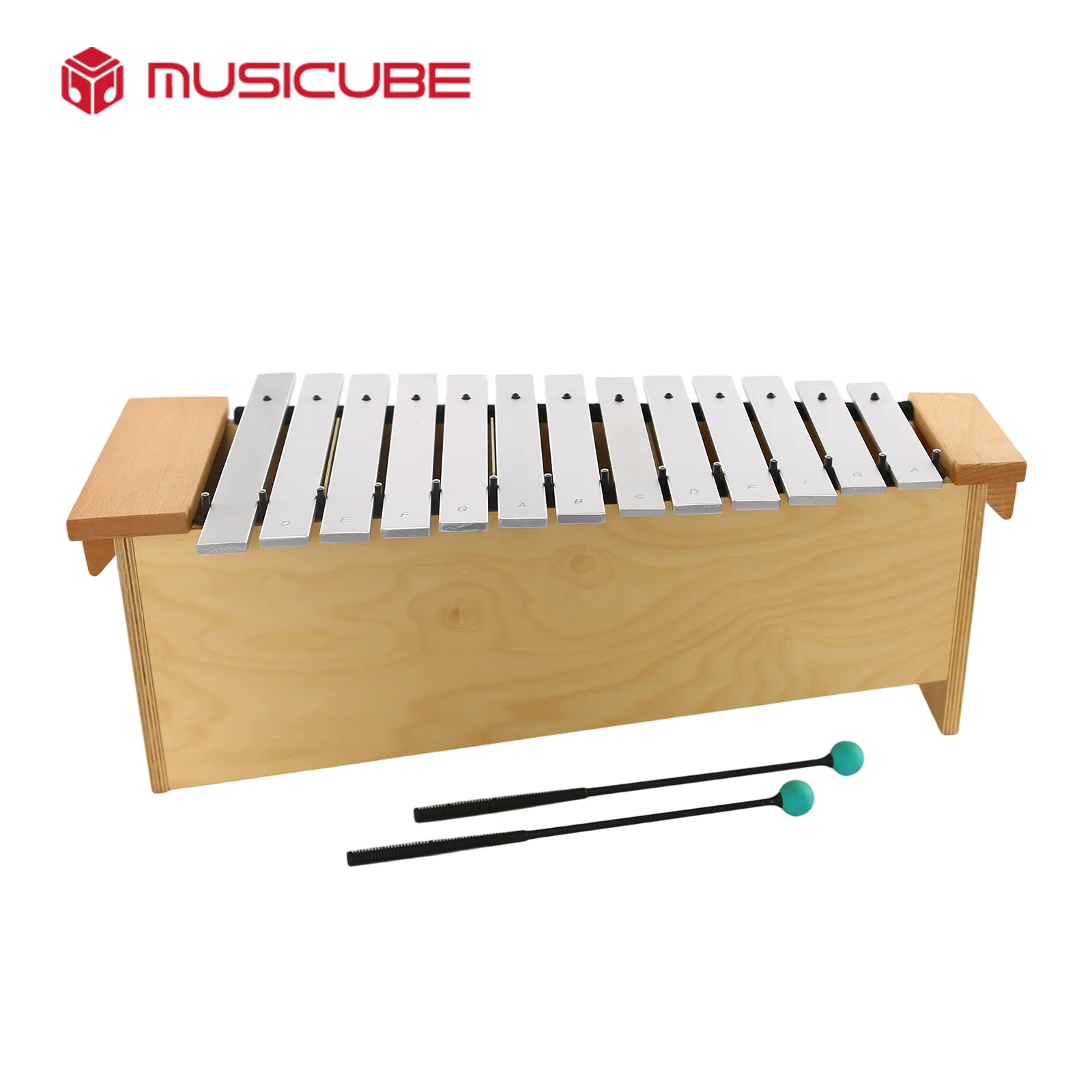 Alto Metallophone – 13 Diatonic BarsAluminium bars · resonator box · 051302
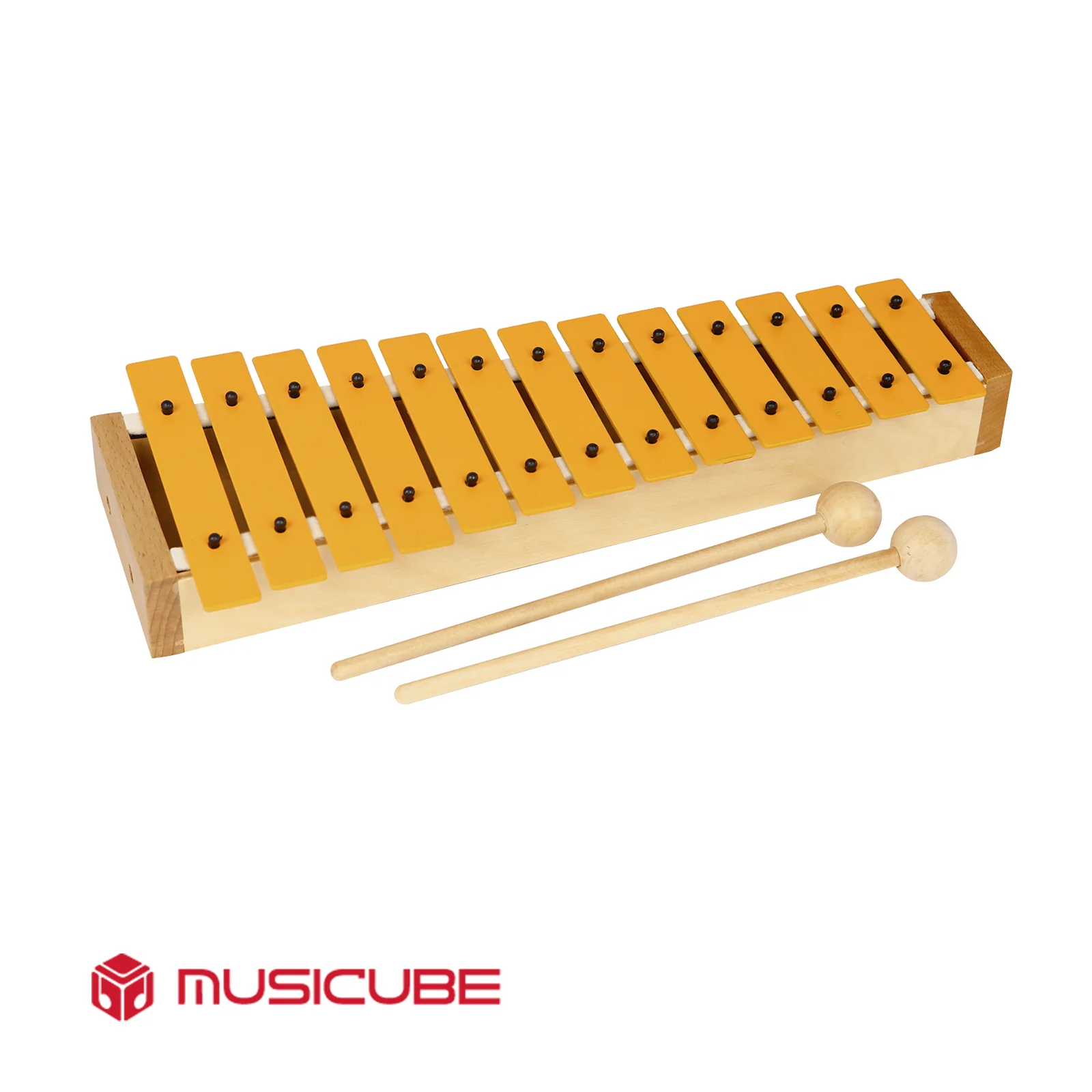 Alto Glockenspiel – 13 Yellow BarsC5–A6 · steel · 051304
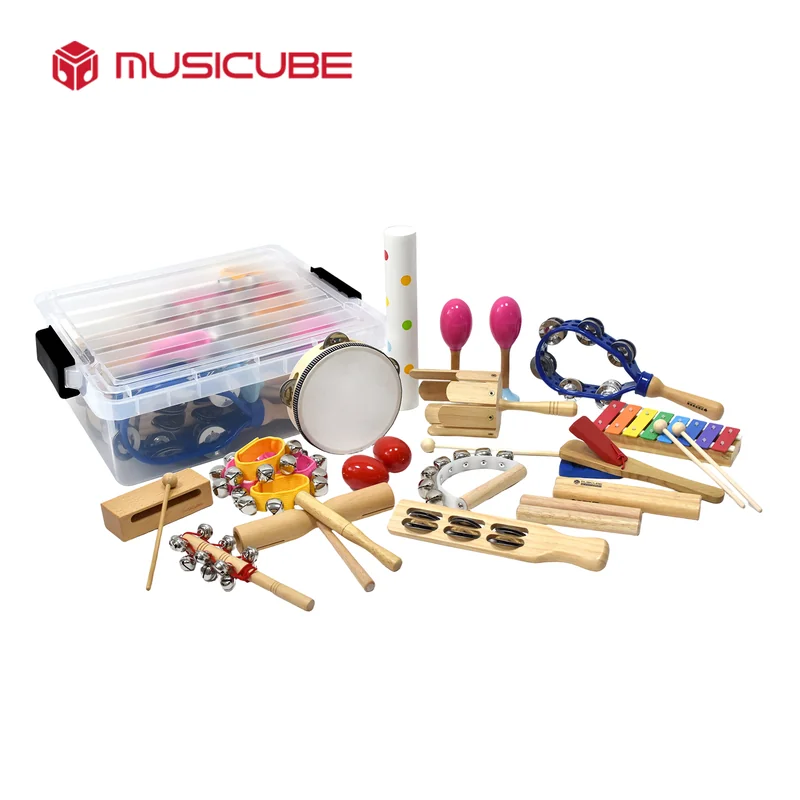 Classroom Percussion SetWith storage box · 200401
Request a Quotation
Send the configuration, destination market and quantity. We reply with a costed set list, carton volumes, MOQ position and lead time within 24 hours.