


By the Royalsound factory team — kids musical instrument manufacturer since 2003 · Updated October 2026
A kids piano bulk order is a different exercise from buying a sample. One sample tests an instrument; a bulk order commits you to a quantity, a carton plan, a payment schedule and a production slot. The difference between a clean order and an expensive one is decided before the deposit moves, in how the order is sized, composed and scheduled. This guide walks the bulk order itself: how to size the first one, what to lock before the clock starts, what the 25–45 day window actually contains, and why the second order runs faster than the first. We build the mechanical and digital kids piano ranges at our own 20,000 m² factory in Huai’an, Jiangsu and sell our own Musicube brand into US retail, so this is written from the side of the table that has to deliver the order.
What a first container order commits you to
Every bulk order passes four gates, and each gate protects against a specific failure. Skipping one does not remove the work; it moves the cost somewhere more expensive.
| Gate | What happens | What it protects against |
|---|---|---|
| Quote | A same-day price, MOQ and lead time, built from a complete brief | A guess priced as a number. The brief decides the quote, not the reverse |
| Sample | One pre-production unit in 10–15 days, built off the production line, cost credited against the bulk order | Approving an instrument you have never played |
| Deposit | 30% T/T, which books the production slot | Planning a launch around a window that was never reserved |
| Bulk | 25–45 days of production, on the same line that built your sample, to the agreed carton plan | A container that arrives wrong: mixed models, wrong packing, late |
The MOQ is 200 pcs on standard models. That is the floor of the system, not a recommendation. Below it, the setup costs of a finish run and a print run spread across too few units to price honestly. Custom colours or packaging usually keep the same MOQ; structural changes are scoped per project and confirmed on your quotation.
Sizing the first container
The most common sizing mistake is ordering on optimism instead of on a shelf plan. The order size should come from your sell-through math: how many units your channel can move in a season, how deep the reorder cycle runs, and how much warehouse space a 30-key grand actually eats. Then sanity-check it against the MOQ.
Ask any factory for the unit price at your trial quantity and at your year-one quantity, side by side. The gap between the two numbers tells you how the factory prices growth, and it is the number a trader cannot show you. Price steps down as the order grows; that ladder is the single most useful thing to extract at quote stage.
| First order | What it proves | What it risks |
|---|---|---|
| 200–400 pcs, one model | The line, the paperwork and the packing on a real shipment, at minimum exposure | Slow to read the market; one model rarely fits every shelf |
| 500–1,000 pcs, two or three models | A real program: entry, volume and display bodies together, one carton plan | Bigger write-off if one key count misses your channel |
| 2,000 pcs and up, full ladder | Year-one supply on one set of terms, with the reorder machinery already proven | Committed before sell-through is proven, so only after a trial order |
A sensible pattern for a first kids piano bulk order: one hero model at trial quantity, one adjacent model at lower quantity, everything else held for reorder. The hero validates the instrument; the adjacent model tests whether your channel wants a second price point. Both fit inside the MOQ without betting the season on either.
Composing the order across three bodies
The mechanical piano line shares one material and tuning standard across every body, which makes a mixed order a packing problem rather than an engineering one. Three shapes cover most programs:
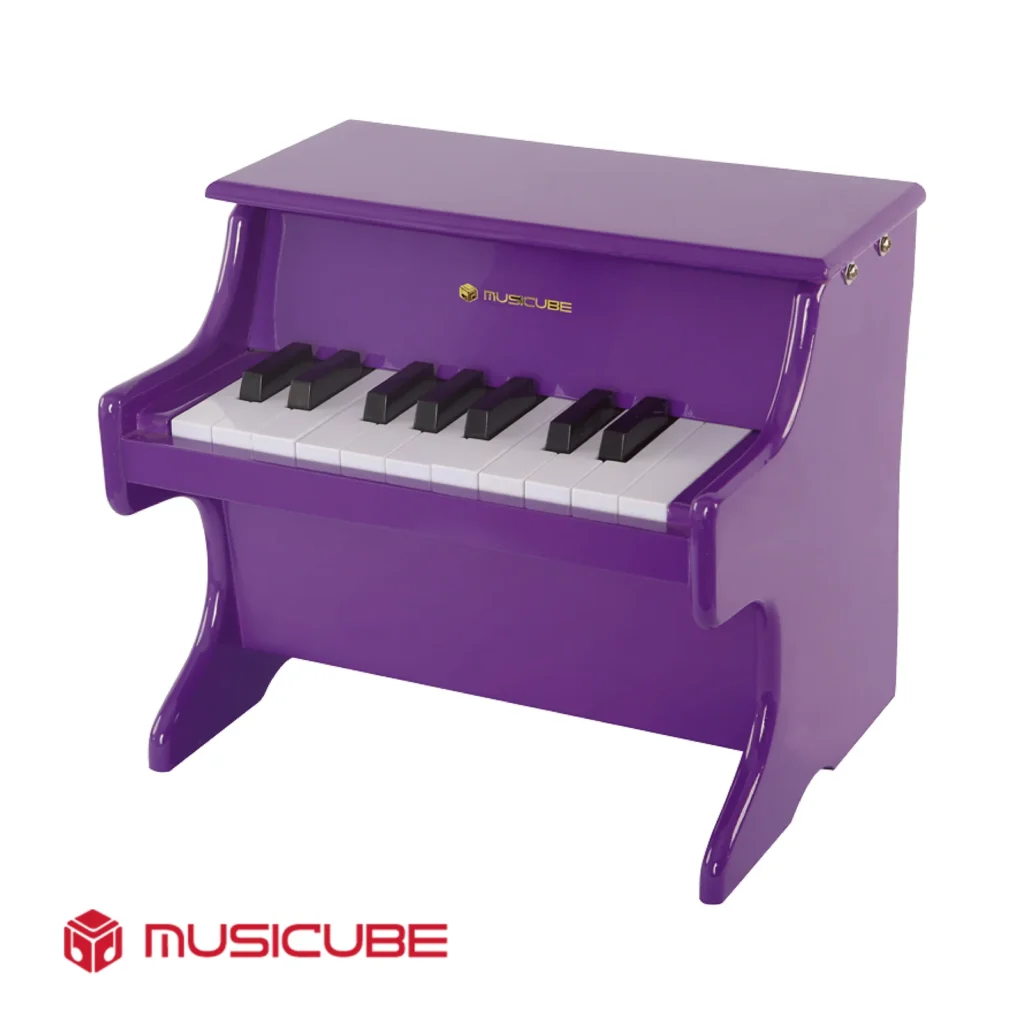
- The 18-key upright (091807). C4–F5, 325 mm wide, the entry price point and the easiest unit to ship.
- The 25-key upright (092502). Two full octaves C4–C6, the volume model, complete enough to teach real songs and compact enough for a gift carton.
- The 30-key grand (093002, 093003). C3–F5 with a matching stool, the display body that lifts a shelf.
The digital line sits alongside it: 25-key models on 22 mm professional-width keys, and the 88-key hammer-action instrument for advancing players. A digital unit adds electronics assembly and per-unit function checks to the same order, so it schedules slightly differently. See the kids digital piano manufacturer guide for that family model by model.
One number to carry into the carton conversation: instrument volume. The 18-key upright occupies roughly 0.024 m³ and the 30-key grand roughly 0.13 m³ — about five times the shipping volume for what the catalogue lists as one piano. Before cartons, dunnage and pallets. A mixed order weighted toward grands is a volume decision disguised as a model decision, and it belongs in the quote conversation, not the loading conversation.
What to lock before the clock starts
Late information is the number one reason bulk orders slip. Everything upstream of printing can wait; printing cannot. Seven items belong in the brief before the deposit, not after:
- Model mix and quantities, SKU-level, not “a mix of pianos”.
- Target market. It determines what documentation applies, and that answer needs to exist before production starts.
- Packaging preference: brown export box, sleeved box, or full-colour gift box quoted from volume.
- Brand requirement: whether the order ships plain or under your own label.
- Pantone references, if you are matching a colour. Each match is a separate finish run.
- Song list, if the songbook carries your selection. The songbook goes to print inside the bulk window.
- Carton scheme: which models share a carton, how retail boxes are labelled, how the container loads.
Send those seven and the quote comes back the same day with pricing, MOQ and lead time. Send four of them and the quote is a guess with a number attached.
The 25-45 day production window
The bulk window is not padding, and knowing what fills it tells you which orders slip. The clock starts at deposit receipt. Not at enquiry, not at sample approval.
| Material prep | MDF and timber stock pulled and verified against the approved sample reference |
| Machining and finishing | Bodies formed and painted; each Pantone match is its own finish run |
| Assembly | Actions bedded, keys fitted, hardware and stools matched, the longest single stage |
| Tuning and QC | Every unit pitch-checked and function-checked; batch recorded for traceability |
| Packing and loading | Cartons built to the agreed scheme; container loaded per the confirmed plan |
Two consequences to plan around. First, the tuning bench sets the pace: on a mixed program, pianos schedule ahead of accessories because the bench is the bottleneck. Second, a supplier promising bulk in two weeks is either holding stock or skipping a stage. If your launch date depends on the window, build the buffer into your retail calendar, not into a hope.
Payment, shipping and the paperwork around them
The terms are the same whether the order is 200 units of one model or a mixed program across the piano ladder:
| MOQ | 200 pcs on standard models |
| Samples | 10–15 days, built off the production line; cost credited against the bulk order |
| Bulk production | 25–45 days after deposit receipt |
| Payment | T/T 30% deposit with 70% against B/L copy |
| Shipping | FOB Qingdao, Shanghai or Ningbo; DDP quoted for EU and US destinations |
| Capacity | 20,000 m² factory in Huai’an, Jiangsu (building children’s instruments since 2003) |
Where applicable, product testing and compliance documentation are reviewed according to the target market and agreed product requirements. State your destination and we confirm in writing what applies to your order before production starts. The MDF on the piano line carries FSC® chain-of-custody certification, and the certificate travels with the shipment paperwork. If your retail customer will ask for reports matched to the model, raise it before you sign the purchase order — paperwork cannot be retrofitted onto a sailing vessel. And a warning about how this trade is marketed: certification claims travel between supplier websites without paperwork behind them. Ask for the certificate or the test report, with a number and a date.
Carton plan and CBM math
A mixed piano order lives or dies at the carton. The 30-key grand is 518 mm long; the 18-key upright is 325 mm. Bodies of different lengths share cartons badly, so the scheme is agreed before bulk starts and confirmed in writing on the quotation: which models share a carton, how many units per carton, how each retail box is labelled and barcoded so your warehouse can receive without opening every carton, and how the container is arranged.
Repacking a sealed container is the expensive kind of mistake, and it is entirely avoidable. It is also the mistake buyers discover at the destination end, when the labour bill lands and the shelf date has already passed. Agree the scheme at approval stage and the loading becomes administration.
QC at container scale
A piano fails in ways a buyer can hear, which is why quality control on a bulk order is per-unit, not per-batch-sampling alone. The gates on our line: every unit is pitch-checked against the written spec before it is packed; pull, drop and sound tests run before a mass run is approved; an AQL inspection with functional checks covers finished goods; and every batch is recorded so a reorder twelve months later can be matched to what shipped before. A sour note is a rebuild, not a discount, and it never reaches the carton. The documented QC process on our quality page is the same one Musicube runs in US retail. A factory that lives with its own consumer returns audits harder than one that only quotes.
Spec sheet: the 18-key upright (091807)
The specification wholesale buyers work from, taken from the product record:
| SKU / Model | 091807 |
| Age range | 3+ years |
| Keys | 18 keys, chromatic scale from C4 to F5 |
| Tuning | Fundamental tuning, pitch-checked per unit |
| Material | FSC® certified MDF wood construction, CARBcompliant™ Phase 2 |
| Finish | PU paint, purple |
| Size | Approx. 325 × 255 × 295 mm (L × W × H) |
| Extras | Keyboard stickers and an illustrated songbook included |
| Packaging | Brown box |
| Lead time | 25–45 days after deposit |
The same material and tuning standard runs across the whole mechanical line (the 18-key grands with illustrated lids, the 25-key upright and the 30-key grands with stools), so a mixed order carries one specification, one QC system and one paperwork pack. Browse the full kids piano range for what currently ships, and the manufacturer overview for the range model by model.
Reorders: why the second order runs faster
The first bulk order builds the machinery; every order after it uses it. The approved sample stays on file as the reference, the specification is saved, and the batch records match a reorder to what shipped before. Same line, same bench, same packing scheme. That is why the second order typically moves quicker than the first: nothing needs re-deciding unless you want it changed.
Keep the approval sample on your side too. It is the reference your quality team will check future batches against, and it settles the “this batch feels different” conversation in one minute instead of one email chain.
Mistakes that cost bulk buyers time
None of these are about the instruments. All of them are about the order:
- Sizing the first order on optimism instead of a shelf plan. The MOQ is the floor; your sell-through math sets the number.
- Approving a sample without playing it. Play every key against a written pitch reference before you sign.
- Mixing key counts without a carton plan agreed before bulk. This is the mistake that turns a good order into a warehouse problem.
- Adding a Pantone colour or a new songbook language after the quote. Both are production runs, and both move the date.
- Leaving the target market until the end. It drives the documentation, and the documentation drives what can ship.
- Moving the deposit before the sample is approved. The sample gate is the cheapest insurance in the whole order.
How to start a bulk order
- Send the model mix, quantities and target market. That is enough for a first quote, back the same day.
- Approve a pre-production sample against the written spec. Play every key, check the finish, check the box contents.
- Confirm the carton scheme, packaging and artwork, including the song list if the songbook carries your selection.
- Bulk production starts at deposit and runs 25–45 days, with the packing scheme agreed above.
Request a quote with your quantities and we reply with pricing, MOQ and lead time within 24 hours.If the order will run under your own brand, the private label guide covers the artwork and packaging side, and the factory guide walks the line the order will run on.
Quick Answers
What is the MOQ for a kids piano bulk order?
How long does a kids piano bulk order take?
Can I mix key counts in one bulk order?
What are the payment and shipping terms?
How is quality controlled on a 1,000-piece order?
What documentation ships with a bulk order?
Does a bigger order change the unit price?
How do reorders work after the first bulk order?
Explore Our Instruments
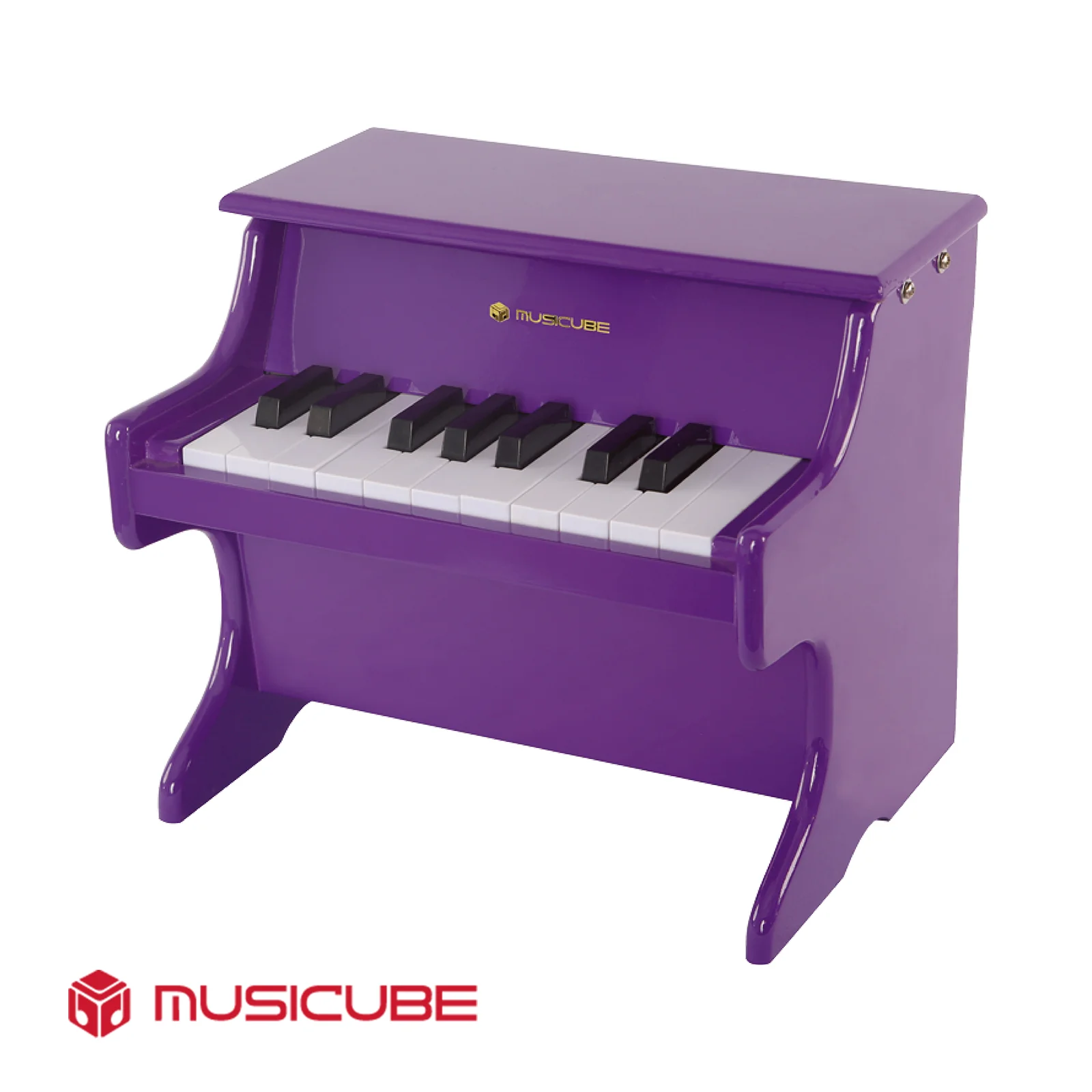 18 Keys Kids Piano – Purple18 keys · C4–F5 · stickers + songbook · 091807
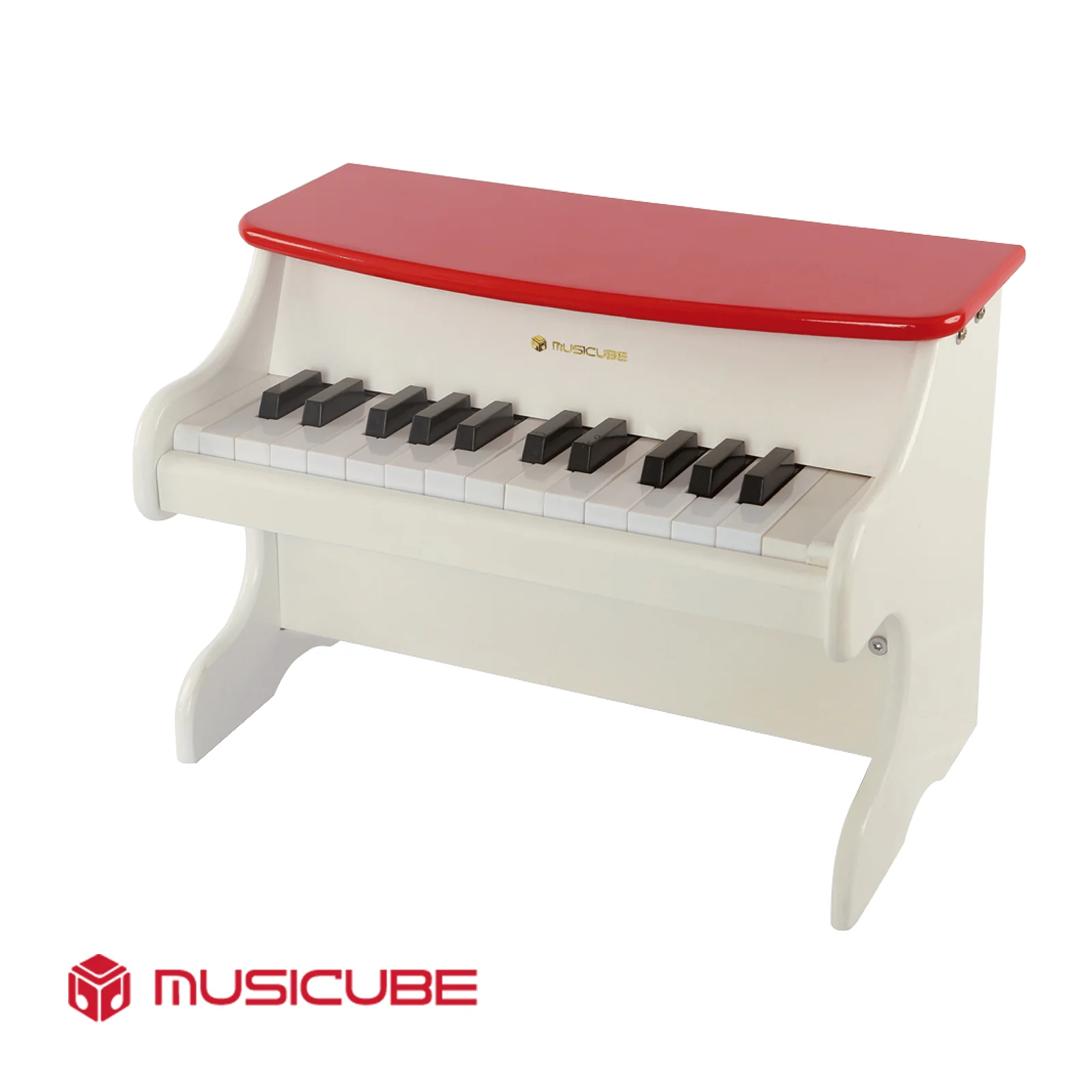 25 Keys Kids Piano – White/Red25 keys · C4–C6 · 092502
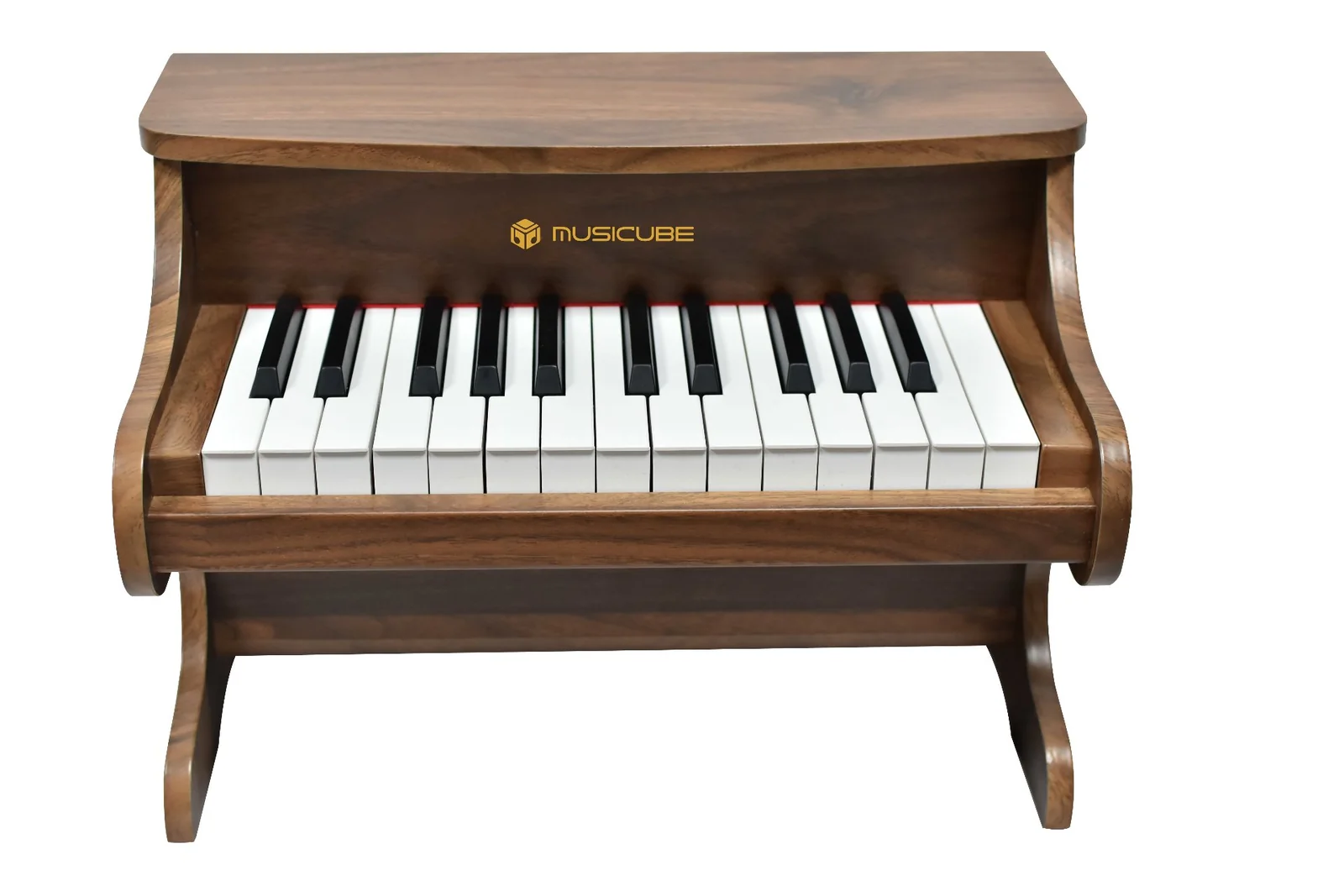 25 Keys Kids Digital Piano – Walnut22 mm pro keys · C4–C6 · 092525
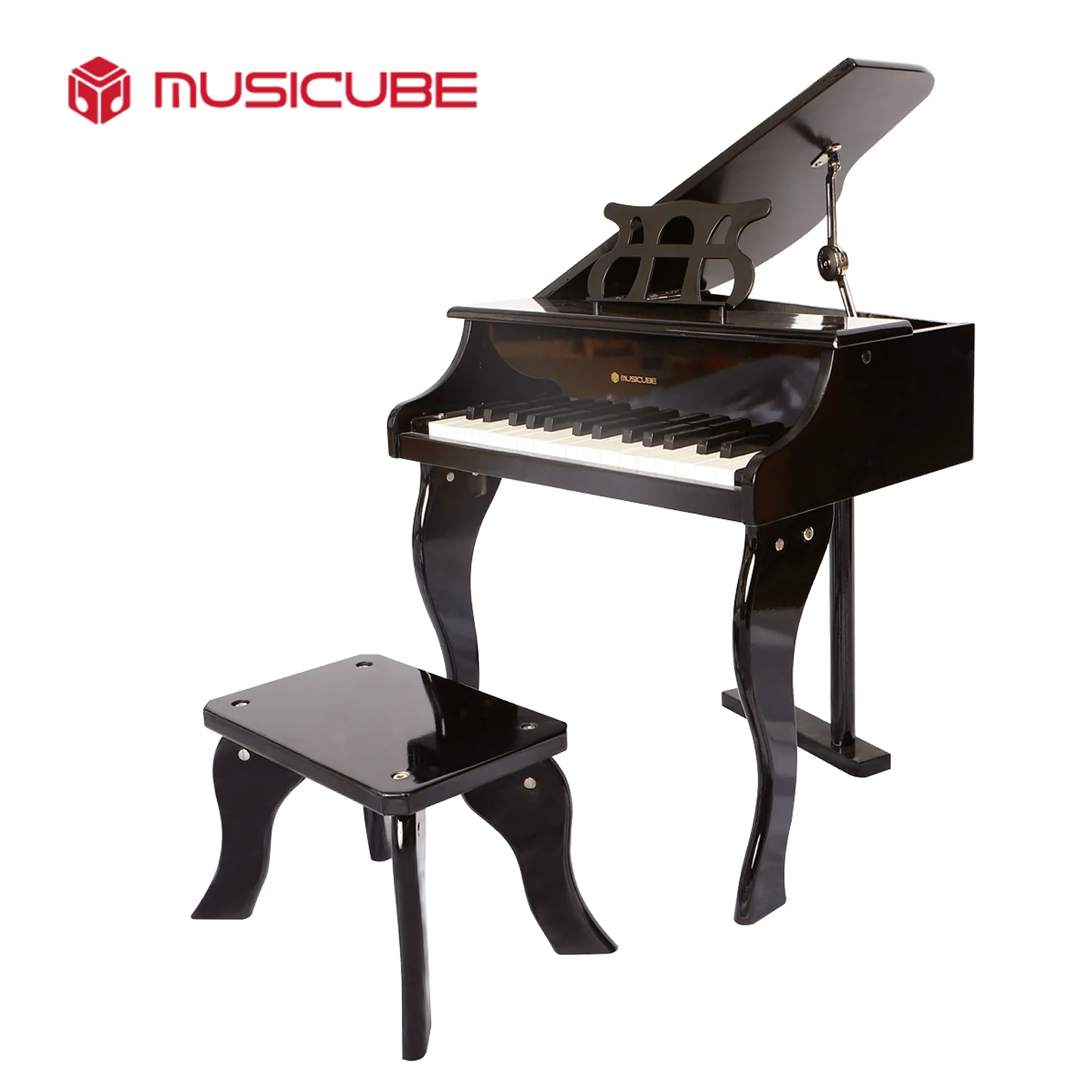 30 Keys Kids Grand Piano – Black30 keys · C3–F5 · with stool · 093002
Ready to Size Your Piano Order?
Send your model mix, quantities and target market. We reply with pricing, MOQ and lead time within 24 hours.
For the wider picture, see kids musical instruments wholesale: how to audit the supplier behin….