


Orff instrument replacement parts, written from inside the factory: we cut, tune and finish every bar in our own plant in Huai’an, Jiangsu, and have supplied barred instruments to schools and distributors since 2003 · Updated October 2026
A cracked bar, a pin that came out during a move, tubing gone flat so the alto buzzes on F — none of these retires an instrument, and all of them do if the part cannot be named. This is the identification half of the problem: what the component is actually called, which size and generation it belongs to, and the six fields that make an order line shippable the first time.
What fails first, in the order it fails
Most replacement requests arrive in the wrong order of urgency. A school asks for a bar because a bar is the part you can see. What has usually failed is the two centimetres of rubber underneath it.
Across the working life of a school set, the order is fairly stable:
- Tubing or cord, on every instrument eventually, and silently.
- Bar holder pins, pulled out when an instrument is lifted by the bars or lost when a frame is dropped.
- Feet, which disappear during room changes and leave the frame rocking.
- Bars, cracked by a dropped instrument or by the wrong beater head.
- Beaters, whose heads flatten and shafts splinter.
- Resonator boxes, rarely, and almost always from water or from stacking.
- Bar supports, on the longest bass and contra bass bars only.
The cheap parts fail first and the expensive ones get blamed: a bass xylophone that will not hold tune is more often a worn tubing strip than a warped bar.
The eight orff instrument replacement parts that come off
A part is something separately manufactured and separately fitted. If it is glued or welded during build it is not a replacement part — it is the frame, and the frame has its own end-of-life test further down. Against that rule a barred instrument has eight.
| Part | What it does | Field swap |
|---|---|---|
| Tone bar | The tuned element. Length, thickness and the arch cut underneath together set the pitch. | Yes, if the note and the instrument size match |
| Resonator box | Closed chamber under the bar that amplifies and sustains it. | Yes, if it matches bar length |
| Bar holder pin | Locates the bar and holds it at the nodal point, where it vibrates least. | Yes, if the frame hole still grips |
| Tubing or cord | The soft strip the bar rests on, so the bar is held, not clamped. | Yes, routinely |
| Felt strip | The glockenspiel version of tubing, thinner because the bars are lighter. | Yes |
| Foot | Keeps the frame level and off the floor. | Yes |
| Bar support | A separate rail under the longest bass bars, which would otherwise sag. | Yes, on bass and contra bass |
| Beater | Transfers the strike. Head material decides whether a metal bar dents. | Yes |
Two of these — tubing and felt — are consumables, meant to be replaced on a cycle, which is why they are the two parts a school should be able to name without looking anything up. The rest fail by accident, and accident is why the request arrives without a description.
Why the same pin carries six part numbers
Here is the pattern that makes this harder than it looks, and it is visible in any trade catalogue. Studio 49 lists a pin set for soprano and alto xylophones, a different set for bass xylophones and metallophones, another for metallophones, another for bass metallophones, another for glockenspiels, and yet another for its 1000 series — six numbers for one function. Tubing splits the same way: one strip for xylophones, one for metallophones, one for glockenspiels, and a separate strip listed specifically for instruments built before 1993. Sonor does it too, with one holder pin listed for xylophones and metallophones, a second for its fibreglass bars, and a third for glockenspiels.
Three things change between those numbers, and only one of them is visible on the instrument. The pin diameter changes with the load on it. The pin length changes with the depth of the frame block. The hole in the frame changes with the generation, because a frame redesigned in 2000 does not accept the pin from 1985.
So the working rule is not “order a pin”. It is: a part number is a function of family × size × generation. Xylophone, metallophone and glockenspiel are three families. Soprano, alto, bass and contra bass are four sizes. And the generation is whatever series number is stamped on the frame, or the year of purchase when there is no stamp. Get any one of the three wrong and the part arrives looking correct and not fitting.
The six fields an order line needs
Five of the six are printed on the instrument or on its label. The sixth is in the school’s purchase records, which is why the original order matters more than the repair.
| Field | What it looks like | What breaks without it |
|---|---|---|
| 1. Family | Xylophone, metallophone or glockenspiel | A metal bar ships for a wooden instrument |
| 2. Size | Soprano, alto, bass, contra bass | Right note, wrong bar length, wrong resonator |
| 3. Note and position | C, F sharp, and whether it sits in the diatonic row or the chromatic row | The right length at the wrong pitch, or a bar that will not fit the gap |
| 4. Generation | Series number on the frame, or year of purchase | A pin or strip that fits nothing on the instrument |
| 5. Part name | Tubing, holder pin, foot, bar support — plus any number on the maker’s label | A symptom arrives instead of a part: “it buzzes” |
| 6. Quantity and unit | One bar, or one set of pins | One pin arrives where fifteen were expected, or the reverse |
Field five is where most requests collapse. A school writes “the thing the bar sits on”, and a supplier has to guess between tubing, a holder pin and a bar support — all of which the bar sits on in some sense. If the label is unreadable, the part name plus a photograph of the failed component and the surface beneath it does the same job.
Matching a bar by pitch, not by length
A bar is a free-free bar: both ends unsupported, pitch falling as it lengthens and rising as it thickens. Makers use the underside arch to tune the overtones as well as the fundamental, which is why two bars of the same length from two makers can differ in character while both play the same note.
The resonator underneath is tuned to the bar above it. That is the reason a bar cannot be matched on length alone. Put a soprano C on an alto frame and the note is correct, but the chamber below it is the wrong volume for that bar, so the tone is short and thin and the note dies where the neighbouring bars ring. The bar has to match the instrument it sits on, not the note it plays.
Wood adds a second variable. A hardwood bar takes on and gives off moisture with the room, so a bar machined to the same nominal dimensions sits differently in a frame after a season in a dry hall. A replacement from a different production year, sent to a different climate, can be slightly out of tune against its neighbours with every dimension still correct — which is why the practical check is to play the octave above and below.
Tubing decides the tone, and nobody replaces it
The bar only rings if it is free to vibrate. Tubing is what makes that possible: it holds the bar at the nodal point on a soft surface, so the bar is located without being damped. Compress that strip and three things happen at once. The bar sits closer to the frame, the contact area grows, and the strip hardens until it behaves like a hard surface rather than a soft one. The instrument keeps playing. It just loses sustain, and it starts to buzz on the notes where the bar and the frame are closest.
This is the single most common fault in a set that is five to ten years old, and it is almost never reported, because nobody files a repair for “sounds worse”. Three checks take a minute:
- Press a bar down at one end and release it. A live strip lets the bar spring back and ring. A dead strip lets it stay down or rock.
- Run a fingernail along the strip under a bar. Soft and matte is alive; hard and shiny has cured.
- Look for a flat, polished band where the bar has been sitting. That band is the compressed section.
Older instruments strung with cord instead of tubing fail differently: the cord stretches, the bars lift off the frame, and the instrument starts to rattle rather than buzz. Either way the fix is the strip, the cheapest part on the instrument.
Repair or retire: look at the pin hole
The decision is usually framed as cost — is the part worth more than the instrument? That is the wrong test: the part is almost never the expensive item. The test that actually decides is the pin hole.
A holder pin is pressed into a hardwood or plywood frame block. When it is pulled out — by a child lifting the instrument by the bars, or by a drop — it takes fibres with it and leaves the hole wider than the pin. A replacement pin of the same diameter will go in and will not hold. There are three honest options: fit a larger pin if the maker supplies one for that frame, drill out the hole and fit a hardwood plug to take a new pin, or retire the frame.
Three other conditions end an instrument’s service life, and none of them is a cracked bar:
- A split running out of the pin hole into the end block of the frame.
- A resonator box separated along its glue line, which changes the chamber volume and cannot be closed again invisibly.
- A bar that has been trimmed or sanded by someone trying to fix a chip, so it no longer matches its neighbours.
Bars themselves are the most repairable component on the instrument, which is the opposite of what most schools assume. It is the frame that ends the story.
What we hold as spares
Because the bars are cut and tuned here rather than bought in finished, a replacement bar can be matched to the frame it shipped with rather than to a catalogue description. Single spare bars are finished in the current colour, so a bar ordered in year six does not arrive in the shade of year two. The component choices behind that are set out on how we build and finish an Orff set, and the four families themselves are introduced on the Orff instrument range we manufacture.
Two things come with every set that make the later order possible: a part reference per model, issued at the time of the order, so the school’s inventory record and ours use the same numbers; and the option of a spare box packed in the same consignment — not a stocking plan, just the parts that have to come from the same production run to match.
How many spares a programme should hold, and what share of the budget that represents, is a different question and is answered in sizing an Orff programme room by room. This page stops at the point where a specific part has to be identified.
For distributors, the spare list is a resale argument
A set is sold once. A service desk is a relationship that runs a decade, and it is usually lost quietly: a school cannot get a bar, the instrument goes into a cupboard, and the next budget round goes to whichever supplier answered the phone.
The commercial case for carrying spares is not the margin on the parts. It is that the distributor who can name a pin in year six is the one invited to quote for the second classroom in year seven. Two practices make that possible without holding much stock:
- Put the part reference on the delivery note, not only on the invoice, because the delivery note is what survives in the store room.
- Hold one box per model sold, keyed to the same numbers, so a request can be answered from the shelf.
The same discipline applies to unpitched equipment, where the failures are different but the ordering problem is identical — the pieces in a classroom percussion set that fail first are covered separately, and the buying logic for the barred instruments is in choosing a xylophone by bar material and range.
What to send us
Four photographs and six fields get the right part out of the door first time:
- The whole instrument, so the family and size can be confirmed rather than assumed.
- The maker’s label or the series stamp, usually on the frame end or underneath.
- The failed component, close up, in place.
- The surface it sits against, with the component removed.
Then the six fields, the quantity, and whether the part must match an instrument bought in a particular year. If the label is gone, the photograph of the mating surface usually settles the generation, because frame blocks and resonator fixings changed shape between series.
Can a bar from one xylophone be used on another?
Why does my instrument buzz on only some notes?
Explore Our Instruments
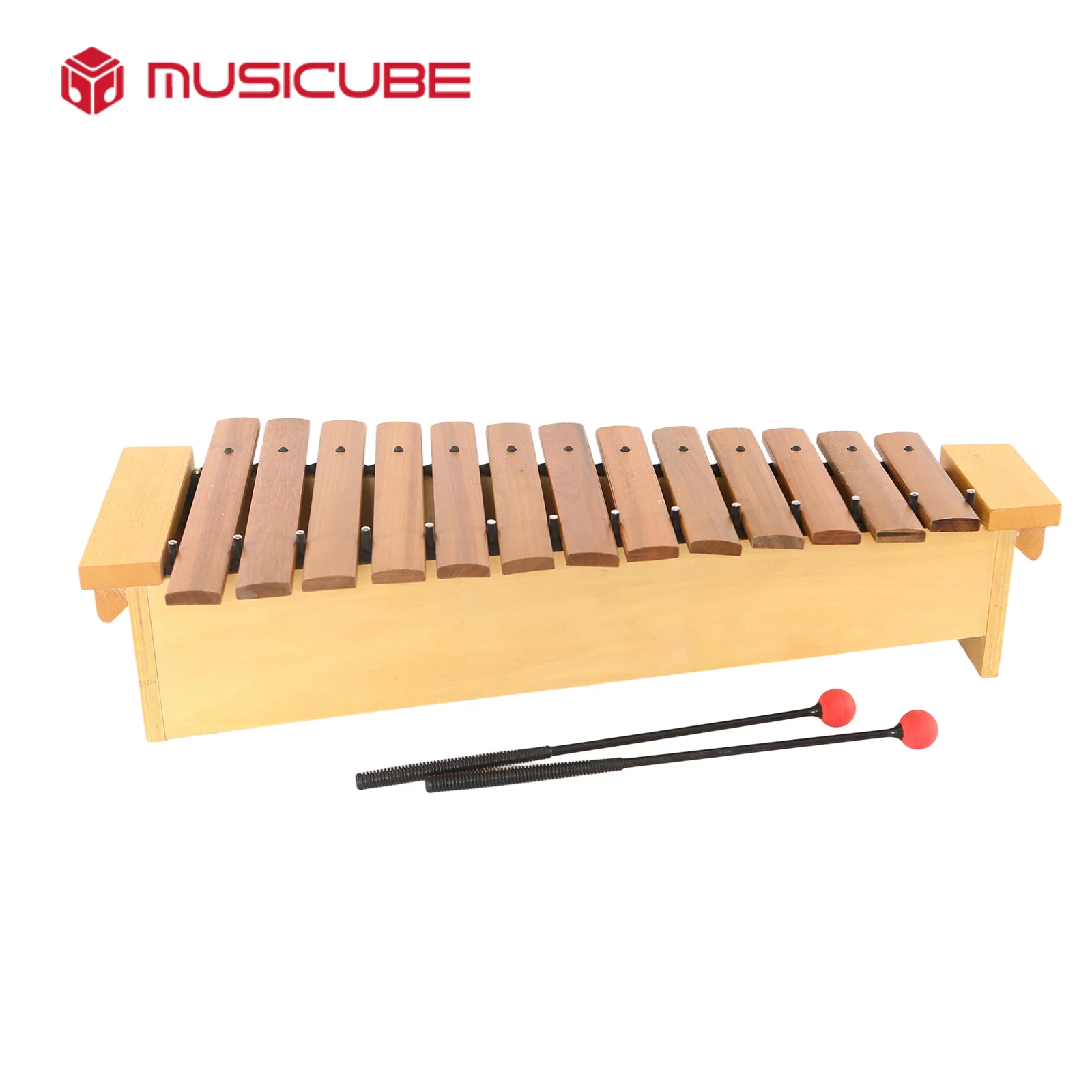 Soprano Xylophone13 diatonic bars
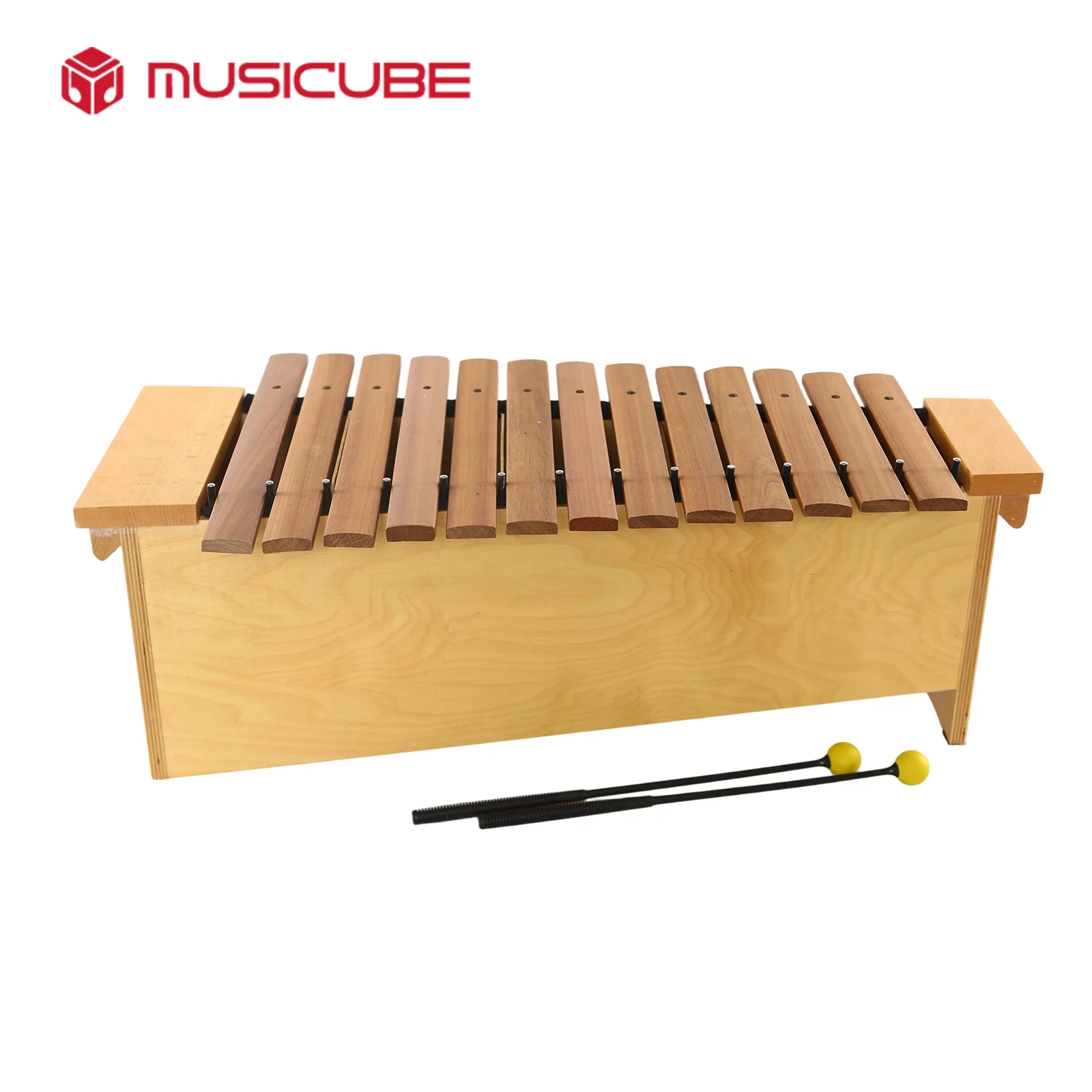 Alto Xylophone13 diatonic bars
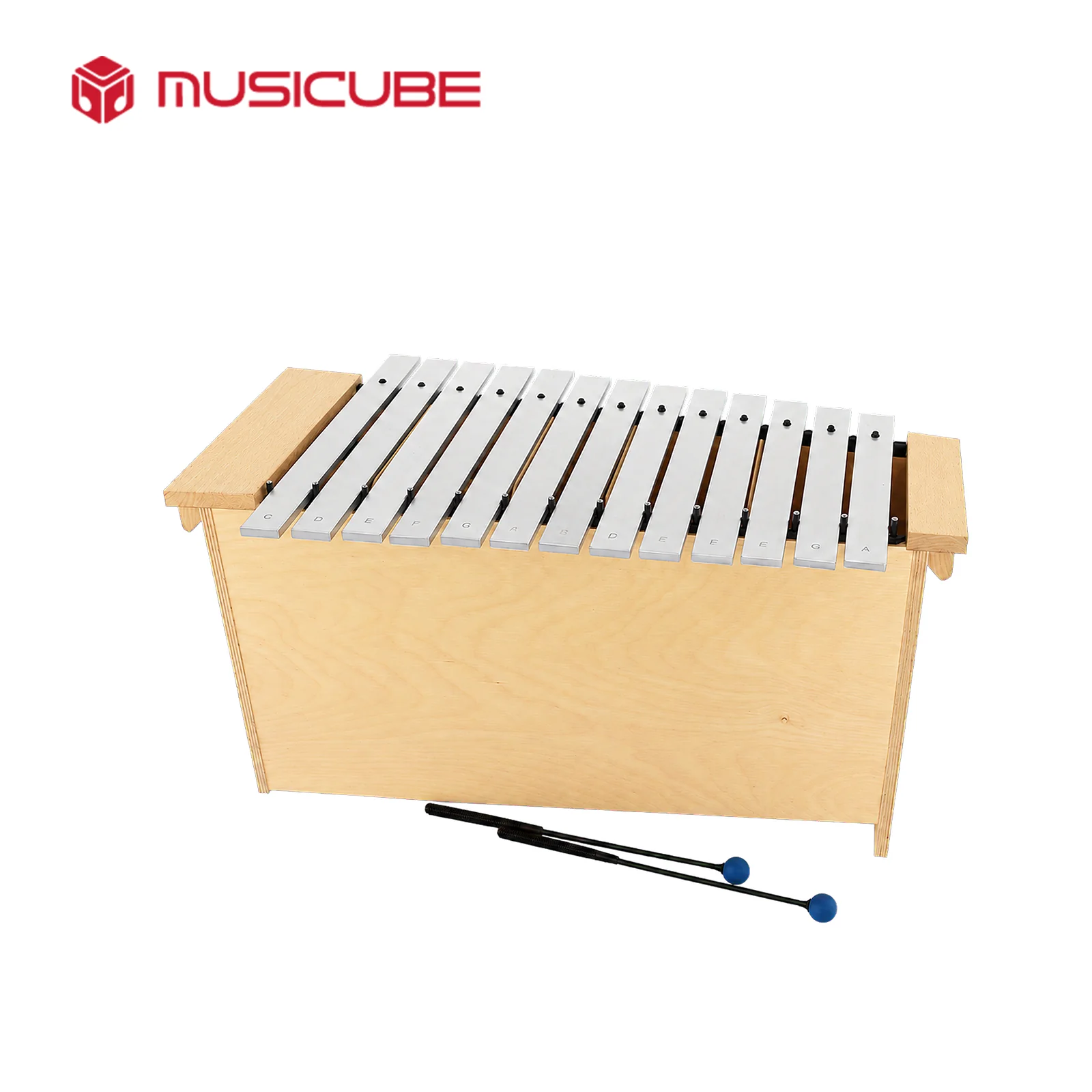 Bass Xylophone13 diatonic bars
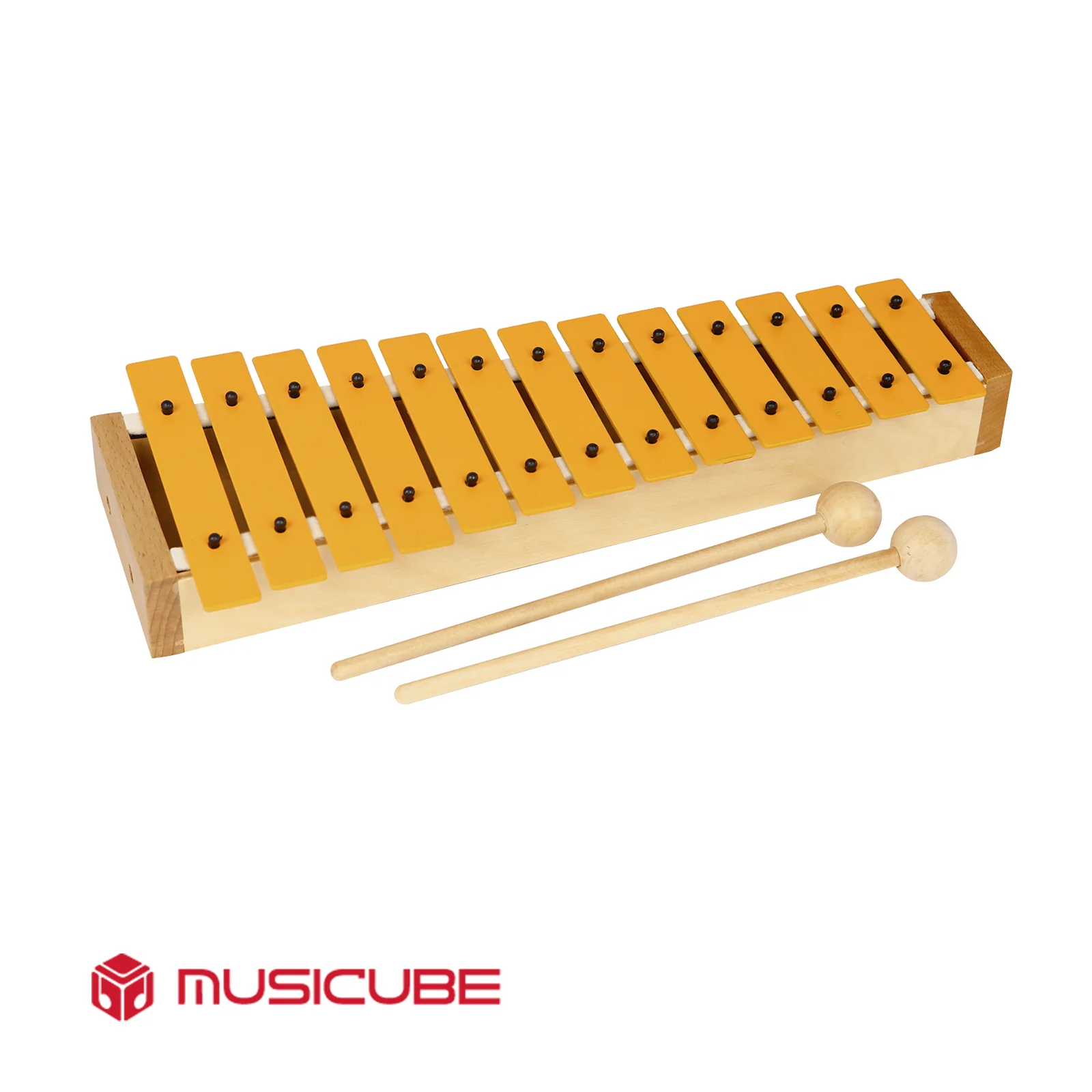 Alto Glockenspiel13 bars · felt strip
Request a Quotation
Send the four photographs and the six fields for the part you need, or the model list if you are building a spare box for a programme. We reply with the matching part reference and the quantity options, usually within 24 hours.
1. STUDIO 49, Orff instruments, replacement bars, pins and parts — the maker lists replacement bars (Ersatz-Stäbe), supports and pins as separate orderable items and runs a repair information system for identifying them. Retrieved 31 October 2026.
2. West Music, Orff replacement parts index — trade catalogue used only as evidence of how part numbers divide by family and size: separate pin sets per instrument family, and a tubing strip listed for pre-1993 instruments. Retrieved 31 October 2026.