

By the Royalsound factory team — supplying Orff instruments for schools and distributors since 2003 · Updated October 2026
For a classroom of thirty children, plan on eight to ten pitched Orff instruments, not thirty: one bass xylophone, one alto xylophone, two or three soprano xylophones, one soprano and one alto metallophone, and two or three glockenspiels, with unpitched percussion for the children waiting their turn. That is the rotation model, and it is what most budgets reach. One instrument per child costs roughly three times as much, and two half-sets cost the same as one full set while teaching less than either. Below are the three provision models, the ratios that hold, a worked example across three classrooms, and the two line items that decide whether a programme of Orff instruments for schools survives to year three.
Sizing Orff instruments for schools is a budget question
There is no correct number of Orff instruments for a school. There is only the number that fits the budget and still lets a teacher run a lesson.
That changes what you compare. Two quotations for “30 instruments” can differ fourfold in landed cost, depending on whether the thirty are glockenspiels or bass xylophones, whether stands are included, and whether the cartons nest. Unit price tells you little.
So the order is: pick a provision model, size to it, then cost it. Doing it the other way — buying what the money reaches and hoping it adds up to a classroom — is how programmes end up with nine soprano xylophones and no bass.
Three models of provision
Nearly every programme lands on one of three shapes. They are not interchangeable, so make the choice explicit.
| Model | Pitched instruments per 30 children | What the teacher can do | Cost shape |
|---|---|---|---|
| Rotation | 8–10, plus percussion for the rest | Full Orff repertoire; children rotate through barred parts across a term | Baseline. The usual starting point. |
| Shared pairs | 15–18, one between two | Same repertoire, less waiting, more playing time each | About 1.7× rotation |
| Full class | 28–30, one each | Everyone on a barred instrument at once | About 3× rotation, plus storage and freight |
The full-class model is the one schools ask for and the one most often value-engineered into failure: keep the count, swap bass for soprano glockenspiels to hit the budget. The count survives, the ensemble does not. If the money only reaches thirty glockenspiels, the honest answer is rotation with a proper spread of sizes.
The ratios that hold up
One room, thirty children
The ratios below are the ones we quote most often for Orff instruments for schools. Start from the bass: one bass instrument anchors the ensemble and is the part children cannot fake, and two is better in a large room because the bass line is what the class listens to for pitch. Then alto, then soprano.
A ratio that works: one bass xylophone (051307), one alto xylophone (051306), two or three soprano xylophones (051305), one soprano metallophone (051301), one alto metallophone (051302), two or three glockenspiels (051304). Eight to ten pitched instruments, weighted toward the middle and top, with the bass carrying the harmony. Then percussion for the remaining twenty children, which is a kit question rather than an instrument question: 200401 with a storage box, 200402 combining drums and xylophone, 200403 on a wall organiser, 200407 as a drum-led set.
Two rooms sharing one budget
Buy one complete set and rotate it, or buy two half-sets and accept that neither room can play the repertoire. The second is chosen more often than it should be, because two half-sets look like fairness. They are not: a half-set cannot teach the thing the method exists to teach.
Where two rooms genuinely run at once and cannot share, duplicate the mid-range — soprano and alto xylophones, one glockenspiel each — and share the bass on a timetable. Bass is the most expensive and the least used per lesson.
Whole-school rollout
A school with six classrooms does not need six identical sets. It needs a standard set defined once, then rolled out in phases, with bass first and duplicates later. The reason is replacement parts: a bass xylophone bought in year one and another in year three must share bar spacing and spares or the school maintains two inventories forever.
Practical sequence: year one, one complete set plus spares; year two, duplicate soprano and alto; year three, add bass and chromatic; then replacement and expansion. Most budget pressure lands in year one and most regret in year two, which is why the spares decision belongs there.
The published plan that counts more than we do
Eight to ten is not the only defensible number. The most widely circulated classroom plan is Brian Burnett’s five-year inventory plan published by Teaching With Orff: “You’ll want an instrument for at least half the largest class.”
Its sample inventory for a maximum class of 30 is 3 soprano glockenspiels, 3 alto glockenspiels, 4 soprano xylophones, 4 alto xylophones, 1 alto metallophone, 1 bass xylophone and 1 bass metallophone — 17 barred instruments, roughly one per 1.8 children. That is the shared-pairs model, not rotation.
Both numbers are right for different rooms. A class that plays in fixed pairs, with partner work built into the lesson, needs the higher count. A class that rotates in stations across a term can run on eight to ten, and spends the difference better on a bass instrument and a metallophone than on a fourth soprano xylophone.
The same source argues for durability over price — an instrument that cannot last ten years in children’s hands is a waste of money — and recommends fiberglass composite bars over rosewood where summer climate control cannot be guaranteed. In an unheated room, that decision matters more than the voice mix.
A worked example: three classrooms
Three classrooms, thirty children each, one budget. The table sizes the rotation model across the department, with and without a shared bass line — the calculation most quotations skip.
| Model | Per room | Three rooms, separate | Three rooms, shared bass |
|---|---|---|---|
| Bass xylophone 051307 | 1 | 3 | 2 |
| Alto xylophone 051306 | 1 | 3 | 3 |
| Soprano xylophone 051305 | 3 | 9 | 9 |
| Soprano metallophone 051301 | 1 | 3 | 3 |
| Alto metallophone 051302 | 1 | 3 | 3 |
| Alto glockenspiel 051304 | 2 | 6 | 6 |
| Classroom percussion set 200401 | 1 | 3 | 3 |
| Pitched instruments total | 9 | 27 | 26 |
The shared-bass variant saves one bass xylophone and, more usefully, its storage footprint: two can cover three rooms because only one room needs the bass at a time in most timetables. The saving is smaller in money than in space — a bass xylophone is the bulkiest item in the set, and the room with nowhere to store it is usually the room that damages it.
Budget tiers
The tiers describe content, not price; price depends on quantity, carton configuration and destination. The point is what an envelope can and cannot deliver when you are buying Orff instruments for schools.
| Tier | Content | Delivers | Does not deliver |
|---|---|---|---|
| Entry | 8–10 pitched from one family, percussion kit, no stands | A working rotation classroom; rhythm and simple melody | No timbral contrast, no bass, chromatic repertoire blocked |
| Standard | 10–12 pitched across xylophone and metallophone, glockenspiels, add-on bars, stands | Full ensemble; wooden and metal voices; chromatic access | No bass metallophone; limited simultaneous playing |
| Full | 15–20 pitched including bass metallophone, chromatic glockenspiel, stands, storage, spares | Two classes in parallel; advanced repertoire; low maintenance | Nothing — at roughly three times entry |
Entry to standard carries the most value: metallophones and add-on bars change what can be taught, while a fourth soprano xylophone changes only how long children wait.
Replacement parts
In year one, nothing breaks. In year two, bars disappear from shared trolleys, beaters get used as drumsticks, and a dropped bass bar takes the lowest voice out of the ensemble for a term.
Programmes that budget 3–5% of the instrument spend for spares in year one almost never place an emergency order. Ones that budget nothing place three small orders in year two, each carrying full freight on a handful of parts. Stock the bars that break most often — outer soprano and lowest bass — plus spare beaters and the frame pins or cord, and ask for part numbers at order time — what a replacement part has to match covers how to identify one once something breaks.
Freight and carton volume
Volume is not proportional to unit count. A bass xylophone and a soprano glockenspiel are similar in price and far apart in cubic metres, so a bass-weighted set can fill two-thirds of a container on under half the units.
Cartons must nest. Instruments in cartons designed to nest use container space far better than the same ones in individual boxes. Ask for nested dimensions, not single-unit.
Stands and storage change the freight class. Quote them in the same shipment where possible; splitting usually costs more than the storage itself. Ask for cubic metres per model rather than one average — the average makes a quotation look good and a landed cost look wrong.
Storage and timetabling
Storage decides the count you can actually run. Twenty-seven pitched instruments across three rooms is a plan on paper. If one room has no cupboard and no wall space, its nine instruments end up stacked on a shelf, and stacked bars warp. A wall-hanging organiser (200403) or a wheeled storage box (200401) is cheaper than replacing warped bars.
Timetables decide whether sharing is real. Sharing a bass instrument works only if two rooms do not need it in the same period. Ask the music lead before committing to the shared-bass variant above.
Height matters as much as quantity. If the budget cannot stretch to stands everywhere, buy them for the bass and alto first, where reach and control are worst.
Reading a quotation line by line
Most quotations are a model number, a description and a unit price. Not enough to compare two suppliers, or to protect a programme if a line is dropped in negotiation.
| Field | Why it belongs on the quotation |
|---|---|
| Model and SKU | Compare identical instruments rather than similar ones; gives the spare-parts reference later |
| Bar material and count | Hardwood, aluminium or steel, 13 diatonic or full chromatic — the facts that set price and voice |
| Add-on bars | Whether chromatic bars are included, and how many the platform accepts |
| Beaters | How many per instrument and what head material; the wrong head dents aluminium bars |
| Resonator box | Included or bars on a bare frame |
| Stand | Part number or explicitly excluded; “available” is not a line item |
| Packaging | Individual carton or nested, because it decides the freight |
| Cubic metres per model | The only figure that lets you sanity-check a freight quote |
| MOQ and lead time | Per model, not per order; a mixed set splits the MOQ across models |
| Certification by model | EN71, CPSIA or ASTM F963 reports naming the models supplied |
A quotation missing four or more of these fields is not comparable with one that has them, and the gap shows up as a change order after the deposit rather than as a cheaper price. The component-level detail behind each line is on our Orff instrument manufacturer page.
Documentation and mistakes
Grant-funded purchases need a compliance file before the order is confirmed, and it is model-specific: EN71 for the EU, CPSIA and ASTM F963 for the US. A glockenspiel report does not cover a hand drum, and a set spans four families. The age on the packaging must match the age grading on the report, and the list must be by model number.
Splitting the budget evenly across rooms. Two half-sets cost the same as one full set and teach less than either.
Buying the count instead of the range. Thirty soprano glockenspiels is thirty instruments and no ensemble.
Leaving stands and storage out. They decide whether instruments are played at the right height and survive the second year.
No spares in year one. Cheap now, expensive later, and the first thing cut in a budget meeting.
Accepting an average carton volume. The most reliable way to turn a good quotation into a bad landed cost.
How to start
Send three numbers: classrooms, children per classroom, age band. We return a set list per room, a phased purchase plan, carton volumes and a landed-cost estimate within 24 hours. Working to a fixed budget? Send that instead — we will tell you which provision model it reaches and what it will not cover.
The instruments behind these ratios sit in our Orff instrument sets range, including combination and private-label options. For bar material and tuning, the xylophone buyer’s guide goes deeper; if the unpitched half of the room is the open question, the classroom percussion set guide covers kit composition.
Quick Answers
How many Orff instruments does a school need per classroom?
Is it better to buy two half-sets or one full set?
What should a school buy first?
How much should be budgeted for replacement parts?
Why is freight higher than expected on a programme order?
Can a programme be phased over several years?
Explore Our Instruments
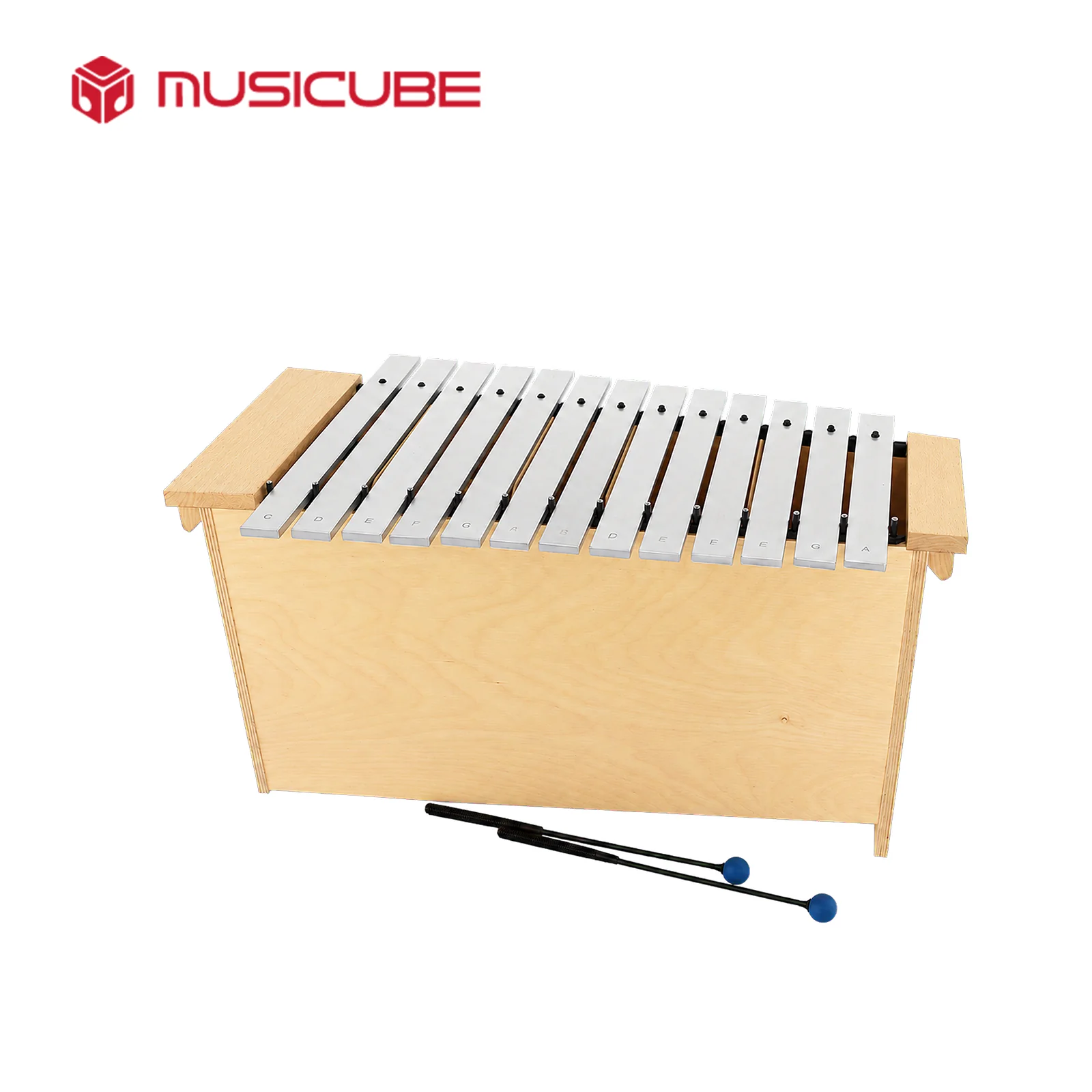 Bass Xylophone – 13 Diatonic BarsAnchors the ensemble · 051307
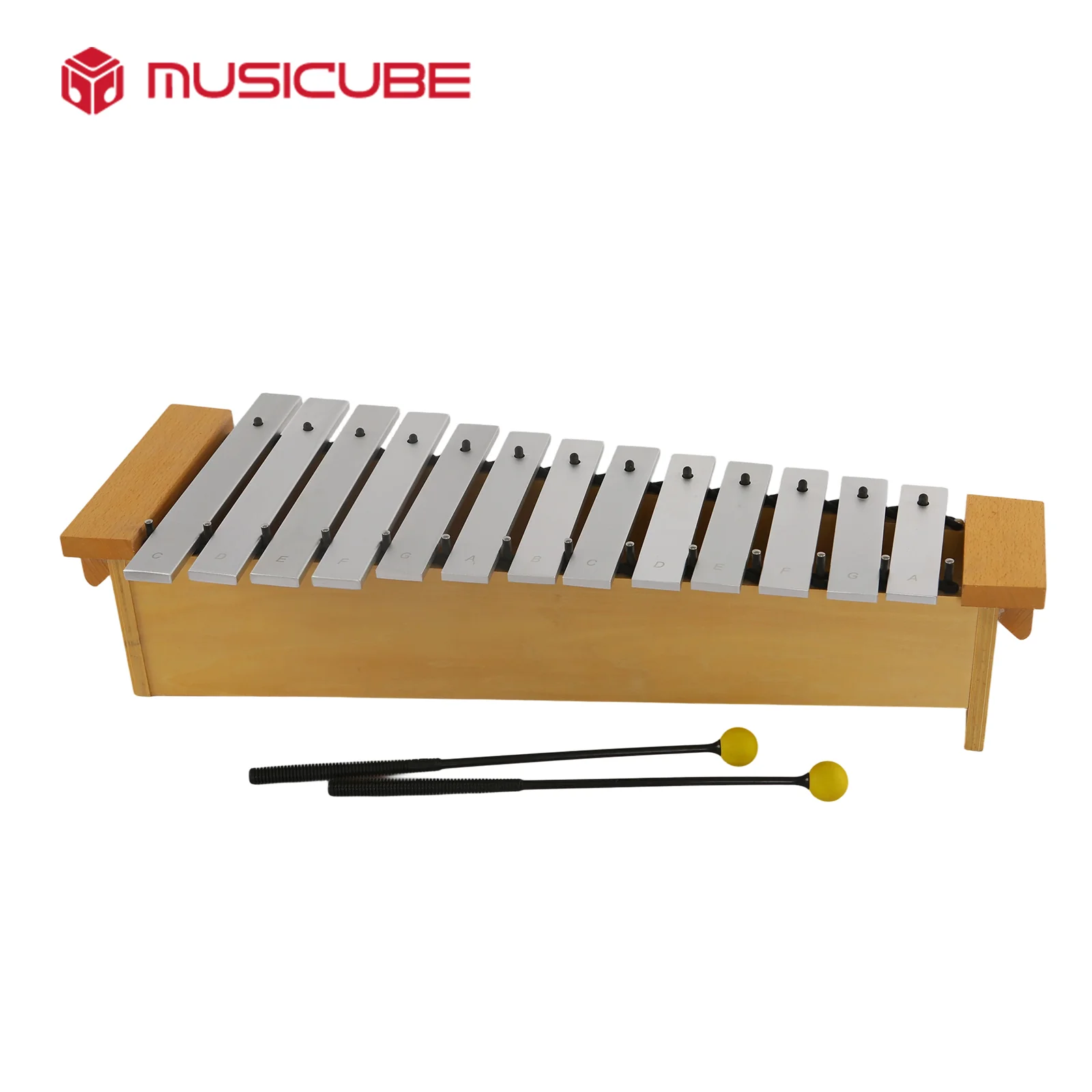 Soprano Metallophone – 13 Diatonic BarsAluminium voice · 051301
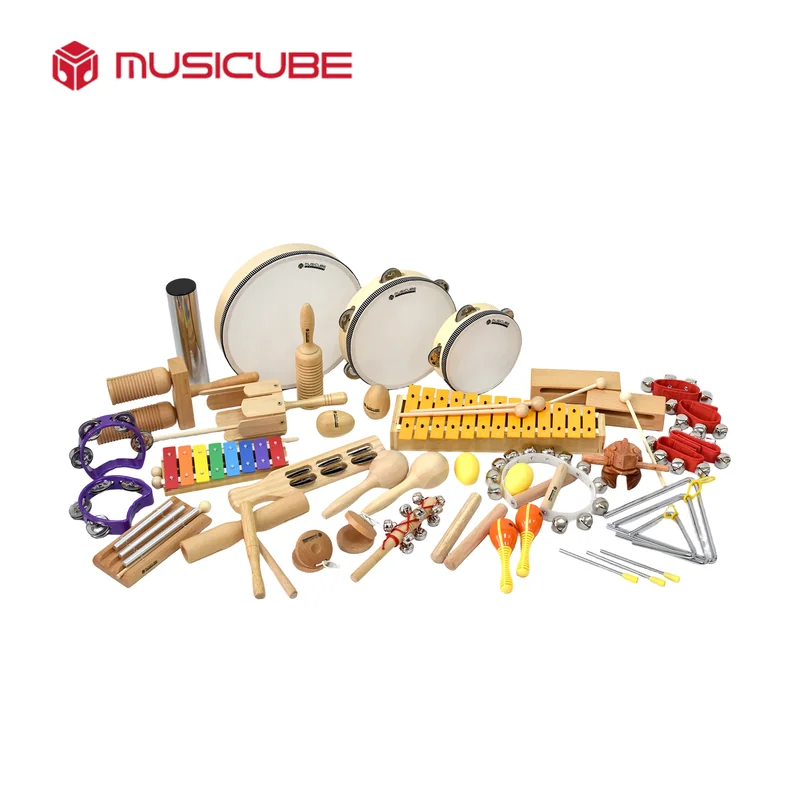 Large Percussion SetDrums & xylophone · 200402
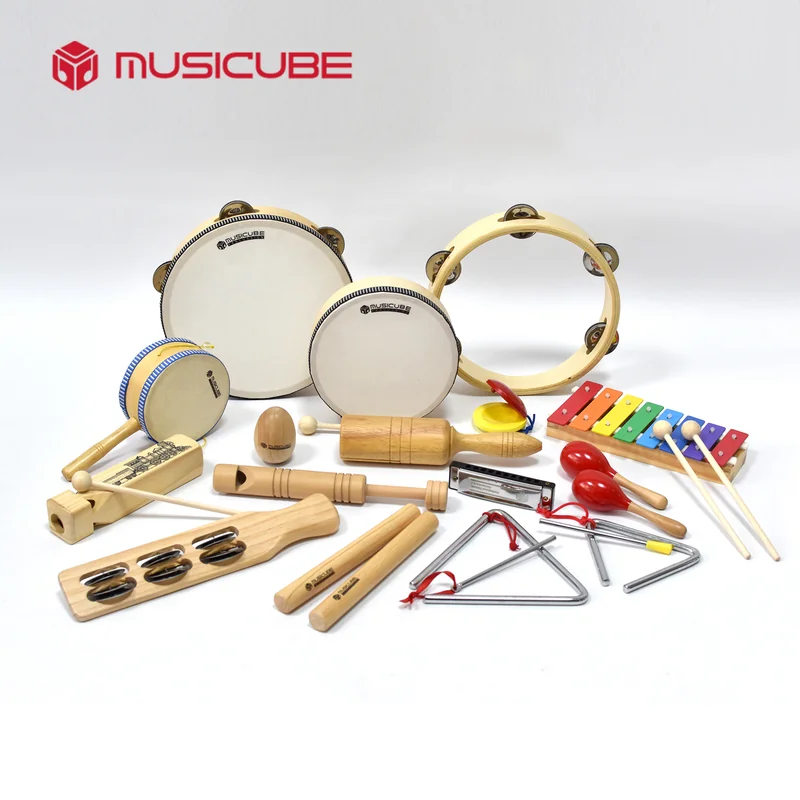 Wall-Hanging Percussion SetCanvas organiser · 200403
Planning a School Programme?
Send your classroom count, children per room and budget. We reply with a set list per room, a phase plan and landed cost within 24 hours.
A room-by-room plan usually ends in two documents: the storage figures that fix how many trolleys a department needs, and the bid specification fields an evaluator expects before an order is approved.