


By the Royalsound factory team — kids musical instrument manufacturer since 2003 · Updated October 2026
Children’s digital piano wholesale is a buyer’s market with a long tail of traps. The instrument is simple — a small weighted or sprung keyboard driving a tone engine through built-in speakers — but the order behind it is not. This guide covers the digital piano range we build at our factory in Huai’an, Jiangsu, the wholesale terms we publish, and the questions a buyer should put to any supplier before a container is booked.
The digital ladder, from 25 keys upward
A wholesale order is not a bigger retail order. A retail buyer picks one finish and checks out. A wholesale buyer commits to a quantity, a mix and a ship date months out, and the supplier who quotes the lowest unit price is not always the one who ships the piano you approved. The work is in the contract, not the catalogue.
Three things decide whether a wholesale program holds together: the specification is locked before sampling, the sample is the reference for the bulk run, and the terms are written down in one document. Skip any of the three and the order becomes a negotiation that never closes. We have run the digital piano line since 2003, and the 20,000 m² plant in Huai’an runs material intake, assembly, QC and export cartons under one roof. That is the difference between a factory quote and a trader’s best guess.
Wholesale also means you carry the inventory risk, so the instrument has to move. A 25-key model priced for nursery retail and a grand-body display piece serve different shelves, and mixing them in one container is normal — if the packing scheme is agreed first. More on that below.
Which formats a wholesale program can carry
Four formats sit on the digital line, and the choice between them is a shelf decision rather than a key-count decision:
| Model | Keys and range | Body | Age | Best for |
|---|---|---|---|---|
| 25 Keys Digital Piano | 25 keys, chromatic C4–C6 | Upright (black, red, walnut, red oak) | 3+ years | Volume orders, nursery and gift retail |
| 25 Keys Grand Digital Piano | 25 keys, chromatic C4–C6 | Grand with hinged lid (red oak) | 3+ years | Display-led channels, premium shelf |
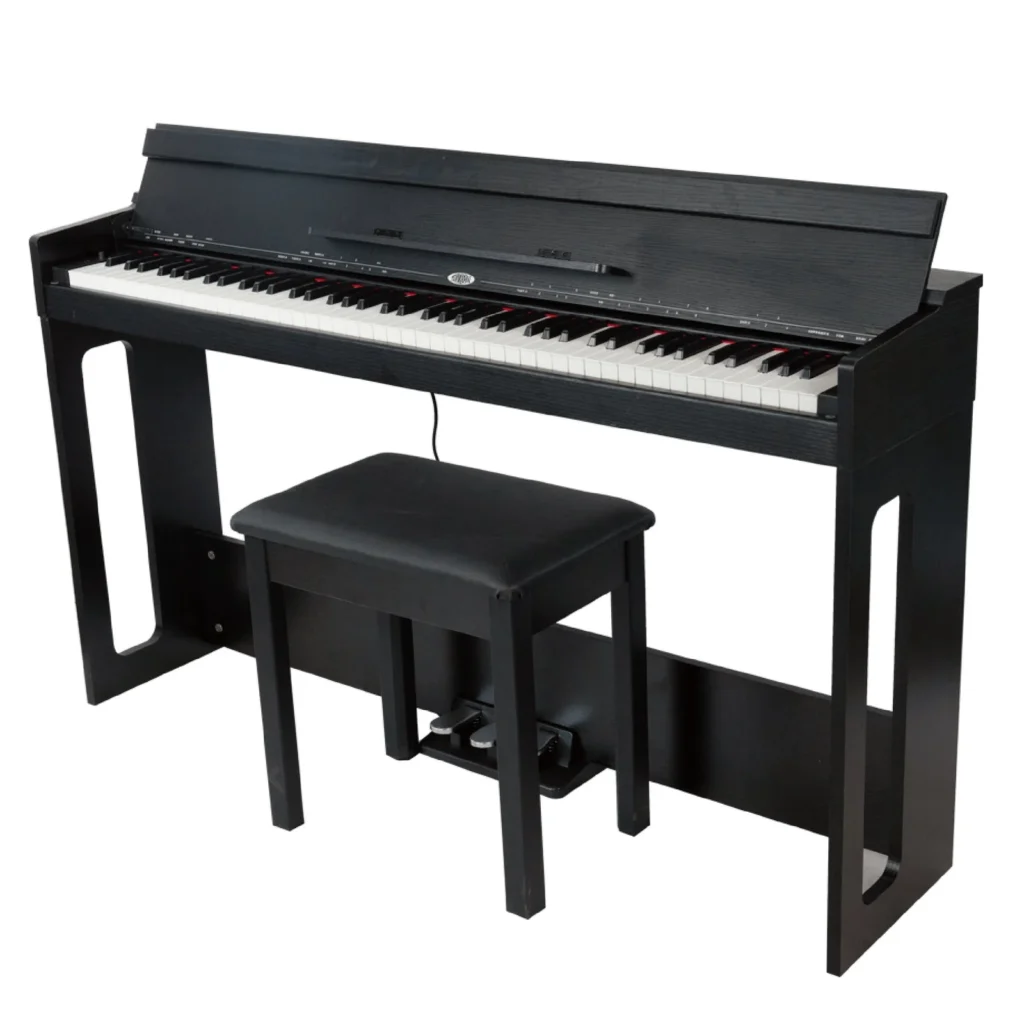
| 88 Keys Digital Piano | 88 hammer-action keys | Cabinet (black, dark rosewood) | 6+ years | Lesson programs, advancing players |
The 25-key upright is the workhorse. Two full octaves on 22 mm professional-width keys let a child play real songs instead of a demo loop, and six finishes across two bodies give a program range on one platform. The grand body with a hinged lid is the same 25 keys in a display silhouette that photographs like a real instrument. The 88-key cabinet is the step-up model for students who have outgrown the small keyboard but still want a home instrument. Most wholesale programs open with the 25-key and add the grand for the premium end and the 88-key for the lesson channel.
Spec sheet: the 25-key digital piano
Below is the 25-key platform as recorded on the product sheets for SKUs 092525, 092526, 092529, 092530 and 092512. This is the sheet a first programme is priced and sampled against:
| SKU family | 092525 walnut · 092526 black · 092529 red oak · 092530 red oak grand · 092512 red |
| Keys | 25 keys, chromatic scale from C4 to C6 |
| Key width | 22 mm professional-width keys |
| Age range | 3+ years |
| Material | FSC® certified MDF wood (CARB compliant Phase 2); red oak construction on the oak finishes |
| Bodies | Compact upright and grand with hinged lid |
| In the box | Keyboard stickers and an illustrated songbook |
| Lead time | 25–45 days after deposit |
The oak and walnut finishes read premium on a shelf, while black and red cover the classic toy-aisle palettes, so a programme can span price points without a new development cycle. Across the whole digital range the material story is consistent: FSC-certified MDF with CARB Phase 2 compliant stock, finished so the grain and gloss survive freight. The 88-key cabinet carries the same material standard and adds 128-note polyphony and hammer-action keys for players who have moved past the small keyboard. Selling our own Musicube brand into US retail gives us a second read on how these bodies behave after a season on a real shelf, and that read reaches the engineers who set the 25-key assembly line.
Commercial terms across a stepped digital programme
The commercial terms attached to a stepped digital programme are these:
| MOQ | 200 pcs on standard models |
| Samples | 10–15 days for a pre-production sample |
| Bulk lead time | 25–45 days after deposit receipt |
| Shipping | FOB Qingdao / Shanghai / Ningbo; DDP quoted for EU and US destinations |
| Payment | T/T 30% deposit, 70% against B/L copy |
A single figure cannot describe a ladder. Request two prices — one at the trial quantity and one at the volume you expect in the first year — and read the step between them. That step is where a factory shows its cost structure and a trading desk has nothing to show. On the 25-key platform the keyboard stickers and songbook ship inside the box and the default packing is a brown export carton; retail packaging, freight, duties and destination-specific documents are quoted as separate lines.
Carton quantity and container loading are settled after the model mix is fixed, not before, and the same applies to paperwork tied to the destination. We confirm both in writing ahead of bulk production. A supplier quoting a fixed loading figure without knowing whether the container holds 25-key uprights, grand bodies or 88-key cabinets is working from a template.
Five checks on the supplier before you book
Five questions separate a factory that runs an assembly line from a desk that forwards photographs, and all five fit in the first message:
- The licence. Ask for the business licence showing manufacturing scope. A factory sends it; a trader sends a price list.
- The line. Ask which production line runs your model and who performs the final check. A factory answers with a line and a name; a reseller changes the subject.
- The price ladder. A factory quotes by quantity tier. A trader quotes one number and hopes you don’t ask for 500.
- The sample source. Samples should come off the production line, not a showroom hand-build. Ask where yours will be built.
- The schedule. Ask which colourways actually ship this quarter. A factory knows its current run; a reseller forwards a catalogue from two seasons ago.
We are the manufacturer, and the same QC system runs for our own retail brand as for your wholesale order. Browse the full kids piano range to see what currently ships, then send the five facts above and you will get a usable quote the same day.
Packing a mixed digital and acoustic order
Retail programs rarely order one key count. A mixed container — 25-key uprights for the volume, a grand body for the display, an 88-key cabinet for the lesson shelf — loads differently than a single-model container, and it needs a plan before bulk starts:
- Which models share a carton, and how many units per carton.
- How each retail box is labelled and barcoded, so your warehouse can receive without opening every carton.
- How the container loading is arranged, confirmed in writing on your quotation.
Agree the scheme at approval stage. Repacking a sealed container is the expensive kind of mistake, and it is entirely avoidable. The plan is the same document the factory uses to load, so what you approve is what ships.
What moves the unit cost on a digital order
Four levers move the price on a wholesale digital piano program. None are secrets, but all belong in the quote:
- Quantity tier: unit price steps down as the order grows.
- Colour count: each custom finish is a separate run; standard finishes avoid it.
- Packaging: brown box plus sleeve is the base; gift boxes cost more.
- Market documents: destination-specific paperwork is quoted per order, not bundled into the unit price.
Ask for the price at your trial quantity and at your year-one quantity side by side. The gap tells you how the factory prices growth. For the product data and wholesale terms behind every model on this page, see our kids digital piano manufacturer guide.
Which declarations an electronic order needs
Electronic instruments carry a different file from acoustic ones. The destination market determines which tests apply, and we set that list out in writing before components are ordered. The MDF is covered by an FSC® chain-of-custody certificate that travels with the shipment papers — a sourcing record, not a toy-safety report. Keep each confirmation in the order file; a customs hold is a poor moment to reconstruct it verbally.
Test-report logos get copied across supplier sites with nothing behind them. Ask for the report itself, with its number and issue date, and check that the model named on it is the model you are buying. Our documented QC process is the sequence we run for our own retail brand and for wholesale orders alike.
Private label on the digital line
OEM on the digital pianos is not a sticker on the lid. What can carry your brand: the instrument through imprint or laser marking, the keyboard stickers and songbook, the packaging with your barcode and warning panels, and Pantone-matched finishes to sit beside your existing range. Sample cost is credited against the bulk order, and pre-production samples run 10–15 days on the standard 25-key platform. The full OEM/ODM service page covers what each track includes, including ODM development from your own specification.
Opening a wholesale digital programme
To price a ladder rather than one model, send the model mix, the quantity on each rung, the destination, the packaging level for each rung and whether the box carries your brand. With those five we can quote against a real container plan; without them any number is provisional.
- State the mix — 25-key uprights, grand bodies and 88-key cabinets — with a quantity for each rung.
- Approve one pre-production sample per body type against the written 25-key platform sheet.
- Fix the packaging level and the artwork for each rung before the carton plan is drawn up.
- Bulk assembly begins at deposit, and the 25–45 day window runs from sample sign-off.
Send the ladder you are planning and we will return tiered pricing, MOQ and the lead time within 24 hours.
Questions wholesale buyers put to us
What is the MOQ for children’s digital piano wholesale?
How long does a wholesale digital piano order take?
Which digital piano models can I wholesale?
What are the shipping terms and ports?
Can I put my brand on a wholesale digital piano?
What documentation ships with the order?
Can I mix key counts in one container?
Are you the manufacturer or a trading company?
Explore Our Instruments
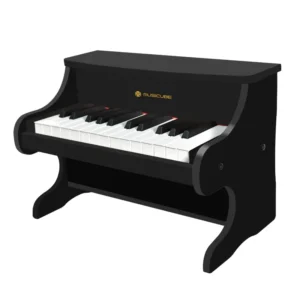 25 Keys Kids Digital Piano – Black22 mm pro keys · C4–C6 · 092526
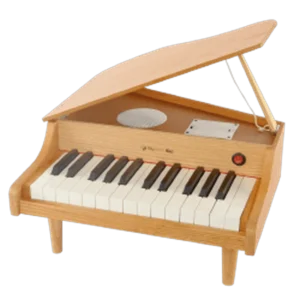 25 Keys Kids Grand Digital Piano – Red OakGrand body · hinged lid · 092530
 88 Keys Digital Piano – Hammer Action88 keys · 128 polyphony · 098801
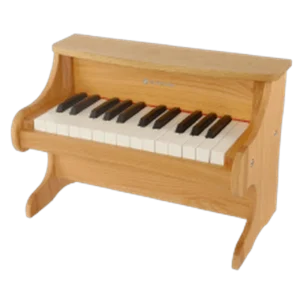 25 Keys Kids Digital Piano – Red Oak22 mm pro keys · C4–C6 · 092529
Ready to Price Your Wholesale Order?
Include the 25-key / grand / 88-key split and the destination market; the reply carries tiered pricing, MOQ and a sample timeline.
For supplier-level vetting rather than product planning, the 7-point factory checklist lists the reports and commercial terms to request from every candidate.