


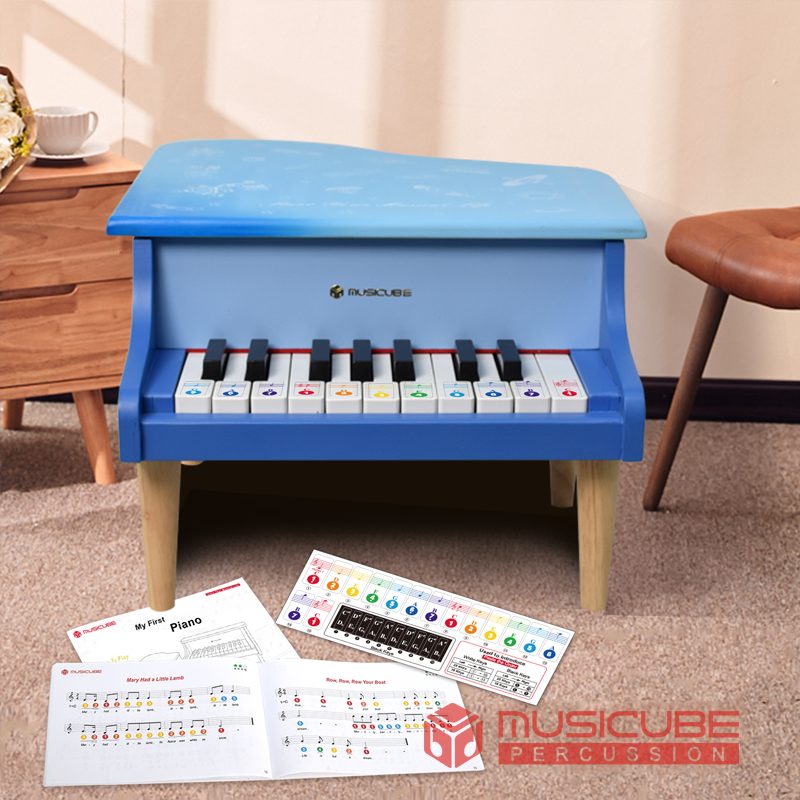
Compliance requirements keep moving, and for OEM buyers of children’s musical instruments the paperwork is as important as the product. This briefing summarizes what matters for 2026 shipments and how we keep documentation ready so your goods clear customs in 100+ countries. The same discipline keeps our consumer brand Musicube live on U.S. retail platforms, where documentation checks are relentless.
What OEM Buyers Are Asking in 2026
- EN 71 (EU): mechanical/physical (Part 1), flammability (Part 2) and migration of certain elements (Part 3) remain the core. Expect your retailer or marketplace to ask for the test reports, not just the CE mark itself.
- ASTM F963 / CPSIA (US): third-party testing against ASTM F963 and a Children’s Product Certificate (CPC) listing each applicable rule. Lead content and phthalates are the checks most often re-verified at import.
- GB 6675 (China) and other national standards: increasingly requested when a program ships to multiple markets from one production batch.
What This Means for Your Program
Two practical consequences. First, plan testing before production, not after: pre-production samples are what the labs test, and our sampling window of 7–10 days exists partly to feed that timeline. Second, decide whose name appears on the documents — for OEM programs we issue batch-level EN 71, ASTM F963, GB 6675 and CPSIA reports under your brand name, which is what your customs broker and your retail partners will want to see.
How We Keep the Paperwork Ready
- In-house QC with documented checkpoints on every batch, feeding the lab sampling plan.
- Batch-level test reports issued under your brand, archived and re-issueable on request.
- One certification matrix per SKU — current certificates, expiry dates and scope — included in the 2026 catalogue.
Quick Answers
Do the reports really carry my brand name?
Yes. Batch-level reports for EN 71, ASTM F963, GB 6675 and CPSIA are issued under your brand at no extra cost for ongoing programs.
How current are the certificates?
Every SKU in the catalogue carries its certification matrix with certificate numbers and validity dates, so you can verify before you order.
What if my target market needs both CE and CPC?
That is the normal case for EU+US dual-market programs. One production batch can be tested against both standards; tell us the markets up front and we will build the sampling plan accordingly.
Get the Compliance Matrix for Your SKUs
Send us your target markets and product list — we will return the matching certification matrix and a costed proposal within 24 hours.
The document set a buyer should hold before shipment
Treat compliance as a file, not a certificate. Before a container is sealed, the importer of record should be able to produce the test reports for each SKU, the market-specific declarations or certificates that reference those reports, the identity of the applicant or brand named on them, the batch or lot identification, and a record of the inspection carried out against the approved sample. If any one of these is missing, the rest are hard to defend at an inbound check.
- Third-party test report per SKU, with report number, lab, date and model scope.
- EU declaration of conformity referencing EN 71 parts 1–3 and REACH where applicable.
- US Children’s Product Certificate listing ASTM F963 and applicable CPSIA rules.
- CPSIA lead and phthalate results, and tracking-label information where required.
- Batch or lot identification that links the shipped goods to the tested configuration.
- Pre-shipment inspection report against the approved sample, with photos.
Market-by-market matrix
Build the matrix before production, not at the packing stage. The same physical batch can often serve several markets, but only if the sampling and testing plan covers all of them from the outset. Adding a market after production usually means re-sampling, re-testing and a new declaration.
| Market | Core requirements | Commonly requested evidence |
|---|---|---|
| EU | EN 71 parts 1–3, REACH | Test report plus declaration of conformity |
| US | ASTM F963, CPSIA | CPC, lead and phthalate results, tracking label |
| China domestic | GB 6675 series | Local test report and CCC where applicable |
| Multi-market | Combined test plan | One matrix mapping each SKU to each report |
Where documentation most often fails
The first failure mode is scope drift: the report covers the original plain finish, but the shipped order has a new coating, a different bar alloy, an electronic module or a revised battery door. Any of those can take the product outside the tested configuration. The second is a name mismatch: the report names the factory while the retailer, marketplace or customs broker expects the brand or importer of record. The third is an expired or superseded report that nobody noticed because no matrix tracks validity dates.
All three are administrative rather than technical problems, and all three are cheapest to fix at the quotation stage. Ask the supplier which changes would trigger re-testing, who will be named as applicant on each document, and how certificate expiry is tracked. A factory with a maintained per-SKU certification matrix can answer in one email; everyone else will need to go and ask someone else.
Make the report match the shipment
When the approved sample is signed off, record its configuration: materials, finish, components, packaging and labelling. That record is what the test report should describe and what the pre-shipment inspection should check against. If a component is substituted for supply reasons, treat it as a change requiring review rather than a like-for-like swap. This habit prevents the most expensive kind of compliance surprise — discovering a mismatch after the goods have landed.
Quick answers, continued
Who is responsible for the CPC?
The importer or the party placing the product on the US market issues the Children’s Product Certificate, based on third-party testing. Agree in the brief who supplies the underlying reports and who signs the certificate.
Does a new colourway need re-testing?
It depends on what changes. A new coating or pigment can affect migration-of-elements results, so ask the lab or the supplier before assuming the existing report still covers the configuration.
How long should reports be kept?
Keep the full file for the commercial life of the SKU plus the retention period required in your market. Retailers and marketplaces can ask for documentation long after the shipment has arrived.
Can one report cover a whole range?
Only where the tested configuration genuinely matches. A range with different key counts, materials or electronics normally needs a per-SKU mapping, which is why we maintain a certification matrix rather than a single folder of PDFs.
For the compliance matrix covering your SKUs and target markets, send the product list through the quote form; see also our factory audit checklist for how to verify a supplier’s documentation process.