


Orff instrument set wholesale, written by the factory that takes the orders: we build barred and percussion sets in Huai’an, Jiangsu, and ship containers to distributors who resell them · Updated November 2026
A wholesale Orff order is decided by arithmetic long before it is decided by price. The minimum is counted per model, so every model you add to the range multiplies the commitment — and the range you need to sell is wider than the range you can afford to buy. This page works that tension: how many models a first order really holds, which ones earn their place, and what the cartons have to carry before the container is worth booking.
Orff instrument set wholesale is a mix decision
Almost every wholesale enquiry we receive asks the same question in a different form: what is the price for a container of Orff instruments? It is the wrong first question, because a container is not a quantity. It is a set of models, each with its own minimum, its own carton and its own rate of sale, and the price only exists once that list exists.
Two buyers with the same budget can order the same number of pieces and get very different businesses. One buys eight models at the minimum each and carries a range nobody else lists. The other buys two models in volume and becomes a price competitor in a market that already has three. Neither is wrong, but they are different decisions, and only one of them can be reversed after the container lands.
So the order of work is: decide the models, count the minimums, check the cartons, then price it. Doing it the other way round is how a container arrives full of the models that were easiest to quote.
Why the minimum is per model, not per order
Our minimum is counted per model, not per order, and that single detail reshapes everything downstream. Two hundred pieces is the floor for a model; a mixed set does not raise that floor, it splits the two hundred across the models you choose. The trading terms themselves — the exact figure, sample timing and lead time — sit on what this Orff instrument manufacturer makes and on what terms, and are not repeated here, because the number is the easy part.
The hard part is what the rule does to a range. A distributor’s instinct is to cover the catalogue: every family, every size, both diatonic and chromatic. That instinct is correct commercially and impossible financially, because coverage is bought per model. A range of ten models is not a container with ten things in it. It is ten separate minimums that happen to travel together.
This is also why a headline minimum quoted by any supplier should be read carefully. A low number usually means a low number on one model, not on a range of ten. The question to ask is not “what is your MOQ” but “what does your MOQ become when I order six models”.
The arithmetic: four models is eight hundred pieces
At a minimum of two hundred per model, the commitment scales in a straight line, and seeing it written down is usually the moment a range gets realistic.
| Models in the first order | Minimum commitment | What the range can do |
|---|---|---|
| 2 | 400 pieces | One voice, wood or metal. Enough to open an account, not enough to equip a room |
| 4 | 800 pieces | High and low, wood and metal. A school can run a full ensemble |
| 6 | 1,200 pieces | The four corners plus two sizes of one family, which is where most distributors land |
| 8 | 1,600 pieces | A catalogue. Justifiable once you know which four actually sell |
The table is arithmetic, not advice, but it explains a pattern we see constantly: distributors who open with four models and expand, and distributors who open with eight and spend the next two years discounting the four that did not move. The second group usually blames the factory for a range that was never going to sell in their market.
One thing the table cannot show is that a piece is not a piece. A bass instrument and a soprano instrument are close in price and far apart in volume, so the same eight hundred pieces can fill very different amounts of a container depending on the mix. That relationship is covered in sizing an Orff programme room by room, and it is the reason the mix has to be settled before the freight is quoted rather than after.
The four corners of a school range
A school buys voices, not models. What a classroom needs — and what the Orff instrument range we build is organised around — is a high sound and a low sound, in a wooden timbre and a metal one, because that contrast is what an Orff arrangement is built on. Four models cover the four corners, and everything else is depth.
- High metal — a soprano or alto glockenspiel. The sound carries over thirty children without amplification.
- High wood — a soprano or alto xylophone. The workhorse: most of the melodic playing happens here.
- Mid metal — an alto metallophone. The voice that sits between the glockenspiel and the bass, and the one buyers most often forget.
- Low wood — a bass xylophone. Without it there is no bass line, and an ensemble without a bass line is a group of children playing tunes at each other.
That is a complete ensemble in four models, and it is the shape we recommend for a first order. Everything beyond it — a second xylophone size, chromatic add-ons, a bass metallophone — makes the range deeper rather than wider, and depth is much easier to justify in year two when you know which corner your market actually plays.
The mistake to avoid is buying size instead of voice. Four soprano xylophones and no bass is four hundred pieces of a range that cannot run a lesson, and no amount of discounting fixes a missing voice.
What the second order adds
Waiting is cheaper than guessing, and a second order placed after one selling season is a better-informed order than a first order placed before one. Three things become visible only after the container has been out in the market for a term.
Which corner sells. Almost every market leans one way — some buy metal, some buy wood, some buy the bass because their schools already own the treble. You cannot know which until you have sold into it, and the answer changes what the second order should be weighted towards.
Whether chromatic is worth it. Chromatic add-ons unlock every key, and schools ask for them, and they also sit on the shelf in markets where the repertoire stays in C, F and G. One season tells you whether to carry them as stock or as a special order.
What breaks. The first term tells you which model comes back, which is the input for the spare-parts decision below. It is also the moment to add depth: a second size of the family that sold, rather than a first size of a family that did not.
A second order also lets you keep the minimum honest. Two orders of four models each cost the same in minimums as one order of eight, and the second one is placed with knowledge the first could not have.
The carton is the shipping unit, the pallet is the buying unit
Wholesale buyers count instruments. Freight counts cartons, and the two numbers are only loosely related, which is where landed cost quietly escapes the business case.
Three relationships decide what actually ships. The first is that each model has its own carton, so a mix of six models is six carton sizes, not one. The second is that the master carton holds a fixed number of retail units, and that number has to divide evenly — a master carton of ten does not accommodate an inner pack of three. The third is that the pallet is built from carton footprints, so a change in carton dimensions changes how many cartons fit on a pallet and how high the pallet stacks before it meets the container roof.
None of this shows up in a unit price, and all of it shows up in the invoice you pay the forwarder. Two habits keep it under control. Ask for carton dimensions and cubic metres per model with the quotation, so the freight can be checked against real figures rather than an average. And decide early whether the carton is also the retail display unit, because a shelf-ready carton has different proportions from a shipping carton and the difference has to be designed in rather than added later.
A mixed pallet is the other trap. It is allowed, it is sometimes the only way to load a wide mix, and it costs time at destination because every carton has to be handled individually. If the receiving warehouse charges by the hour, one carton size per pallet is worth more than it looks.
Retail readiness, before the container is booked
A carton that cannot be sold is a carton that has to be opened, repacked and relabelled, and that work is never in the budget. Four things have to be settled before production, not after arrival.
The barcode. The number is yours to license, not ours to invent, and it belongs on the retail unit. A master carton with a code and a sellable unit without one is a carton that a shop has to handle by hand.
The inner pack. How many units a shop can buy at once, and whether that number divides the master carton evenly. An inner pack that fights the master carton produces part-cartons and a picking cost nobody quoted.
The label content. Importer name and address, age marking, warnings and the language set for the destination. For toys sold into the EU these are legal obligations on the product as placed on the market, which is your version, and the European Commission’s toy safety rules are where they are set out. The language set alone can change the carton artwork, so it belongs in the first conversation.
The carton marking. Model, quantity, your order reference and the shipping marks your forwarder requires. Cheap to print, expensive to add by hand.
The spare-part obligation you inherit
The moment you resell an Orff set, you become the service desk for it. That is not a small commitment on barred instruments, because the parts that fail are cheap and model-specific, and a school that cannot get one does not repair the instrument — it retires it and buys the next one from whoever answered the phone.
The commercial argument is not the margin on the spares. It is that the reseller who can name a pin in year six is the one invited to quote for the second classroom in year seven. Three things make that possible without tying up capital:
- Ask for a part reference per model at the time of the order, so your inventory record and the factory’s use the same numbers.
- Carry a small spare box for the four models you actually stock, not for the whole range.
- Know which components are consumables, because those are the ones that will be asked for.
The identification side — what the failed component is called, which size and generation it belongs to, and what has to be on the order line — is set out in what a replacement part has to match. Read it before the first container, not after the first complaint.
What goes on the purchase order
A wholesale Orff order that goes wrong usually goes wrong on the paperwork rather than the production line. The purchase order needs twelve things, and five of them are the ones that get left out.
| Field | Why it has to be there |
|---|---|
| Model and family per line | Xylophone, metallophone and glockenspiel are different products with different cartons |
| Size or register | Soprano, alto and bass are different SKUs, not variants of one |
| Bar count and layout | Diatonic and chromatic are different cartons and different prices |
| Tuning reference | Sets that arrive tuned against different references do not play together |
| Finish and colour | Matched on a physical sample, not a screen |
| Logo placement | If private label, the placement and size are part of the price |
| Packaging per model | Carton, inner pack and whether the carton is retail-facing |
| Barcode and label content | Yours to license; the factory cannot supply the number |
| Language set | Changes the carton artwork and the manual |
| Quantity per model | Not a total. The total hides the mix, and the mix is the order |
| Carton marking and shipping marks | Decided by your forwarder, printed by the factory |
| Delivery window | Sets with stands and storage take more cartons and load a little slower |
The five that get left out are tuning reference, packaging per model, barcode, language set and shipping marks. Each of them is cheap before production and expensive afterwards, because every one of them touches artwork or tooling that has already been set.
What to send us
Send the models you are considering, the destination market, the four voices you intend to cover and whether the carton is retail-facing. Everything else — carton dimensions, cubic metres per model, the minimum split — comes back with the quotation.
Is the minimum counted per model or per order?
Can I mix models in one container?
Should the first order be wide or deep?
Explore Our Instruments
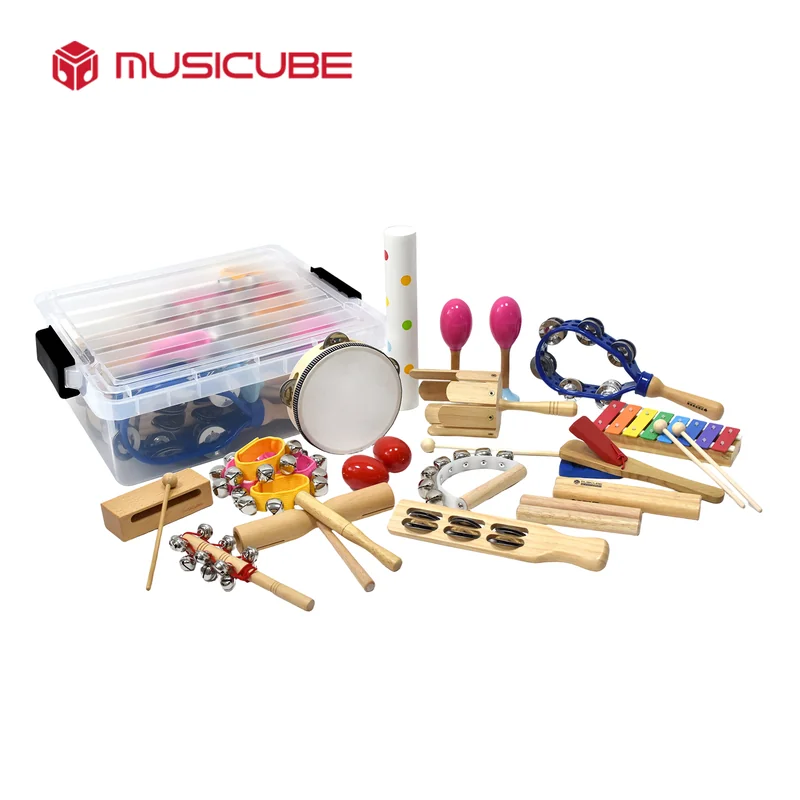 Classroom Percussion SetStorage box · 200401
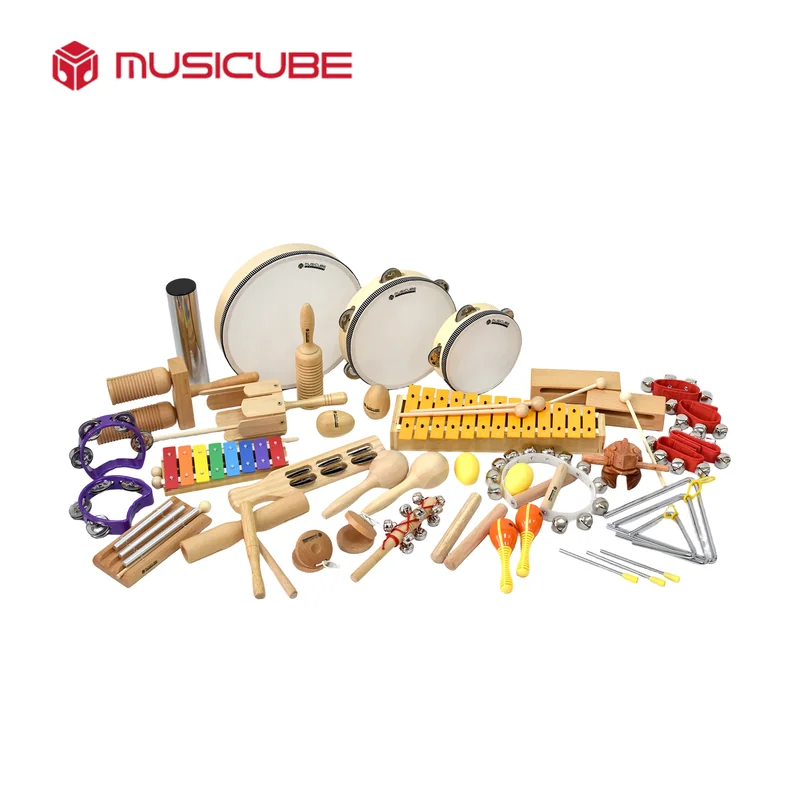 Large Percussion SetDrums & xylophone · 200402
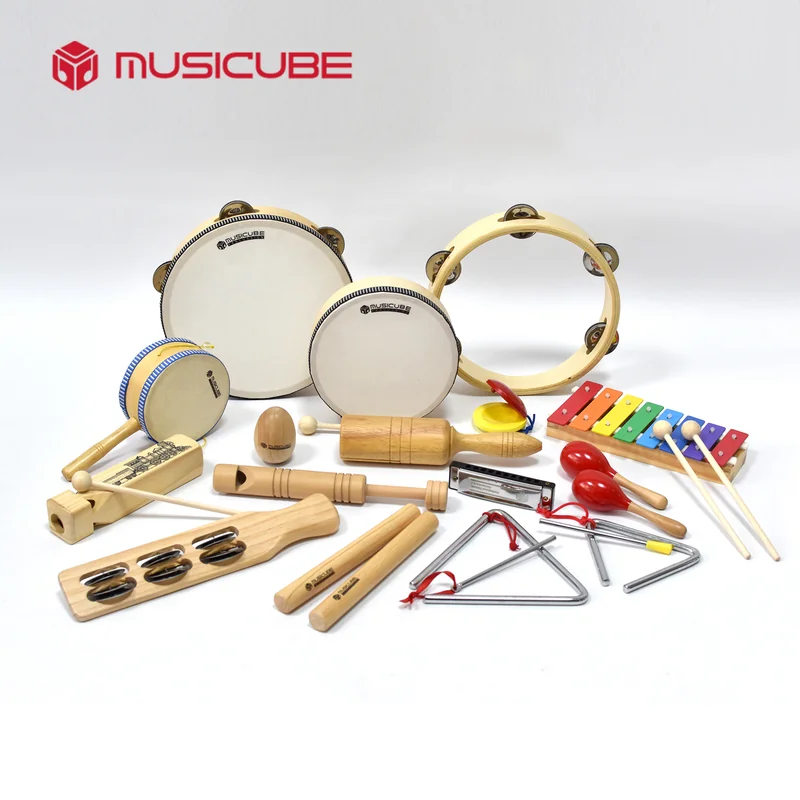 Wall-Hanging Percussion SetCanvas organiser · 200403
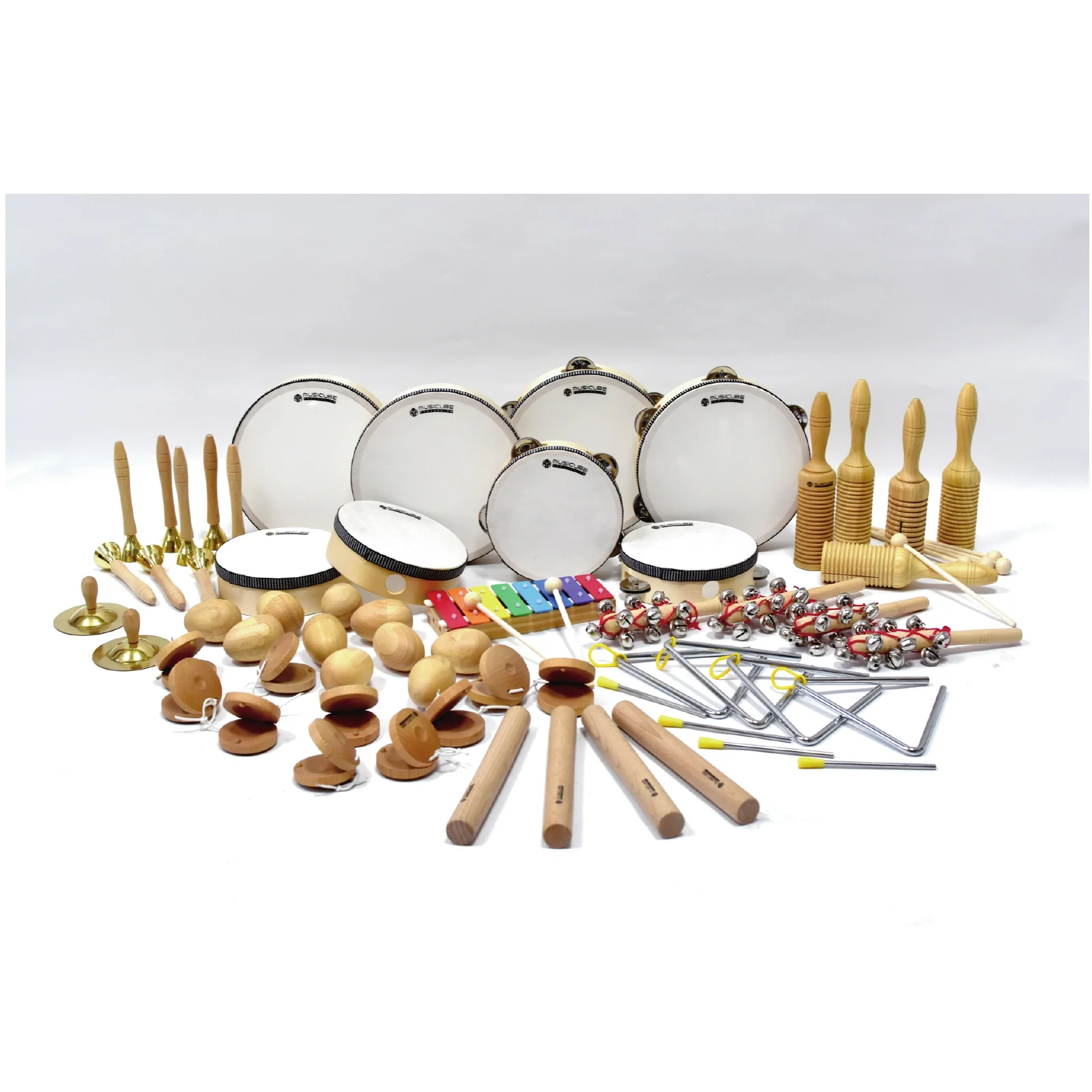 Percussion SetStorage cart · 204067
Request a Quotation
Tell us the market and the voices you want covered. We reply with the minimum split, the carton dimensions and the cubic metres per model.
1. European Commission, Toy safety rules in the EU — the source for the labelling obligations a reseller inherits: importer details, age marking, warnings and the language set for the destination market. Retrieved 1 November 2026.
2. Orff instrument manufacturer — the page that carries the trading terms this article deliberately does not repeat: per-model minimum, sample timing, lead time and cubic metres. Read them together, since the arithmetic here only means something against those numbers.