


By the Royalsound factory team — kids musical instrument manufacturer since 2003 · Updated September 2026
A good kids piano manufacturer is easy to verify: certified products (EN 71, ASTM F963, CPSIA), a factory you can audit in person or on video, a documented QC process, and commercial terms — MOQ, lead time, Incoterms — that appear in writing on every quote. This 7-point checklist is the same one our OEM buyers use when auditing factories in China.
The 7-Point Factory Checklist
1. Certifications you can verify — not just logos
Ask for the actual EN 71 and ASTM F963 test reports, issued by an accredited third-party lab (SGS, TÜV, Intertek), matched to the product model you are buying. A serious factory sends reports within one business day. Logo-only claims without a report number are a red flag.
2. Own factory, not a trading company
Trading companies mark up 15–30% and add a communication layer between you and production. Verify ownership: a video walkthrough of the production line, a business licence showing manufacturing scope, or an on-site audit. If you source repeatedly, visit once — reputable manufacturers welcome audits.
And the factory behind this checklist knows retail first-hand: we also build our own consumer brand, Musicube, familiar to many U.S. retailers – so the factory-audit points below are not theory.
3. Safety engineered into the details
Kids instruments fail audits on details: small parts on age 3+ products, lead-heavy paint, sharp string anchors. Ask how the design is age-graded and which components are tested per EN 71-1/-2/-3. The answer should be specific to the product, not a generic certificate.
4. Real OEM/ODM depth
Many factories only print your logo. Full-service OEM covers colourways, packaging, tooling and function changes with in-house design engineers. Ask for one example project where they modified structure or electronics — not just packaging.
5. Sampling speed and communication
Sampling time tells you how the whole project will run. A workable benchmark for kids pianos is 7-15 days for a pre-production sample, with a named sales engineer answering in clear English within 24 hours. Slow, vague sampling almost always predicts slow production.
6. A documented QC process
Look for three gates: incoming material inspection (IQC), in-line checks (IPQC), and a pre-shipment inspection against your approved sample — with photo and video reports before packing. Ask which AQL standard they inspect to (2.5 is common for toys).
7. Commercial terms in writing
Every quote should state MOQ, unit price by quantity, lead time and its starting point (usually deposit receipt), Incoterms and port, and payment terms. For reference, our standard terms: MOQ 200 pcs, samples 7-15 days, bulk 25–45 days after deposit, FOB Qingdao / Shanghai / Ningbo, T/T 30% + 70%.
Red Flags vs. Good Signs
| Red flag | What a serious manufacturer shows you |
|---|---|
| Certificate images without report numbers | Third-party lab reports matched to your model |
| “We are a factory” — no video or audit offered | Video walkthrough or scheduled on-site audit |
| MOQ only, no price ladder | Unit price by quantity tier, in writing |
| “Lead time: depends” | 25–45 days after deposit, stated per order |
| Generic photos, no sample policy | Pre-production sample approval before bulk |
Quick Answers
What MOQ should I expect when ordering kids pianos wholesale?
How long does sampling and mass production take?
Which certifications are mandatory for selling kids pianos in the EU and US?
Can a factory produce kids pianos under my own brand?
Explore Our Instruments
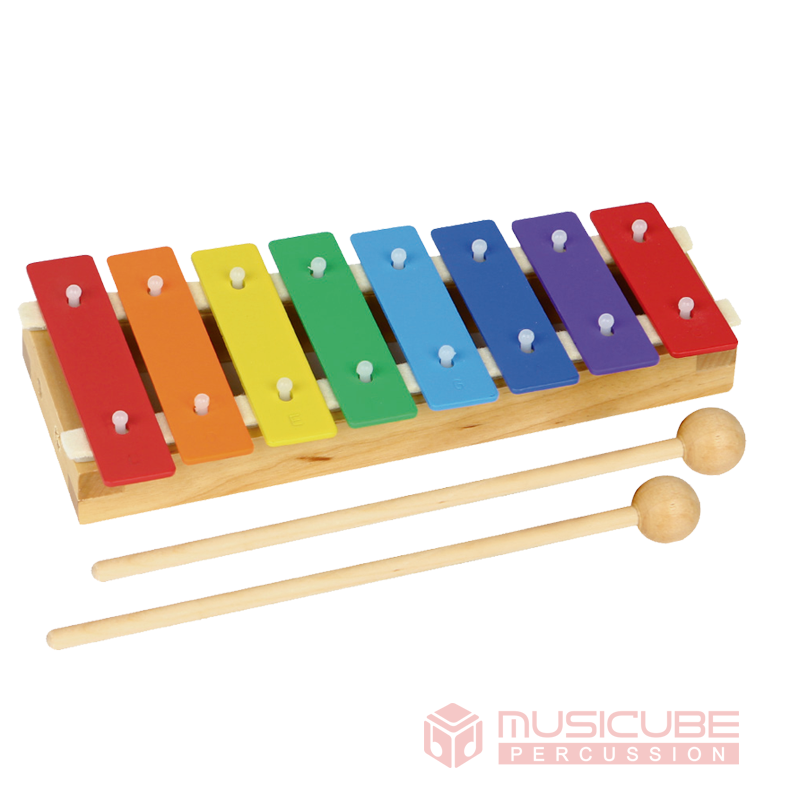 8-Note Wooden Xylophone for KidsSolid wood · 8 tuned notes
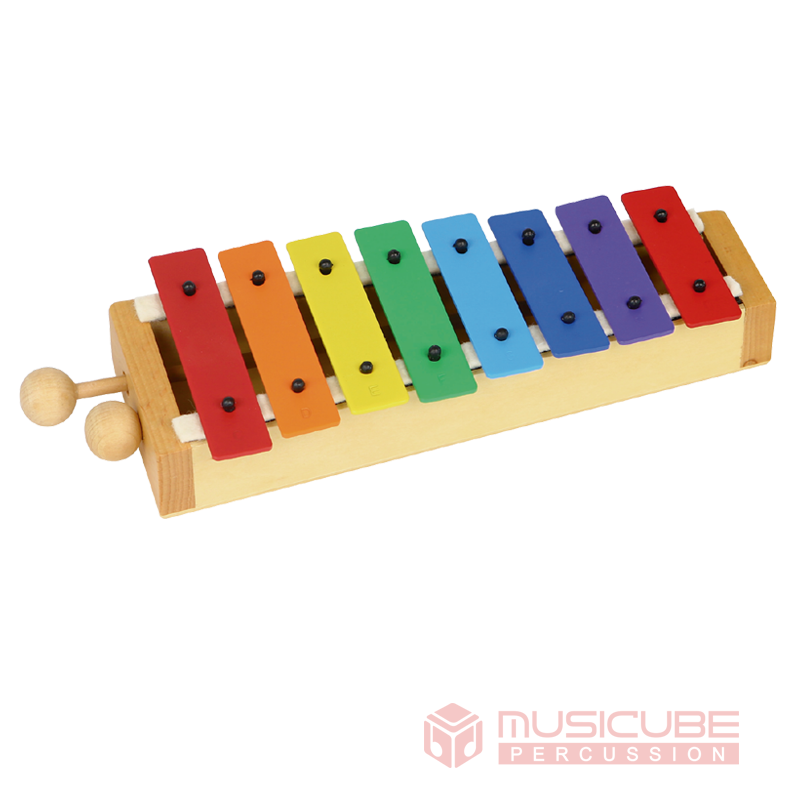 8 Tones Colored Glockenspiel – Basswood Body8 metal tones · MOQ 500 pcs
Ready to Source with a Certified Factory?
Send your requirements — we reply with pricing, MOQ and lead time within 24 hours.
Define the program before you audit the factory
Factory audits go wrong when the brief is vague. Before you compare suppliers, write down four things: the product family and key-count ladder you intend to carry, the markets you will ship to, the channel you sell through, and the volume you expect in the first year. A partner that is excellent for a trial order of compact 18-key pianos is not automatically the right one for a container of 88-key hammer-action instruments going into school tenders. The 18-key model, the 30-key grand, the 37-key melodica and the 88-key digital piano each have their own tooling, test file and packing plan, and a serious quotation reflects that.
Put the brief on one page: model numbers, target age mark, finish, logo method, packaging, destination port and required certificates. Send exactly the same brief to every factory you are considering. Comparable quotes are only possible when everyone prices the same specification, and the way a supplier responds to a precise brief is itself the first audit result. A reply that ignores half the brief tells you more than a glossy catalogue does.
How to read a test report, not just a certificate logo
A certificate image is marketing; a test report is evidence. When a supplier sends EN 71, ASTM F963 or CPSIA documentation, open the actual report and check five things: the issuing laboratory and its accreditation, the report number, the date and validity window, the exact model and material scope, and the name of the applicant or brand on the document. Reports are issued for a specific product configuration. A report for a plain wooden xylophone does not automatically cover the same body with a different coating, a new metal bar alloy or an added electronic module.
Ask the supplier to map each SKU in your brief to a report and to state which changes would trigger re-testing. A factory with a maintained certification matrix can do this in an afternoon; a trading intermediary will usually forward whatever PDF it last received. For multi-market programs, also confirm who issues the Children’s Product Certificate for the US and who signs the EU declaration of conformity — the importer of record needs documents in its own name, not a generic factory file. Our quality documentation page explains how we keep batch-level reports organised.
| Check | What a usable answer looks like |
|---|---|
| Lab and accreditation | Named third-party lab, report number, verifiable |
| Model scope | Report matches the exact SKU, finish and materials |
| Validity | Current date range, re-test triggers stated |
| Applicant name | Your brand or importer where the market requires it |
| Market coverage | EN 71 / REACH for EU, ASTM F963 / CPSIA / CPC for US |
Age marks are compliance labels, not marketing bands
The 3+, 4+ and 6+ marks on this catalogue are age-grading decisions backed by test files and carton labels. They exist because small parts, coatings, mechanical strength and battery access are assessed against a stated age. They are not keywords to be traded up or down to fit a search trend. If a buyer asks for a product to be re-declared from 3+ to 2+, the honest answer is that it needs a new design review and a new test scope, not a different sticker.
This matters commercially: retailers, marketplaces and school procurement teams increasingly check that the age mark on the carton, the instruction sheet and the test report agree. A mismatch found at inbound inspection is far more expensive than getting the specification right at the quotation stage. Our 3+ sourcing guide and 6+ guide explain what each band covers when you build a class set or a tender response.
Price ladders, MOQ and what must appear in writing
A quotation that states a single unit price and an MOQ is not yet a commercial offer. Ask for a price ladder by quantity tier, the MOQ per SKU and per customisation, the lead time and the event that starts the clock, the Incoterm and named port, the payment terms, and the validity period of the quote. Confirm separately which items are included: tooling, print plates, sample courier, testing, packaging artwork and inspection. Ambiguity on these lines is where first orders lose their margin.
Also ask how a mixed container is priced. A program combining 18, 25 and 30 key pianos with a percussion line often needs a consolidated carton plan, and the price ladder should reflect the actual mix rather than a single-SKU assumption. If a supplier cannot produce a written ladder, treat it as a process gap rather than a negotiating tactic. The wholesale terms page sets out the structure we use, and the quote form is the fastest way to get a comparable written proposal.
Packaging, carton data and container planning
Carton quantity, carton dimensions, cubic metres per carton, gross and net weight, and 20-foot versus 40-foot high-cube load counts belong in the same document as the price. Without them you cannot compare two quotes on a landed-cost basis, and you cannot plan a retail roll-out or a school delivery schedule. Ask for drop-test results for the retail box as well: an instrument that arrives out of tune or with a crushed box generates returns that no unit-price saving covers.
For private-label programs, add the artwork deadline and the approval path to the schedule. Printed boxes are usually the long-lead item, and a late artwork approval is one of the most common reasons a production slot slips. Ask who holds the approved sample and how it is referenced at pre-shipment inspection.
Sampling is the cheapest audit you will ever run
A pre-production sample tells you what a specification sheet cannot: whether the keys respond evenly, whether the instrument holds its tuning after a rough courier trip, whether the finish smells or marks, whether the battery door stays shut, and whether the printed box matches the artwork. Approve one sample in writing and require the bulk order to be checked against it. If a supplier wants to skip the approval step, that is a reason to slow down rather than speed up.
Use the sampling stage to test communication too: how quickly a named contact answers a technical question, whether the answer is specific, and whether a revised sample arrives with a change note. Sampling behaviour is the best available predictor of how a production issue will be handled six weeks later.
A shortlisting scorecard
Score every candidate on the same seven points and keep the sheet with the quotes. It turns a subjective impression into a defensible sourcing decision, which matters when a purchasing team or a retail partner asks why a particular factory was chosen.
| Criterion | Weight | Evidence to request |
|---|---|---|
| Verifiable certification | High | Reports matched to each SKU |
| Own production | High | Licence, video walkthrough, audit |
| OEM / ODM depth | High | A structural or electronic customisation example |
| QC documentation | High | IQC / IPQC / pre-shipment gates and AQL |
| Sampling performance | Medium | Timeline, change notes, named contact |
| Commercial clarity | Medium | Written ladder, Incoterm, lead-time trigger |
| Logistics data | Medium | Carton, CBM, container loads, drop test |
Common mistakes on a first order
- Comparing quotes with different specifications. One includes testing and artwork, the other does not.
- Accepting a certificate image as documentation. Always open the report and check the scope.
- Skipping the approved sample. There is then no reference for pre-shipment inspection.
- Treating the age mark as negotiable. It is tied to the design and the test file.
- Leaving the lead-time trigger undefined. “After deposit” and “after order confirmation” are not the same date.
- Ordering the whole range at once. A focused trial order exposes process problems cheaply.
Quick answers, continued
How many suppliers should I shortlist?
Three is usually enough to see the range of responses. Send the same one-page brief to each and compare the written quotes and reports side by side rather than the sales presentations.
Does a factory audit have to be in person?
Not for a first trial order. A live video walkthrough of the production line, the tuning bench and the QC area, combined with a business licence and verifiable lab reports, is a reasonable first step. Plan an on-site visit before scaling to container volumes.
What should be checked at pre-shipment inspection?
Quantity, carton marks, packaging against approved artwork, a sample of units against the approved sample for tuning and finish, and the documents that will travel with the shipment. Ask for a photo and video report before the container is sealed.
Can one batch serve both EU and US markets?
Often yes, if the test plan covers both standards from the start. Declare the target markets in the brief so the sampling plan and the certificate matrix are built before production rather than after.
Where should I start if I only need a trial quantity?
Pick one or two standard models, request a pre-production sample and a written quote with the full terms, then run the seven checks above on that single order. The OEM and ODM page describes what changes once you move from standard models to a custom program.
The seven points above are the same ones we apply when buyers audit us. Send your specification through the quote form and we will return a written proposal with the certification matrix, price ladder and lead time attached.